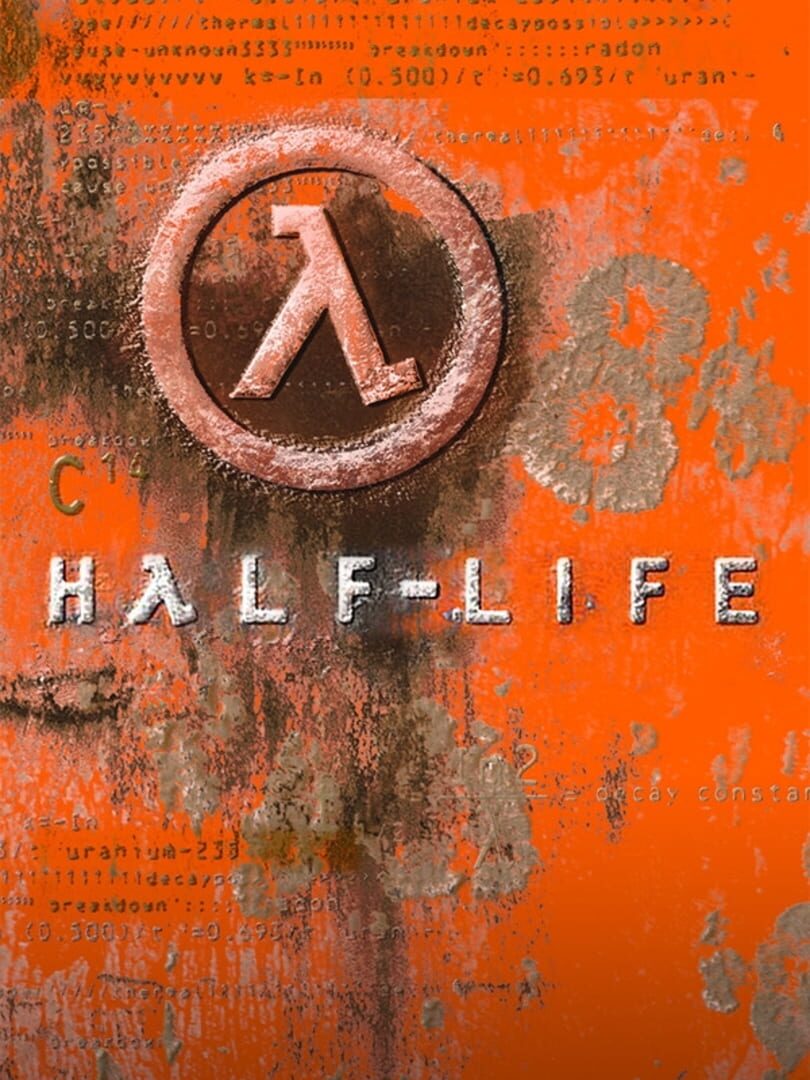
When Half-Life launched in November 1998, it arrived at a pivotal moment in gaming. First-person shooters had already proven themselves commercially with Doom and Quake, but Valve’s debut title did something different—it took the formula and wrapped it in a real narrative with actual characters and environmental storytelling. You weren’t just blasting through corridors; you were Dr. Gordon Freeman, a physicist caught in a catastrophic experiment at the Black Mesa Research Facility, and everything that followed emerged from that single moment when something went catastrophically wrong.
What struck players immediately was how Half-Life treated its world seriously. The opening sequence—riding the tram system deeper into Black Mesa, watching scientists and security officers go about their day—established atmosphere in a way shooters rarely attempted back then. There’s no cutscene explaining the plot. There’s no cinematic intro. You’re just arriving late for work at 8:47 am, putting on your hazard suit, and heading down to the Anomalous Materials Lab where they’re about to run an experiment on “the rarest and also the most unstable” specimen imaginable. It’s mundane until it isn’t, and that tonal shift defines the entire game.
The genius of Half-Life was how it synthesized three different genres into something cohesive. Yes, it’s a shooter at its core, but Valve integrated puzzle-solving and adventure elements so naturally that you never felt the seams. Combat wasn’t about mowing down waves of enemies—it was about managing resources, understanding enemy behavior, and using your environment strategically. The puzzle design felt organic too. You weren’t solving abstract block-sliding challenges; you were figuring out how to progress through a real space using whatever tools and objects were available.
> The game earned an /10 rating and proved that players wanted more from their shooters than just reflexes and aiming accuracy.
Mechanically, Half-Life introduced ideas that became industry standards. The crowbar became iconic not because it was mechanically special, but because it felt essential—a tool for a scientist dealing with improvisation and desperation. The way the game escalated enemy encounters, introducing new threats just as you mastered the previous ones, kept tension fresh across the entire campaign. Physics-based puzzle solving using gravity guns’ spiritual predecessors and environmental hazards made you think about space differently than other shooters demanded.
The AI design deserves specific mention because it was genuinely impressive for 1998. Enemy soldiers actually used cover, flanked you, communicated with each other. They didn’t just run at you in predictable patterns. Playing Half-Life meant constantly reassessing encounters because enemies adapted to what you were doing. That intelligence made every fight feel consequential rather than rote.
What made Half-Life resonate culturally, though, was something less tangible. The game respected your intelligence. It didn’t explain everything through exposition dumps or on-screen text. The environmental storytelling told you what had happened—corpses in specific positions, terminal logs, conversations you overheard—and let you piece together the narrative yourself. By the time you discovered what the Resonance Cascade actually meant and what it unleashed, you were already emotionally invested in escaping rather than just progressing through levels.
The technical achievement shouldn’t be understated either. Sierra Entertainment and Valve shipped a game across multiple platforms—Linux, PC, Mac, and later PlayStation 2—while maintaining quality and performance. That cross-platform ambition was unusual in 1998. The game looked good, ran smoothly, and played consistently across different systems. The modding community that emerged around Half-Life fundamentally changed how developers thought about game longevity and community engagement.
Cultural impact:
- Redefined how narratives could work in first-person games
- Influenced shooter design for an entire generation of developers
- Spawned one of gaming’s most vibrant modding communities
- Proved that a startup studio could compete with established publishers
- Created a universe that players remained emotionally connected to for decades
What’s remarkable is that Half-Life hasn’t aged poorly in the way many games from that era have. Recent updates to the Steam version in November 2023 restored the original 1998 content and presentation for the game’s 25th anniversary, and players responded with genuine enthusiasm. The fact that the community wanted to experience it as it originally shipped, rather than seeing improvements as essential, speaks to how well the fundamentals hold up. The controls feel responsive. The level design still guides you logically through spaces. The pacing still works.
The legacy extends beyond the game itself. Half-Life established Valve as a studio willing to take risks and prioritize player experience over convention. It created a fictional universe—Black Mesa, the Resonance Cascade, the Combine—that grew more important across subsequent releases and became part of gaming’s collective mythology. When players talk about narrative in shooters or how to balance action with exploration, Half-Life is still part of that conversation.
If you haven’t experienced Half-Life, it’s worth understanding why it matters historically and then playing it to see if the design still resonates. It might feel different from modern shooters—slower in some respects, more methodical—but that’s exactly the point. Valve made a game that prioritized discovery and atmosphere alongside combat. For a 1998 release, that was genuinely bold. For players today, it’s a reminder that good level design and environmental storytelling never really become obsolete.


