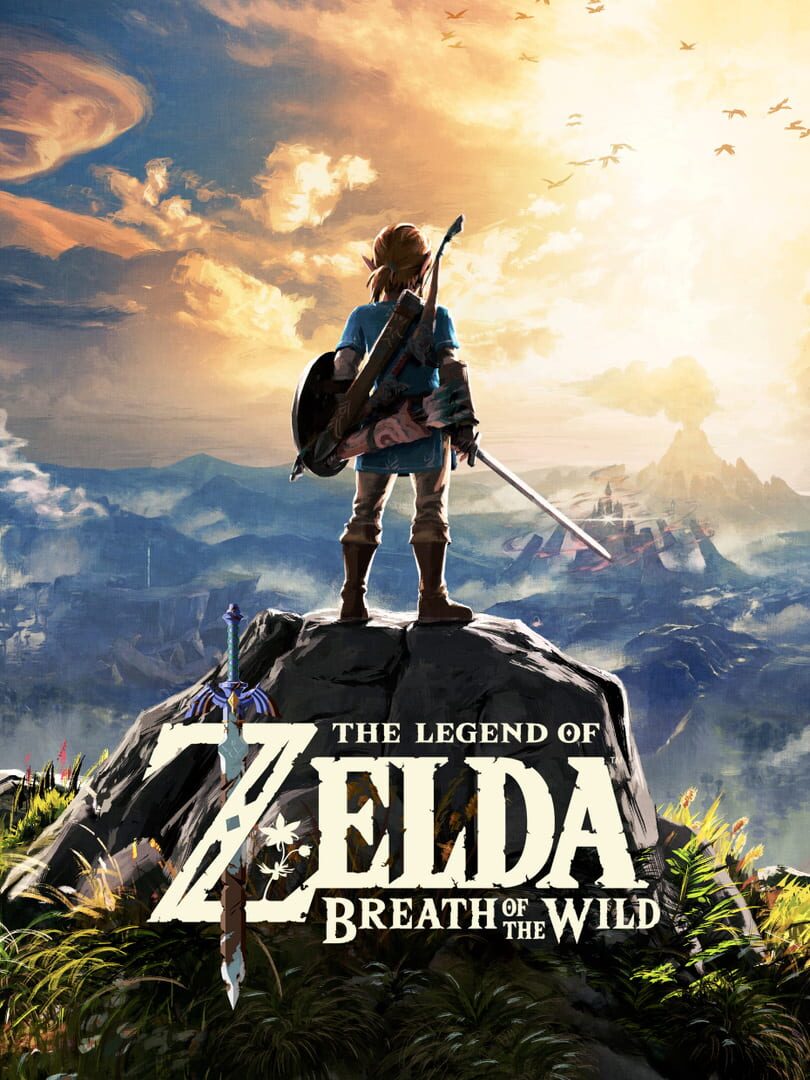
When Breath of the Wild launched on 2017-03-03 across the Wii U and Nintendo Switch, it didn’t just arrive as another Zelda game—it fundamentally rewrote what an open-world adventure could be. Nintendo took everything players knew about the series and tore it apart, rebuilding it from the ground up with a philosophy that prioritized player freedom above almost everything else. Seven years later, with a /10 rating that reflects genuine critical consensus, the game stands as one of the most important titles in gaming history.
What made this approach so radical was that Nintendo essentially said “no” to the traditional Zelda formula. There’s no mandatory progression path. You don’t need to visit dungeons in any particular order—in fact, you can walk straight to Calamity Ganon and attempt the final battle whenever you want. This sounds simple, but it challenged a fundamental assumption the industry had held about open-world games: that players need breadcrumbs leading them forward. Instead, Breath of the Wild trusts you completely, and that trust transformed how we think about game design.
The genius lies in what Nintendo calls “emergent gameplay.” Rather than crafting a singular narrative experience with predetermined moments of wonder, the game gives you tools and systems that interact in unexpected ways. You want to use a metal sword to conduct electricity through water? Go for it. You want to freeze an enemy and launch them across a canyon? The physics engine supports that. You want to solve a puzzle using wind mechanics in a way the developers never explicitly intended? The game rewards you for creative thinking.
> The real innovation wasn’t just freedom—it was making freedom feel natural and supported by every system in the game. Environmental interaction wasn’t a secondary feature; it was the primary feature.
This is where the Puzzle and Adventure elements merge brilliantly. Almost every challenge you encounter can be approached from multiple angles. A tower puzzle might have an intended solution, but if you recognize that you can use a nearby tree branch as a bridge, suddenly you’ve bypassed half the challenge through observation and resourcefulness. The game doesn’t punish this—it rewards you with the same outcome, maybe even acknowledging your cleverness through enemy placement or environmental storytelling.
The storytelling deserves special mention too. Link awakens after a century of failure, and the weight of that history permeates every environment. When you encounter the Divine Beasts or meet the Champions’ spirits, you’re not watching cutscenes explain what happened—you’re discovering tragedy through environmental design, NPC conversations, and the architecture of the world itself. The narrative is there, but it never interrupts your agency. You can experience it deeply or ignore it entirely and just enjoy the adventure.
What made players connect with this game wasn’t just innovation—it was how that innovation felt:
- Exploration rewards curiosity – A distant mountain isn’t locked behind progression; you can literally walk there
- Failure becomes discovery – Dying to a cliff fall teaches you about the world’s geography
- Systems interact logically – Fire burns grass, wind moves objects, metal conducts electricity—not as puzzle solutions but as physics
- Combat respects player choice – Stealth, direct confrontation, environmental manipulation—all valid approaches
- Pacing belongs to you – Side quests, shrines, villages, or the main path—your time is valued equally in all directions
Nintendo’s support for the game extended well beyond launch. Multiple patches improved stability and balance, while the Expansion Pass added substantial content through The Master Trials and The Champions’ Ballad. According to IGN, the DLC was released on June 30, 2017, giving players reasons to return and experience fresh challenges. That ongoing commitment signaled respect for the player base.
The industry impact cannot be overstated. Open-world games that followed clearly learned from Breath of the Wild‘s approach to player agency and environmental interaction. The game proved that you don’t need a rigid quest-marker system to guide players meaningfully—you just need a world that’s coherent and responsive. It didn’t invent the open world, but it asked the question: “What if we trusted players more?” and then proved that trust could work at a commercial and critical level.
Even now, as the game has moved into its mature phase with continued support and compatibility with the Nintendo Switch 2, Breath of the Wild remains a reference point for what thoughtful game design can achieve. It’s the kind of game that justifies its existence not through spectacle or narrative complexity alone, but through the fundamental respect it shows for player intelligence and imagination. That’s why players still return to Hyrule, and why this game will continue to matter.


