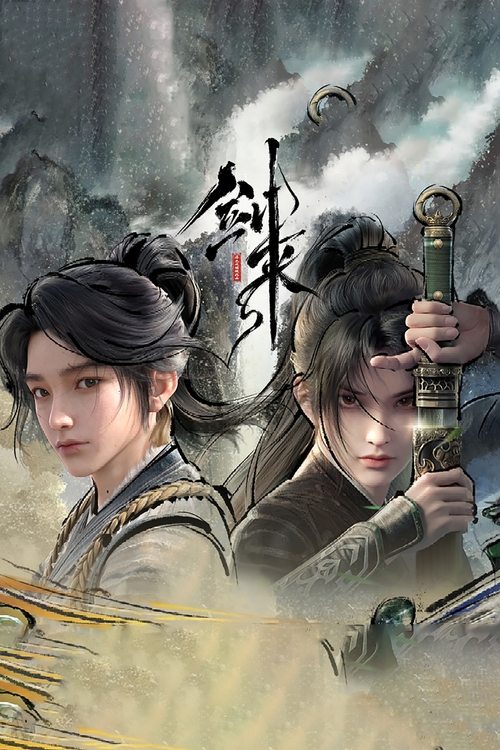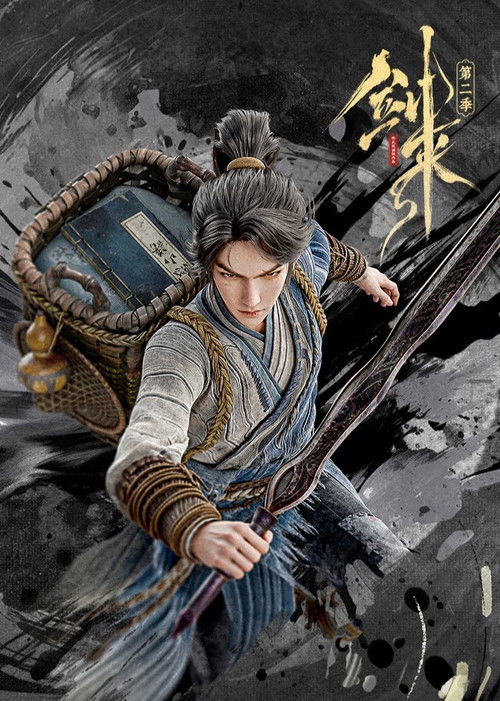
When Sword of Coming debuted on Tencent Video in August 2024, it arrived with a specific vision: to tell a coming-of-age story that would weave together cultivation mythology, martial arts spectacle, and genuine character development in a way that felt both reverent to its genre roots and refreshingly ambitious. What’s emerged over its expanding run—now confirmed as a Returning Series with two seasons and 52 episodes under its belt—is something that deserves serious consideration in conversations about where animated action-fantasy is heading.
Creator Chen Zhenghua has crafted something that operates on multiple levels simultaneously. On the surface, you’ve got your archetypal protagonist discovering a hidden world of cultivation and martial arts, but the execution reveals far more nuance than that premise might suggest. The show doesn’t rush through its world-building or character introductions. Instead, it trusts its audience to sit with ambiguity and gradually piece together the larger tapestry—which, admittedly, hasn’t worked for everyone, and that’s worth acknowledging.
> The early episodes maintain an 8.9/10 rating across the entire series, which speaks volumes about how Sword of Coming eventually found its footing and won over skeptics.
There’s something fascinating happening in the viewership conversation around this series. The first eight episodes sparked genuine debate—some viewers found the pacing deliberately measured and the world-building intricate in ways that rewarded attention, while others struggled with what felt like opacity without immediate payoff. What’s telling is how the ratings trajectory tells the story: Episode 1 hit 9.8/10, dipped to 9.0 in Episode 2, then climbed to 9.9 by Episode 3, and remained consistently strong throughout Season 1’s average of 9.7/10. This isn’t a show that loses momentum—it’s one that actually gains clarity and purpose as it unfolds.
That persistent high rating across 26 episodes of Season 1 alone suggests something clicked. The animation team found its rhythm. The narrative threads that seemed tangled early on began to resolve into something coherent and genuinely compelling. By the time audiences reached the deeper episodes, the investment paid dividends. The show’s decision to stretch across 52 total episodes—split across two seasons—allowed for a kind of pacing that modern television often abandons. Sword of Coming had the breathing room to let character arcs develop, to let world-building accumulate naturally, and to trust that patience would be rewarded.
What makes this show significant isn’t just technical execution, though the animation itself demonstrates real craft. It’s the way Chen Zhenghua approached the marriage of action spectacle with intimate character moments. In a landscape dominated by either pure spectacle or introspective character studies, Sword of Coming refused that false binary. The martial arts sequences function as both visual expression and character revelation—how a fighter moves tells you something about who they are, their values, their journey.
The cultural conversation around this series has evolved considerably. Initial skepticism transformed into appreciation, which eventually hardened into genuine fandom. That’s the trajectory of a show that’s doing something difficult and getting better at it as it continues. The fact that it earned a Returning Series status speaks to Tencent Video’s confidence, but more importantly, it speaks to audience investment. People showed up for Season 1, struggled with some early pacing, but stayed engaged enough to see where the story was actually going.
- The genuine strength lies in the show’s refusal to over-explain itself. Characters speak in references and context that demands viewer engagement.
- Animation quality improved notably as the season progressed, allowing action sequences to become increasingly kinetic and purposeful.
- The coming-of-age narrative actually means something here—it’s not just window dressing for action beats.
- Tencent Video clearly saw something worth expanding, greenlighting a second season that builds rather than retreads.
What’s particularly interesting is how Sword of Coming handles the unknown runtime element. Rather than being constrained by strict episode lengths, the show appears to have approached each episode as a chapter, letting storytelling needs dictate pacing rather than fitting narrative to formula. This flexibility allowed for episodes that breathe, that linger on moments, that trust visual storytelling over exposition dumps. In an era where we’re often fed pre-digested narratives, that approach feels almost radical.
The show’s ascent from initial confusion to sustained 8.9/10 quality represents something worth celebrating: a series that doesn’t compromise its vision to appease immediate skepticism. It stayed true to what Chen Zhenghua set out to create, refined its execution, and in doing so, proved that animated action-fantasy could still surprise us. The fact that 52 episodes across two seasons have maintained that quality level, with genuine momentum carrying into its Returning Series status, suggests this isn’t a flash in the pan. This is a show that’s built to last, that has something substantive to say about growth, power, and the price of transformation.
If you bounced off the first few episodes, there’s genuinely compelling television waiting if you circle back. And if you’ve been riding with Sword of Coming since August, you already know why the rest of us are excited about what comes next.