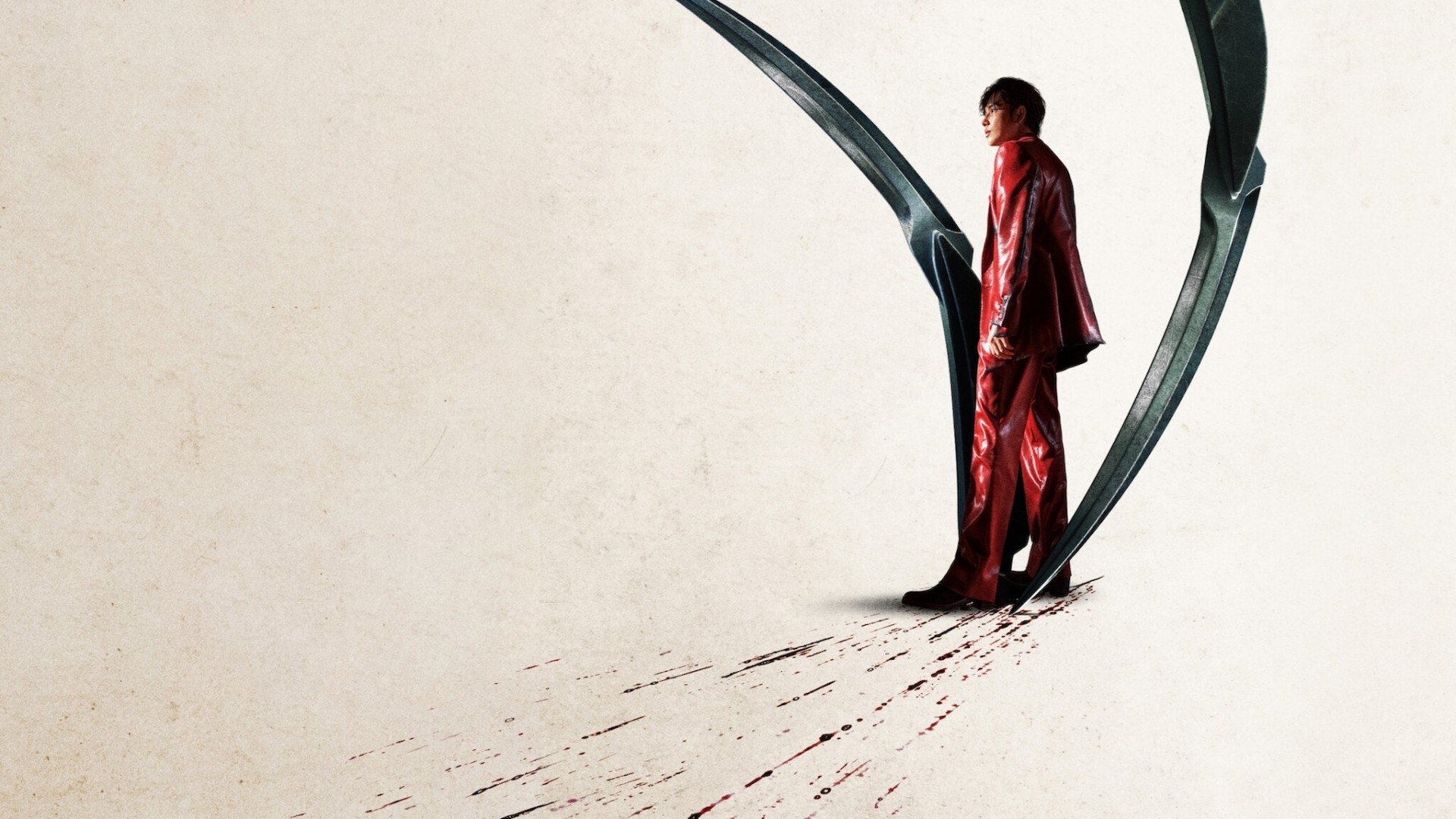
When Mantis premiered in late September 2025, it arrived as something quietly significant: Lee Tae-sung’s feature directorial debut, operating within a franchise universe but carving its own distinct path. This is a film that understands what modern action cinema needs—not just spectacle, but character depth wrapped in the tension of a world where killing is a profession, and professionalism is everything. For a debut, that’s a pretty confident statement to make.
The premise itself feels deceptively simple: an ace assassin named Mantis returns to the contract killing industry after stepping away, only to collide with two forces—his former trainee Jae-yi and a retired legendary killer named Dok-go. What could’ve been a straightforward revenge or turf-war narrative instead becomes something more introspective. Director Lee uses the 1 hour and 53 minute runtime with surgical precision, refusing filler and respecting the audience’s time in a way that feels increasingly rare. Every scene earns its place, every conversation carries weight beyond exposition.
The Creative Vision Behind the Frame
What makes Lee Tae-sung’s approach particularly noteworthy is his understanding of restraint. This isn’t a director overwhelmed by the action genre—it’s someone who recognizes that the most compelling moments in assassin narratives aren’t always the kills themselves, but the choices that lead there. The film exists as a spin-off in the Kill Boksoon universe, yet it doesn’t feel beholden to that connection. Instead, it uses the established world to explore something fresher: what happens when a mentor returns to find the game has changed, and the players have evolved in ways he didn’t anticipate?
The ensemble cast brought something essential to this material. Yim Si-wan carries the film with a performance that manages to be both controlled and emotionally present—no small feat when playing a character whose entire profession demands emotional suppression. There’s a quiet intensity to his work here that transcends typical action-hero tropes. Park Gyu-young and Choi Hyun-wook complete a triangle of compelling dynamics, each actor bringing specificity to what could’ve been stock thriller roles.
> The film’s central tension doesn’t come from who will survive, but from whether these characters can coexist in a world that fundamentally doesn’t allow for peace between predators.
Reception and Industry Recognition
The critical reception has been modest—a 6.3/10 rating from 134 voters reflects a film that divides opinion rather than overwhelms it. That’s actually more interesting than universal acclaim would’ve been. Mantis is clearly the kind of film that asks something of its audience: it doesn’t explain every motivation, doesn’t resolve every thread neatly, and trusts viewers to sit with ambiguity. For those who appreciate that approach in thriller cinema, the film resonates deeply. For those seeking clearer narrative satisfaction, it might feel incomplete. That tension is honest.
What’s particularly worth noting is that Yim Si-wan earned significant recognition for his performance, winning Best Actor in the Film Category at a major award ceremony—validation that his work here transcended the typical action-film performance and achieved something genuinely compelling. That kind of recognition matters for a debut director, signaling that audiences and critics alike recognized something worth celebrating in the collaborative vision he assembled.
Why This Matters for Action Cinema
The significance of Mantis lies less in box office dominance (financial figures remain undisclosed, but the film found its audience through streaming distribution and theatrical runs) and more in its approach to the contract-killer subgenre at a specific cultural moment. South Korean cinema has been exploring these themes with particular sophistication for years—this film continues that lineage while offering something distinctly its own.
Consider what the film accomplishes thematically:
- Generational conflict without becoming didactic—the tension between old-school professionalism and new-era ruthlessness feels lived-in rather than constructed
- Moral ambiguity as central to character rather than narrative crutch—these are professionals, and the film respects the complexity that entails
- Restraint in violence—action sequences serve story and character rather than exist for their own spectacle
- Female characters with agency—Park Gyu-young’s presence ensures the narrative doesn’t collapse into male-centric mythology
- A lean, efficient structure—nearly two hours that never wastes a moment
The Lasting Legacy
Where Mantis likely influences future filmmaking is in proving that debuts don’t need massive budgets or guaranteed box office returns to matter. Director Lee Tae-sung announced himself as someone who understands that sometimes the most dangerous killers in cinema are the ones who think before they act—and the most effective directors are those who edit ruthlessly. The film’s streaming platform release meant it reached a genuinely global audience, introducing Lee’s sensibility to viewers far beyond traditional theatrical markets.
The film’s legacy will likely grow as it discovers audiences through streaming platforms over time. These are the films that accumulate cultural weight gradually—word-of-mouth recommendations, discovery by critics reassessing 2025 releases, influence on upcoming thriller directors who see what’s possible when you trust your audience and your cast. It’s the kind of film that matters not because everyone loves it, but because everyone who connects with it understands why it was made and what it’s trying to say about professionalism, mortality, and the impossible dream of escape.
In a landscape crowded with flashy action vehicles, Mantis whispers rather than shouts. And sometimes, that’s exactly what cinema needs.


![Official Trailer [ENG SUB]](https://img.youtube.com/vi/PItlVyrf15U/maxresdefault.jpg)
![Official Teaser [ENG SUB]](https://img.youtube.com/vi/GcW_tYL1R_o/maxresdefault.jpg)