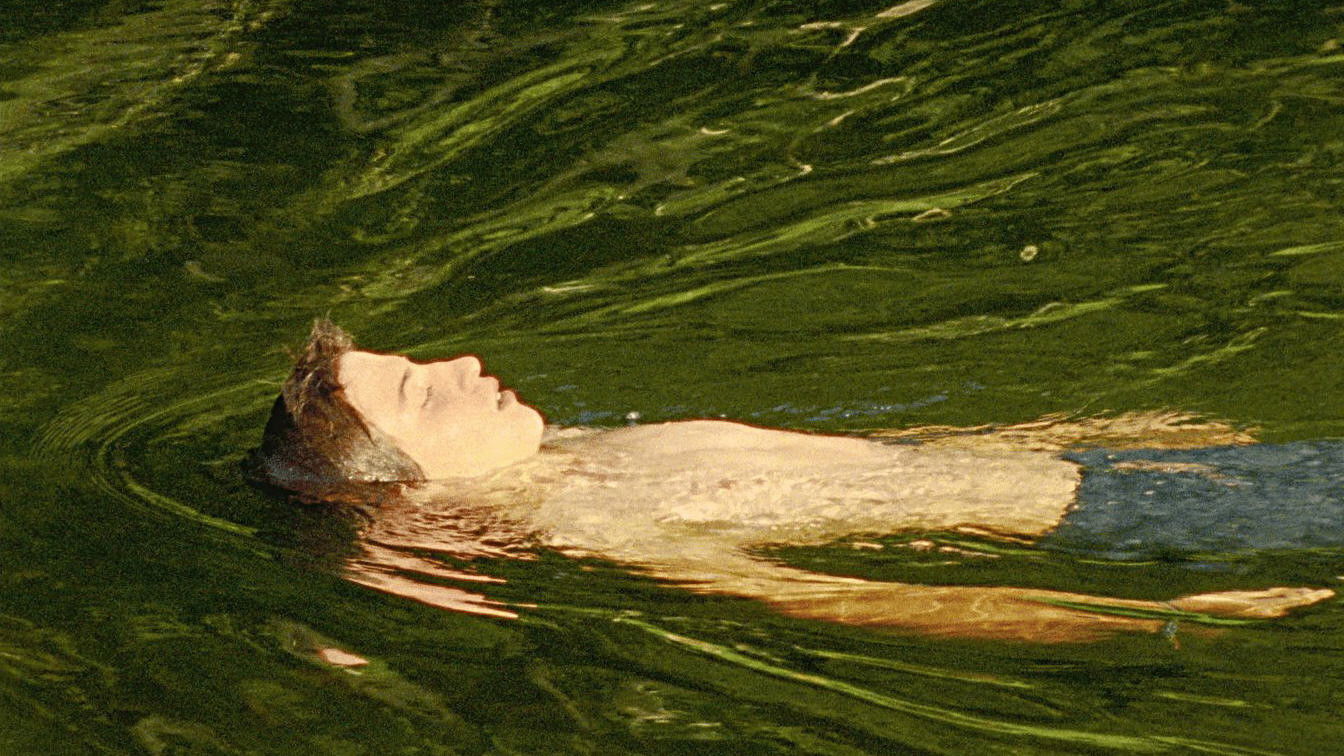
When Jaume Claret Muxart’s Strange River premiered at Venice in 2025, it arrived quietly—a Catalan road movie about a teenage boy encountering something inexplicable along the Danube. The film came out theatrically in Spain on October 3rd with modest ambitions and even more modest expectations. But what makes this debut feature worth paying attention to isn’t measured in box office numbers or prestige; it’s about what the film accomplishes in its lean 106 minutes-minute runtime, and how it sits comfortably in a growing tradition of queer cinema that refuses easy answers.
The setup initially feels conventional. Sixteen-year-old Dídac travels by bike along the Danube with his family, retracing a journey his mother Monika took decades earlier as a teenager. That cyclical structure—returning to the source, following a river downstream—could have been predictable. But then Alexander appears. This mysterious boy materializes in the water, draws Dídac’s attention, and quietly begins to unravel everything about the trip. The closer they become, the further Dídac drifts from his brother Biel. And when Monika recognizes something of her own past in their connection, she does something unexpected: she encourages them to continue alone.
What’s brilliant about Muxart’s approach is that he never fully explains Alexander. That ambiguity isn’t laziness—it’s the entire point. Alexander could be a memory made flesh. He could be a projection. He could be something else entirely. By refusing to settle the question, the film taps into something real about desire and self-discovery. These feelings don’t arrive with explanations attached. They arrive as confusion, as magnetism, as the sudden sense that your life is changing in ways you don’t fully understand.
Nausicaa Bonnín brings a vulnerable openness to Monika, the adult who sees her younger self in her son’s transformation. There’s something generous about how the film treats her character—not as the parent who needs to rein things in, but as someone who understands what’s at stake because she lived through something similar. Jordi Oriol as Dídac captures that raw, uncertain energy of adolescence; the way desire and fear can coexist in the same moment. And Jan Monter, as the enigmatic Alexander, works precisely by not doing much—his presence is enough. The less explained he is, the more powerful his effect.
The critical reception has been modest so far. The film holds a 5.7/10 rating from 3 votes, which reflects the reality that this is a niche film. It won’t satisfy everyone. Some viewers will find the ambiguity frustrating. Others will wish for more dramatic payoff, a clearer narrative arc. That’s fair criticism. But there’s something to be said for a film that trusts its audience to sit with uncertainty, that doesn’t rush to resolve its central mystery because the mystery is the story.
What makes Strange River significant isn’t that it reinvented the coming-of-age road movie—it didn’t. Rather, it’s what Muxart does within those familiar boundaries:
- It centers a queer experience without making that the film’s entire purpose. Dídac’s attraction to Alexander is fundamental to who he is, but the film treats it as one part of a larger awakening.
- The Danube itself becomes a character. The river is where Alexander appears and disappears, where boundaries between reality and something else blur. It’s not decoration; it’s central to the film’s meaning.
- There’s real tenderness between characters. The film doesn’t mistake emotional distance for artistic sophistication. When Dídac and Alexander are together, there’s genuine connection—fragile, strange, and real.
- Mothers and sons, siblings and strangers—all the relationships fracture and reform. Nothing stays stable. That instability is the film’s true subject.
In a landscape crowded with coming-of-age stories that want to explain everything, Strange River stands out by embracing mystery. It’s not experimental in a showy way, but it’s genuinely unconventional in its refusal to resolve its central tension. Twilight falls, Dídac begins to question who Alexander truly is, and the film ends leaving us with questions too. That might frustrate viewers accustomed to narrative closure. But it’s also what makes the film linger.
The collaboration between Muxart, his producers at ZuZú Cinema and Miramemira, and this small cast created something genuinely personal. This is a debut feature from a director with a clear vision and the discipline to follow it. The film doesn’t want to be your favorite film. It wants to be a film you think about later, when you’re alone, when you’re remembering how desire first felt—confusing and real and impossible to fully explain.
Strange River matters because it adds another voice to the conversation about what queer cinema can be. Not therapy, not explanation, not a neat narrative about self-acceptance. Just a film willing to sit in the uncertainty of becoming—whatever that means for whoever’s watching.