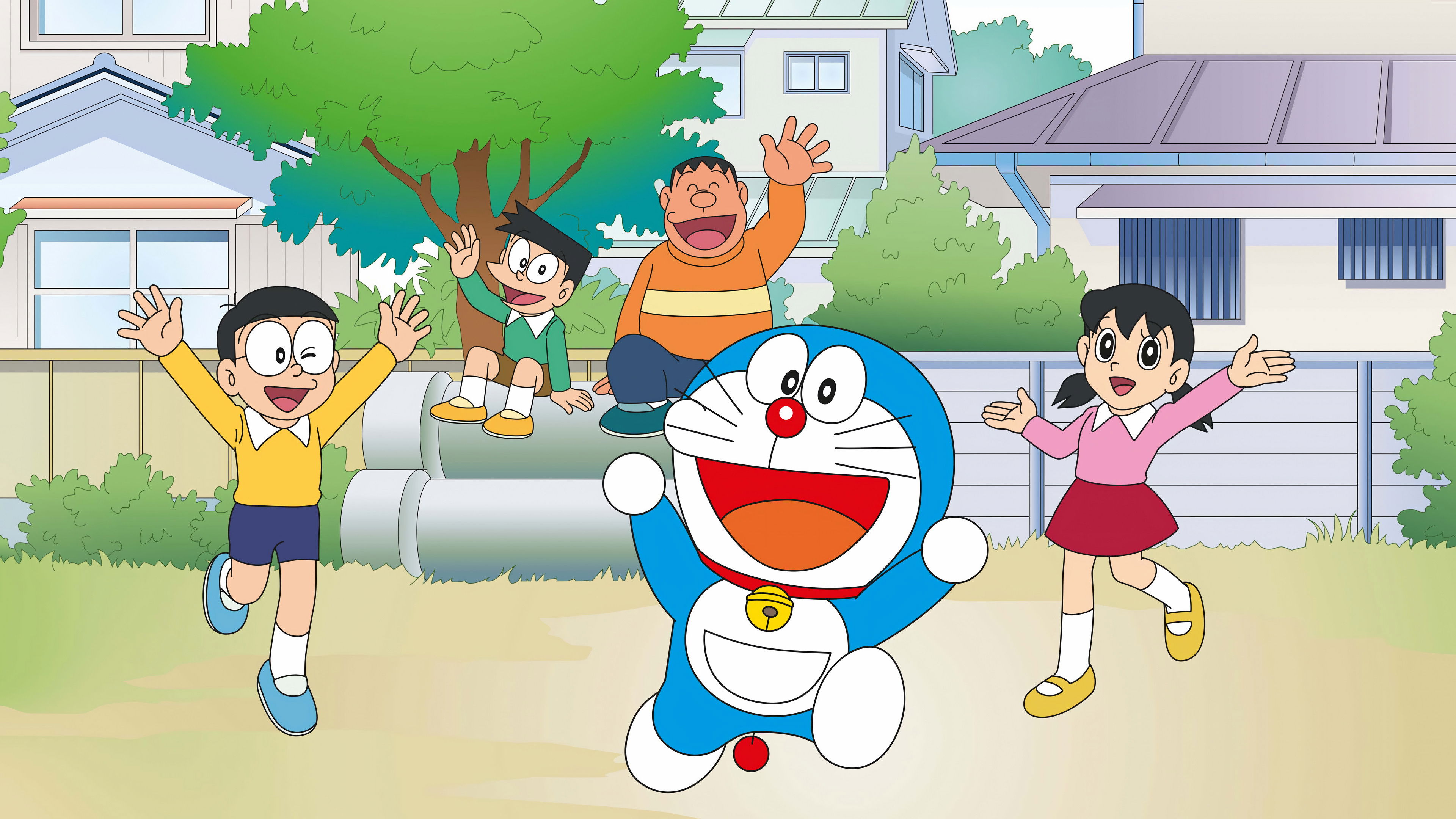
When Doraemon premiered on April 22, 2005, television audiences were introduced to one of anime’s most enduring franchises—a show that would go on to deliver an astonishing 1445 episodes across what the network categorizes as a single season, a testament to how the series transcended traditional television structure through episodic storytelling. What makes this achievement remarkable isn’t just the sheer volume of content, but rather how consistently the show maintained an 8.0/10 rating across thousands of viewers, proving that audiences were willing to follow Doraemon’s adventures for nearly two decades without fatigue. This longevity speaks to something fundamental about the show’s appeal: it understood how to balance the fantastical with the relatable, the comedic with the genuinely touching.
The premise itself is deceptively simple, yet brilliantly constructed for television. At its heart, Doraemon tells the story of an earless robotic cat sent back from the 22nd century to help Nobita Nobi, a boy struggling with talent and confidence in the present day. But this isn’t a story about instant transformation or wish fulfillment in the traditional sense. Instead, what made the show resonate across generations is how it used its sci-fi gadgetry as a framework for exploring very human problems—friendship, perseverance, school anxieties, and the messy business of growing up. The 22-minute runtime proved to be the perfect vessel for this approach, allowing each episode enough breathing room to develop emotional stakes while maintaining the comedic momentum that kept younger viewers engaged.
> The show’s greatest strength lies in its understanding that sci-fi elements serve character, not the other way around. Every gadget from Doraemon’s seemingly infinite pocket exists not to dazzle, but to create scenarios where Nobita learns something valuable—often about himself.
The Creative Vision Behind the Format
What’s particularly fascinating about Doraemon‘s structure is how it leveraged the episodic format as a strength rather than a limitation. Rather than pursuing serialized storytelling that demanded viewers catch every episode, the show created standalone narratives within a consistent universe. Each episode could be enjoyed independently, yet the recurring cast of characters—Nobita’s loyal friends, his complicated relationship with Gian and Suneo, his crush on Shizuka—gave the series continuity and emotional weight. This approach proved revolutionary for how anime could exist on television, showing that episodic structure didn’t mean sacrificing character development or audience investment.
The animation and comedy, particularly in those memorable standout episodes like “Seiki no Superstar!!” and “Gunnyari Gian,” demonstrated how to craft humor that worked on multiple levels. Kids laughed at Gian’s antics and the visual gags of Doraemon’s wild gadgets, while older viewers found themselves amused by the social commentary embedded within each story. This multi-layered approach to comedy meant the show could thrive simultaneously as children’s entertainment and something adults could genuinely enjoy watching alongside their kids.
Cultural Footprint and Lasting Influence
What elevated Doraemon beyond being merely a successful children’s show was its willingness to tackle genuine emotional territory. Episodes that explored Nobita’s self-doubt, his frustration with his limitations, or his moments of unexpected courage created conversations about what it means to be a flawed person trying to improve. The show never positioned Doraemon as a magic solution—the robot cat was a helper, a friend, but the real growth came from within Nobita himself. This philosophy resonated deeply across cultures, which is partly why the franchise became a genuine phenomenon spanning multiple continents.
The show’s influence on television’s approach to action and adventure genres cannot be overstated. Rather than relying on escalating conflict or dramatic showdowns, Doraemon proved that adventure could exist in everyday situations enhanced by imagination and friendship. This softer approach to action and adventure storytelling influenced how subsequent shows balanced excitement with emotional authenticity, demonstrating that spectacular action sequences weren’t necessary to keep audiences invested.
Why Audiences Keep Returning
Perhaps most tellingly, Doraemon maintained its Returning Series status for nearly two decades because it understood something fundamental about television and human connection. Each episode, while standing alone, contributed to an ever-growing tapestry of memories and moments. Viewers weren’t just watching a show; they were spending time with characters who felt like friends. The consistency of that experience—the reliability of finding comfort in Doraemon’s loyalty, humor in the gang’s misadventures, and hope in Nobita’s persistent optimism—created a bond that transcended typical audience-show relationships.
The 8.0/10 rating, maintained across thousands of episodes and thousands of individual viewer ratings, represents something quite rare in television: genuine, sustained appreciation. This wasn’t a show that had a brilliant first season before declining; it was a show that understood how to remain relevant across different eras of television and changing viewer demographics. Families that grew up watching Doraemon could introduce it to their own children and find it remained fresh, meaningful, and entertaining.
In the landscape of television animation, Doraemon deserves recognition not merely as a successful long-running series, but as a masterclass in what episodic storytelling could achieve when guided by genuine affection for its characters and understanding of what audiences truly needed from their entertainment—connection, laughter, and the quiet reassurance that being imperfect doesn’t mean being unworthy of help and friendship.
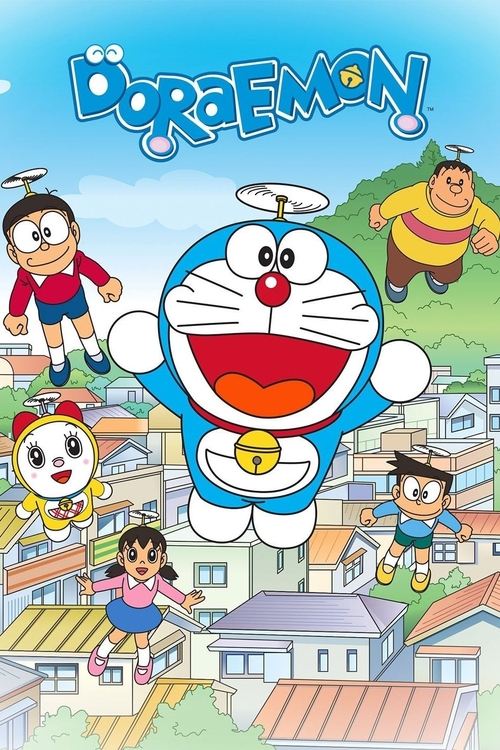


![Opening 3 | Make My Dreams Come True, Doraemon - Mu00b7 Au00b7 O [Subtitled]](https://img.youtube.com/vi/b-nqKIJczVE/maxresdefault.jpg)