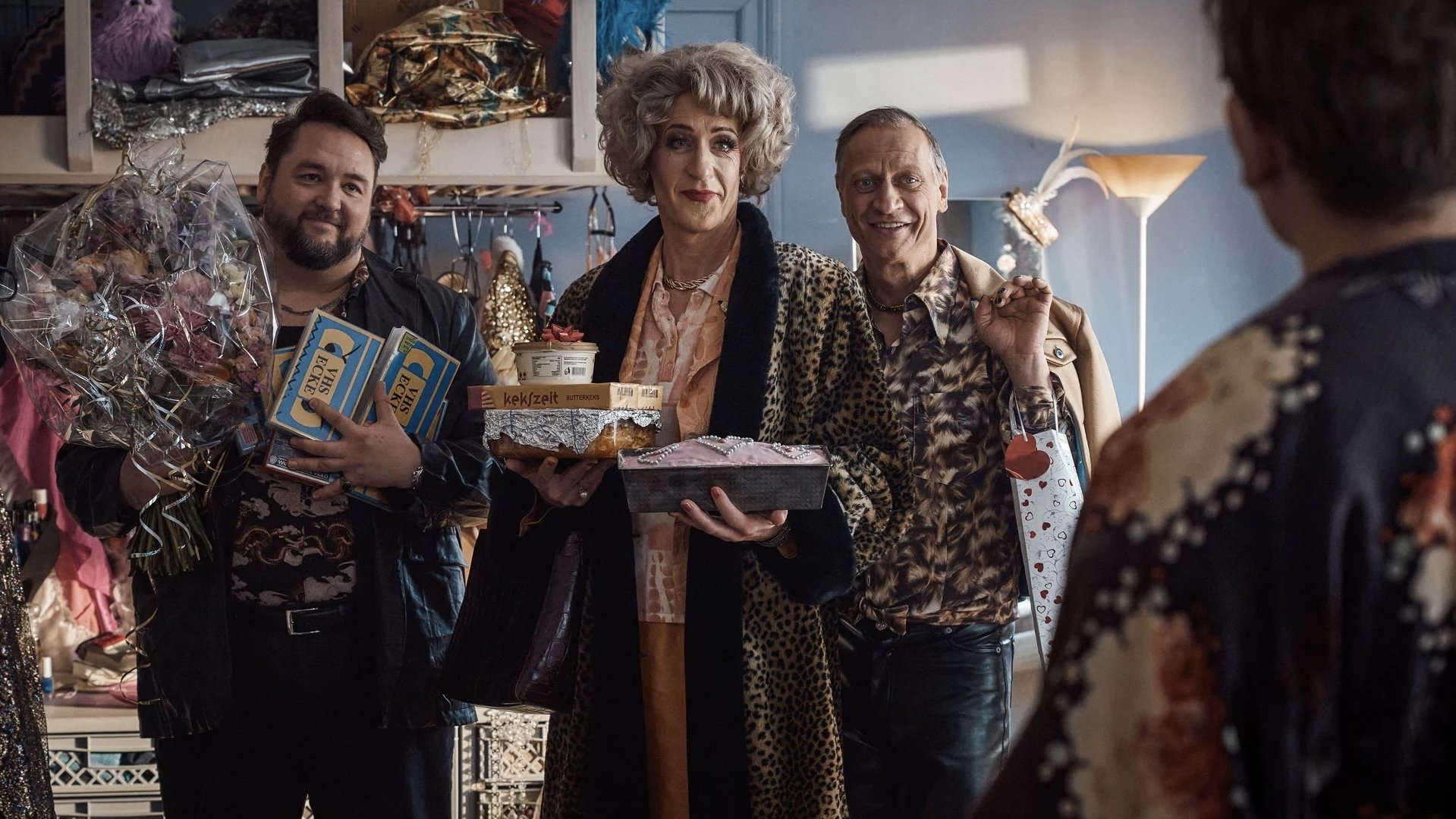
When Olivia premiered in September 2025, director Till Endemann gave audiences something that feels increasingly rare in contemporary cinema: a genuinely intimate portrait of transformation rooted in real history. This isn’t a sweeping biographical epic with grand gestures. It’s a 90-minute television film that takes its time exploring the emotional architecture between a mother and her son, using the true story of drag icon Olivia Jones as its spine.
The film centers on Evelin, stuck in 1970s and 80s Springe—a bourgeois Lower Saxony town where difference isn’t celebrated, it’s managed. Her son Oliver represents everything the town finds uncomfortable: a young man who doesn’t fit the mold, whose otherness becomes a source of shame and worry for his family, and eventually social pressure so suffocating he needs to escape. What makes Endemann’s approach distinctive is that he doesn’t romanticize either the escape or the staying behind. Both choices are complicated.
The Creative Collaboration
Johannes Hegemann carries the weight of this film in the role of Oliver/Olivia, and it’s a performance that requires genuine vulnerability alongside moments of defiant joy. Annette Frier, as Evelin, navigates something particularly delicate—playing a mother who loves her son but is trapped by the expectations of her time and place. There’s no easy redemption arc here, no tearful reconciliation in the third act. Frier communicates the internal conflict of someone who wants to protect her child while being unable to fully understand him. Angelina Häntsch rounds out the family dynamic, and together, the cast creates a real sense of domestic tension that never feels manufactured.
What Endemann understood about this material is that the drag icon Olivia Jones became isn’t the point of the story. Her success in Hamburg, her transformation into an entertainer and restaurateur, is almost secondary to the film’s real focus: how a person survives when their home environment can’t contain them.
Finding Authenticity in Restraint
Television movies sometimes get dismissed in critical circles, but Olivia is a reminder of what the format can do when handled with care. There’s no inflation of scale here. The 90 minutes runtime feels exactly right—long enough to develop relationships and emotional stakes, but short enough to maintain focus. Endemann doesn’t cut away from difficult moments. He lets scenes breathe. There are quiet dinners where the unsaid things hang heavier than dialogue ever could.
The period setting of the 1970s and 80s gives the film historical context without making it feel like a museum piece. This was a real era, with real attitudes toward sexuality and gender expression, and the film doesn’t soften that reality for contemporary audiences. Yet it also refuses to make it purely a period piece about how much better things have become. Oliver’s escape to the Kiez quarter of Hamburg is presented as necessary survival, not triumph.
Why This Story Matters Now
The reception of Olivia has been modest by mainstream standards—/10 from votes so far—which tells you something important about how cinema engages with intimate, character-driven stories about queer identity and family dysfunction. These films don’t generate the buzz of superhero spectacles or high-concept thrillers. They circulate differently, through word-of-mouth and film festivals, reaching audiences who are hungry for authenticity over affirmation.
What Olivia refuses to do is make anyone entirely villainous. Evelin isn’t a monster for struggling with her son’s identity. The small town isn’t evil for being conservative. The film understands that real pain often comes from people doing their best within systems that don’t allow for much flexibility. That’s a more complex and ultimately more useful story than simple villain narratives.
The Bigger Picture
In 2025, there’s something quietly radical about a German television film that takes the domestic consequences of homophobia seriously. It doesn’t position the story as inspiration porn or redemption narrative. Oliver becomes Olivia through her own resilience, humor, and refusal to disappear—not because she was somehow enlightened by tragedy or saved by a dramatic gesture. The film’s closing note is neither cynical nor saccharine. It’s honest.
The collaboration between Endemann and his cast created something that will likely endure beyond immediate reception numbers. This is the kind of film that finds its audience over time, that people return to when they need to feel seen in their own complicated family stories, or when they want to understand how survival and transformation are sometimes the same thing.