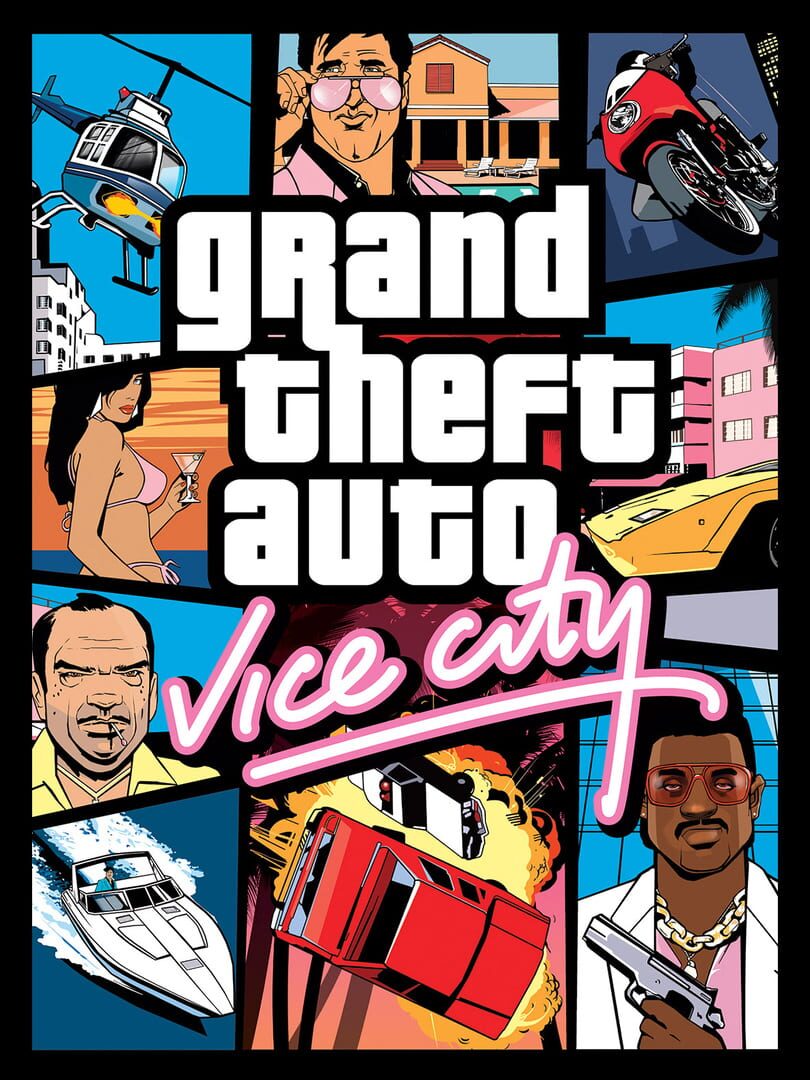
When Grand Theft Auto: Vice City launched on October 27, 2002, it didn’t just release a game—it handed players the keys to an entire era. Rockstar Games and Take-Two Interactive understood something fundamental about interactive storytelling: you don’t just tell players about the 1980s, you let them live in it. The result earned an /10 rating and spread across PlayStation 2, Xbox, PC, and Mac, becoming the standard-bearer for open-world ambition for an entire generation.
The genius of Vice City lies in how it treats setting as a character itself. The game drops you into Tommy Vercetti’s shoes—a ex-con with nothing but a plane ticket and borrowed clothes—and immediately establishes the stakes through a simple, brutal setup. You’ve been sent to Vice City by your old boss Sonny Forelli to conduct business, but within minutes, you’re betrayed, robbed, and left scrambling. It’s a narrative hook that works because it mirrors the player’s actual position: you’re dropped into an unfamiliar environment with minimal resources and maximum opportunity for chaos.
What made Vice City transcend its genre wasn’t just the story, though. It was the complete sensory experience Rockstar created:
- Eight radio stations with licensed tracks that weren’t just background noise—they were a curated journey through ’80s culture, comedy, and news
- Art direction that captured pastel neon excess without becoming parody
- NPC dialogue and ambient storytelling that made Vice City feel lived-in rather than constructed
- A soundtrack that fundamentally shaped how players remember the game two decades later
The gameplay itself is what connected all these elements. Vice City blended shooter mechanics, racing, and adventure seamlessly—you weren’t choosing between gameplay styles, you were using them fluidly depending on the mission or your whim. Need to shake a wanted level? Steal a car and lose the cops. Want to cause mayhem? Pick up a weapon and see what happens. The freedom was real, not illusory.
Mechanically, Vice City refined what Grand Theft Auto III started. The camera was more responsive, mission design was tighter, and the physics felt less janky. But more importantly, Rockstar understood that the ’80s setting could inform every design decision. Driving cars felt like piloting heavy steel boxes with loose steering—because that’s what ’80s cars actually drove like. The violence was exaggerated and darkly comic rather than realistic, which freed the game from having to apologize for what it was.
> The cultural conversation Vice City started was immediate and ongoing. It wasn’t just about whether video games could tell stories (we already knew that). It was about whether they could capture mood and atmosphere with the same sophistication as film or music.
The game arrived at a specific cultural moment. Post-9/11 anxiety was still fresh, and Vice City’s satirical take on American excess and criminality hit differently. The game didn’t lecture you about corruption and greed—it let you live as a character perpetuating those systems, then trusted players to form their own conclusions. That’s sophisticated game design.
Across all platforms, Vice City maintained its identity. The PC version ran well on modest hardware, the Mac port brought it to Apple users, and console versions delivered consistent experiences. This wasn’t a rushed multiplatform port where one version suffered; Rockstar ensured the game’s core design survived the transition to different systems.
The mechanics Vice City pioneered became the blueprint for open-world games for years:
- Radio stations as world-building – Other games copied this directly
- Mission variety within a cohesive narrative – Balancing player freedom with story progression
- Environmental storytelling – Details that told stories without cutscenes
- Satirical tone – Serious enough to be compelling, playful enough to not take itself too seriously
- Character progression through gameplay – Tommy changes because of what you do, not despite it
What’s remarkable is how Vice City has aged. Sure, the graphics are dated by modern standards, and the control scheme feels stiff if you’ve spent years with contemporary games. But the structural design—the mission flow, the pacing, the environmental density—holds up. A community forum post noted that Vice City “aged like fine wine,” and there’s truth to that. When a game is designed well, the systems support the experience even as the technical presentation dates.
The 2021 remaster in Grand Theft Auto: The Trilogy – The Definitive Edition proved the game still had legs. Despite the rocky launch and various technical issues with that release, people returned to Vice City because the game underneath remained compelling. That’s the mark of something genuinely well-made—even a mediocre remaster couldn’t kill what made the original resonate.
Vice City’s legacy is massive but sometimes underappreciated. It’s the game that proved Rockstar’s formula could scale beyond GTA III’s novelty. It showed that open-world games didn’t need to be serious or realistic to be meaningful. It demonstrated that atmosphere and setting could drive a game as much as mechanics. And it established that video games could tackle satire, crime narratives, and moral complexity without sacrificing fun.
Twenty years later, Vice City remains what it always was: a complete artistic vision that understood its own appeal and delivered on it without apology. That’s not something every game achieves, and it’s why it still matters.


