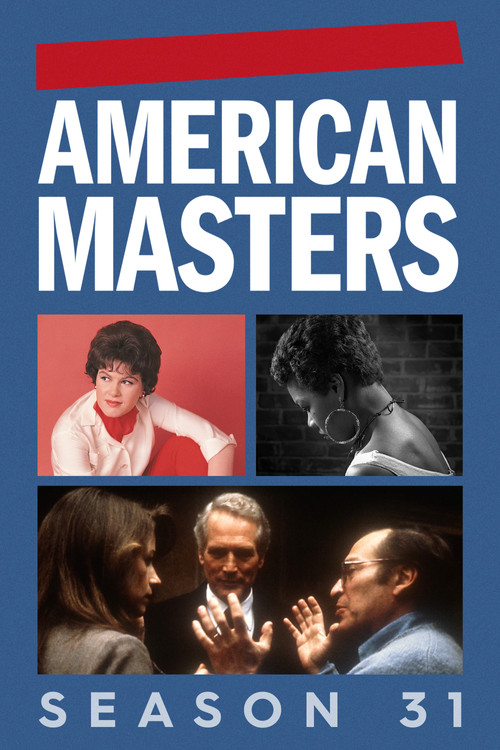
When Susan Lacy created American Masters back in 1986, she had something ambitious in mind: a documentary series that would elevate biographical storytelling on television. What she ended up building was nothing short of a cultural institution. Over four decades and 309 episodes, this PBS staple has become the gold standard for how we explore the lives and legacies of transformative American artists and thinkers. There’s something almost magical about how the show managed to stay relevant and vital across generations—no small feat in an era of rapidly changing media consumption.
The genius of American Masters lies in its fundamental approach. Rather than rushing through a subject’s life in a formulaic 45 minutes, Lacy gave herself and her filmmakers the breathing room of a 90-minute runtime. That decision proved crucial. Those extra minutes allowed for the kind of narrative complexity and emotional depth that transforms a biography from a simple chronology into something genuinely revelatory. You’re not just learning facts about Frank Lloyd Wright or Aretha Franklin; you’re inhabiting their worlds, understanding the contradictions that made them human, grappling with their flaws alongside their brilliance.
What makes the show stand out in the documentary landscape:
- Intimate access: The series developed a reputation for securing unprecedented interviews with subjects’ families, collaborators, and close friends
- Artistic scope: Rather than limiting itself to one medium, American Masters has explored architects, musicians, writers, filmmakers, and visual artists with equal sophistication
- Visual storytelling: Each episode became a carefully crafted visual essay, using archival material, photography, and cinematography to match the quality of its subjects
- Cultural democracy: The show treated a blues legend with the same reverence and runtime as a classical composer, challenging hierarchies about whose story “deserves” to be told
Looking at the ratings, that 7.5/10 might seem modest at first glance, but it actually tells you something important about the show’s character. This isn’t prestige television in the contemporary sense—it’s not gunning for viral moments or shocking twists. Instead, it’s earned its modest but solid standing through consistency, credibility, and the kind of quiet authority that builds devoted audiences rather than massive ones. The people who watch American Masters tend to become passionate advocates for it, turning individual episodes into events worth discussing.
The cultural footprint this series has left on American television cannot be overstated. Before American Masters, biographical documentaries often felt like secondary programming, something relegated to late-night slots or educational channels. Lacy’s vision helped legitimize the form, proving that documentary biography could be cinematic, intellectually rigorous, and deeply moving all at once. Networks took notice. The cascade of prestige documentaries that followed—many inspired by the template American Masters established—owes a genuine debt to this show’s success.
> “The show demonstrated that American audiences were hungry for substantive stories about their cultural icons—not gossip or scandal, but genuine exploration of artistic process and human complexity.”
What’s particularly fascinating is how the show evolved over its 40-season run without losing its core identity. The production values improved with technology, the archive of subjects grew more comprehensive, and the filmmaking approaches became more varied. Yet Lacy never abandoned the foundational principle: let the subject’s work and life speak for itself through careful, respectful storytelling. That consistency across 309 episodes—across decades of changing television tastes—demonstrates something rare in this medium: a show with actual vision that never compromised that vision for ratings or trends.
The creative achievement deserves deeper examination. Consider the practical challenges involved: securing rights to performances and artworks, coordinating interviews with elderly or reticent subjects, finding the visual language to represent internal artistic processes. A sculptor’s creative journey isn’t inherently cinematic in the way a film director’s might be. Yet American Masters found ways to make it so, developing a visual grammar that felt specific to each subject while maintaining stylistic coherence across the series.
The show’s enduring appeal comes down to several interconnected factors:
- Curation: Choosing which American masters deserved an episode mattered deeply; it meant making cultural judgments that sparked conversation
- Depth over breadth: Ninety minutes allowed for nuance that shorter formats couldn’t accommodate
- Historical documentation: The series created an invaluable archive of interviews and materials that might otherwise be lost
- Intellectual seriousness: The show never condescended to its audience, assuming viewers could handle complexity and ambiguity
- Accessibility: Despite its sophistication, it aired on PBS, reaching audiences across economic and educational lines
The fact that American Masters maintains its “Returning Series” status speaks to something important about contemporary television. In an age of cancellations and algorithmic programming, this show keeps coming back because there’s apparently an inexhaustible supply of American artists whose stories deserve telling—and audiences who want to hear them. That’s not just survival; that’s vindication of a particular vision about what television could be.
If you haven’t spent time with American Masters, it’s worth approaching it not as a box to check but as an invitation into conversations about art, ambition, failure, and legacy. That’s what Susan Lacy created: not just a series, but a framework for understanding ourselves through the lives of those who shaped our culture. And after forty seasons, that framework feels more necessary than ever.