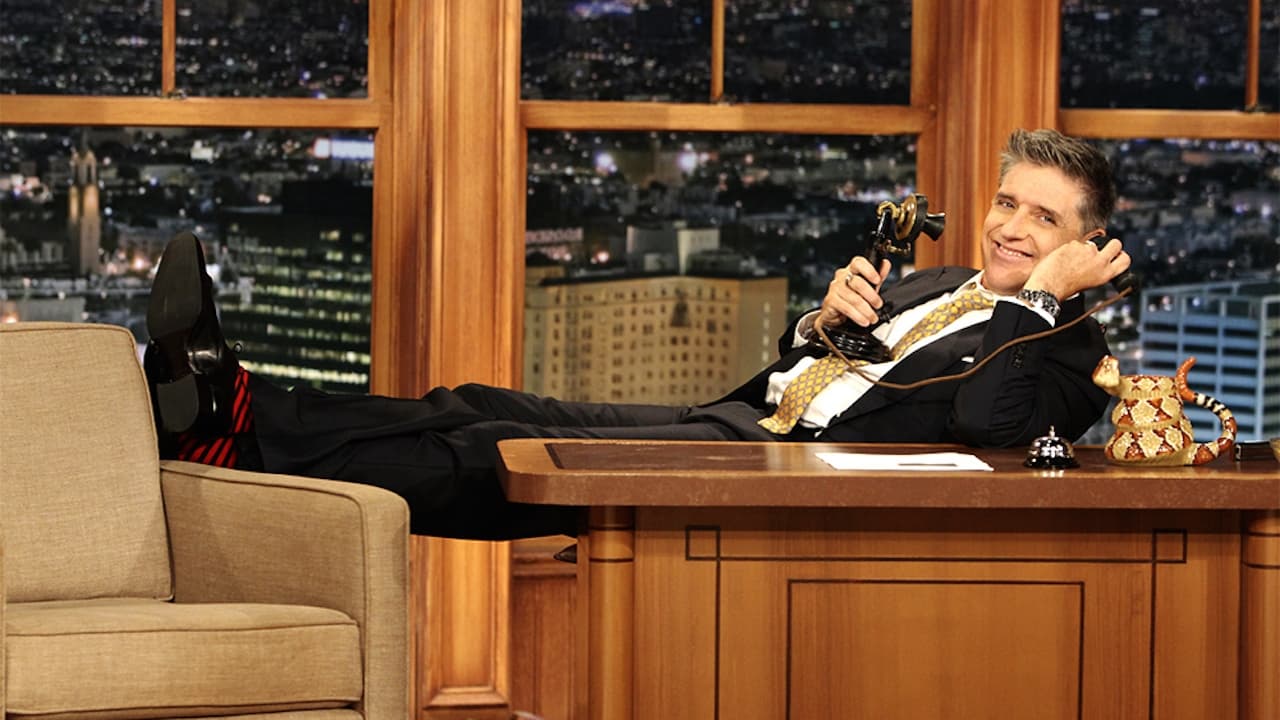
When The Late Late Show with Craig Ferguson debuted on January 3, 2005, late-night television didn’t know what was about to hit it. Craig Ferguson, a Scottish comedian with a gift for the absurd and a genuine warmth that cut through typical talk show artifice, inherited a struggling time slot that had been limping along since 1995. What happened next was a quiet revolution—one that wouldn’t necessarily show up in massive Nielsen ratings, but would leave an indelible mark on how we understand the late-night format itself. Over eleven seasons and 2057 episodes, Ferguson transformed what could have been a forgettable CBS property into something genuinely unique in American television.
The genius of Ferguson’s approach lay in his refusal to play it safe. Where most talk show hosts hid behind formulaic banter and safe celebrity interviews, Ferguson leaned into the inherent strangeness of the medium itself. He brought along Secretariat, an anthropomorphic horse puppet, and Geoff Peterson, a robot skeleton sidekick who became something far more than a prop—they were co-conspirators in Ferguson’s philosophical riffing about life, death, meaning, and absurdity. This wasn’t decoration; it was Ferguson’s actual worldview on display, filtered through surrealism and genuine curiosity.
> Ferguson achieved the highest ratings for The Late Late Show since its inception, proving that audiences were hungry for something different in late-night television.
The 60-minute format that networks provide for late-night programming typically forces hosts into a rigid structure: monologue, sketches, celebrity interviews, musical guest. Ferguson used that same template but subverted it completely. He’d spend fifteen minutes of a segment just talking—genuinely talking, not performing—with a guest about recovery from addiction, or his philosophy on happiness, or the nature of celebrity itself. These weren’t the kind of conversations that fit neatly into sound bites, yet audiences responded to their authenticity. The show’s 6.7/10 rating doesn’t capture the passionate, devoted audience that tuned in night after night for something that felt less like a television product and more like hanging out with a genuinely interesting person.
What made Ferguson’s approach revolutionary in retrospect was his implicit rejection of cynicism. Late-night television, particularly after the 1990s, had developed a certain weariness—a sense that everything was absurd and therefore everything was funny in a detached, ironic way. Ferguson certainly understood irony and absurdism, but his show was undergirded by something surprisingly earnest: a belief that conversations mattered, that vulnerability was strength, and that the format itself could be honest about its own strangeness.
The show’s cultural significance extended beyond ratings into how it influenced the broader landscape of talk television:
- Ferguson’s treatment of serious topics alongside comedy set a template that would influence hosts who came after him, particularly in terms of normalizing discussions about mental health and addiction in a late-night context
- The robot skeleton and horse weren’t gimmicks but rather a visual representation of Ferguson’s philosophy—that artifice and reality could coexist without one invalidating the other
- His Scottish accent and outsider perspective gave the show a genuinely different voice in an American landscape dominated by a particular type of talk show personality
- The show proved that you didn’t need massive ratings to build a devoted following that would support a show for over a decade
Over its eleven-season run, The Late Late Show accumulated 2057 episodes—a staggering number that speaks to Ferguson’s commitment and consistency. Not every episode was gold; consistent quality across that many hours of television is virtually impossible. The ratings fluctuated, peaking at 7.3 in season five before settling into a respectable middle ground. But that consistency also meant something: audiences knew what they were getting, and what they were getting was sincerity wrapped in weirdness, intelligence wrapped in comedy.
The later seasons of the show found Ferguson increasingly comfortable with the format, less concerned with proving anything and more interested in pure conversation and connection. He’d interview musicians like Tom Jones or Foo Fighters not to promote their latest album but because he genuinely wanted to understand how they thought about their craft. He’d talk to political figures and activists with curiosity rather than gotcha energy. This approach, which might sound quaint now, was genuinely countercultural in the context of contemporary late-night television.
What Ferguson understood, perhaps better than most talk show hosts, was that the late-night slot is inherently intimate:
- Late-night audiences are tuning in when they’re tired, vulnerable, and looking for something that feels real
- The format allows for genuine rambling and tangential conversation in ways daytime television doesn’t permit
- A host who’s willing to be awkward, uncertain, or emotionally open creates space for guests to do the same
- The artifice of the set and the manufactured nature of television become more interesting when acknowledged rather than hidden
When The Late Late Show with Craig Ferguson ended, it left behind something valuable: evidence that you could do something genuinely different in late-night television and find an audience for it. The show wasn’t perfect, and it never aspired to be; Ferguson would be the first to acknowledge its rougher moments. But it was authentic, it was curious, and it treated its audience with respect. In an era increasingly dominated by irony and performance, that actually matters more than ratings ever could.