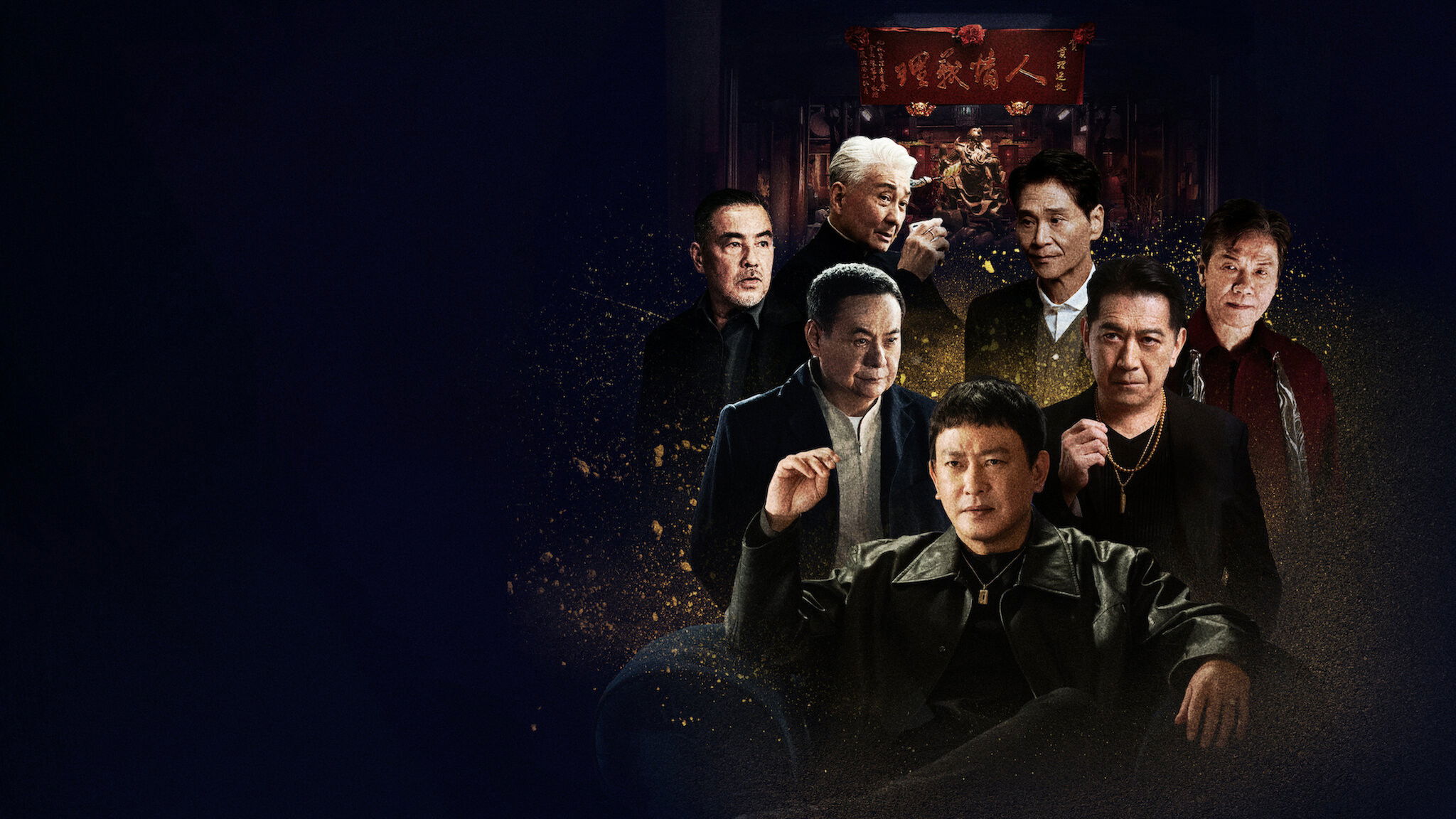
When Gatao: Big Brothers premiered in August 2025, it arrived as something of a cultural milestone—not just another entry in a long-running franchise, but a film that represented the continued vitality of Taiwanese gangster cinema at a moment when action filmmaking globally was becoming increasingly homogenized. Director Jui-Chih Chiang inherited a decade-spanning franchise that had already proven its staying power, and what he’s crafted here is a film that understands its own legacy while refusing to simply coast on it.
The fifth installment in the Gatao series carries the weight of that history, yet the film manages to feel urgent and contemporary. At its core, Gatao: Big Brothers tells a deceptively familiar story—a son attempting to navigate the violent underworld his father has destabilized—but in the hands of Chiang and his cast, it becomes something more layered. The film explores themes of generational conflict, the corrupting nature of power, and the question of whether you can control forces you’ve inherited rather than created. There’s a philosophical undercurrent here that elevates what could have been straightforward criminal melodrama into something more psychologically complex.
Jack Kao’s presence anchors the entire project. As the emotional and moral center, Kao brings a weariness to his performance that suggests a man watching systems collapse around him. Tsai Chen-Nan and Tai Bo complement this with their own distinctive energies, and the interplay between the three creates a triangle of ambition, loyalty, and desperation that drives the narrative forward. These aren’t characters merely playing roles in a crime saga—they’re fully realized figures navigating impossible circumstances, and the cast’s commitment to their complexity is evident in every scene.
> The real story here isn’t just about box office numbers or critical scores—it’s about a franchise that proved it could still matter.
What’s particularly notable about Gatao: Big Brothers is how it positions itself within the current landscape of action cinema. Released during a period when streaming platforms were cannibalizing theatrical releases and when traditional crime dramas were being reimagined through prestige television, this film stood its ground. The box office battle between Gatao: Big Brothers and the high-speed thriller 96 Minutes demonstrated something important about Taiwanese audiences: they still wanted visceral, theatrical crime narratives told with craft and conviction. Both films crossed the $6 million mark, no small feat in a competitive marketplace.
The film’s 6.5/10 rating from early voters tells an interesting story. It’s not the kind of score that screams “masterpiece,” yet it doesn’t suggest failure either. What it actually reflects is the challenge Chiang faced: how do you make a fifth film in a series feel necessary? How do you honor what came before while pushing forward? The middling reception suggests the film divided viewers—some responding to its thematic ambitions, others perhaps wanting something more straightforward or visceral. This tension between artistic aspiration and genre expectation is actually far more interesting than universal praise would be.
What makes Chiang’s direction memorable:
- An unflinching willingness to let consequences matter—this isn’t a film that rewards its characters with easy outs
- Visual compositions that emphasize confinement and moral claustrophobia, particularly in scenes of negotiation and territorial dispute
- A pacing that favors tension over spectacle, even during action sequences
- Attention to the mundane brutality of criminal life—paperwork, phone calls, and power lunches matter as much as gunfights
From a cultural impact perspective, Gatao: Big Brothers represents something worth celebrating about contemporary Taiwanese cinema. The franchise itself has now spanned a full decade, and rather than becoming stale, it continues to attract serious filmmakers and accomplished actors willing to engage with its themes. That’s a remarkable achievement in an era when most action franchises either jump to blockbuster excess or fade into irrelevance.
The legacy of this film will likely hinge on how future installments (should they come) build upon it. Chiang has set a particular tone here—serious, psychologically engaged, uncomfortable with easy answers. If the franchise continues, it now has a template for remaining artistically vital. If Gatao: Big Brothers proves to be the final entry, it stands as a respectable capstone, a film that acknowledged its moment in history and tried to say something true about power, family, and the choices we inherit versus the ones we make.
What ultimately matters about Gatao: Big Brothers isn’t that it revolutionized crime cinema or that it became a critical darling. What matters is that it proved Taiwanese filmmakers could still make distinctly local stories with international production values, that audiences would still show up for character-driven crime narratives, and that a tenth-year franchise entry could pursue artistic credibility without cynicism. In a film landscape increasingly dominated by algorithmic suggestions and proven IP formulas, that feels genuinely worth celebrating.


![Trailer [Subtitled]](https://img.youtube.com/vi/jJEkjoF18xE/maxresdefault.jpg)