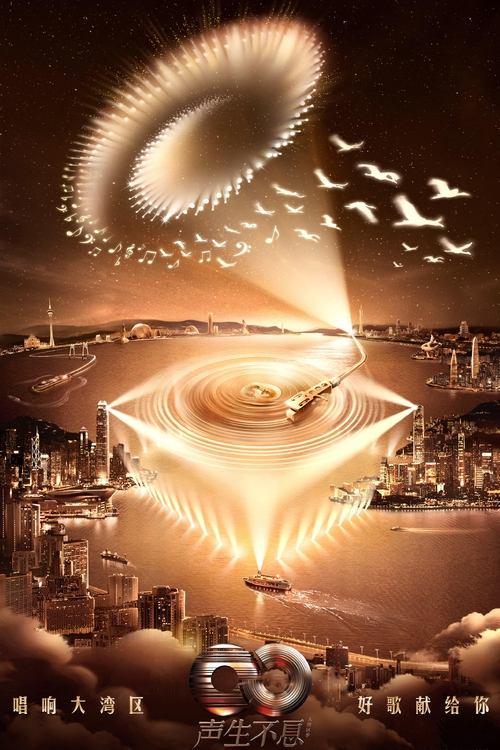
When Infinity and Beyond premiered on April 24, 2022, it arrived with a deceptively simple premise that would prove remarkably ambitious: take the rich tapestry of Chinese music across different eras and transform it into a celebration through competitive performances. What could’ve been a straightforward nostalgia project instead became something far more meaningful—a genuine cultural excavation that demonstrated television’s unique power to bridge generations and preserve artistic heritage.
The show’s genius lies in its commitment to specificity. Rather than retreating into generic “greatest hits” territory, Infinity and Beyond grounded itself deeply in regional musical traditions. The early episodes, particularly those exploring Hong Kong music and iconic themes like “My Pride” and “My Happy Youth,” established the show’s central thesis: that our musical memories are inseparable from where we come from and who we are. This wasn’t just entertainment; it was cultural archaeology disguised as competition.
What makes this series remarkable is how it sustained this concept across five full seasons and 65 episodes. That’s no small feat for a reality competition format. Most shows of this type burn bright and fast, relying on novelty to carry them through. Infinity and Beyond instead deepened its focus with each season, expanding the scope of eras and regions it explored while maintaining the intimate connection between performers and audience that made the early episodes so compelling. The show understood that there was an inexhaustible well of material to draw from—centuries of musical evolution across vast territories—and it approached that well with genuine reverence.
> The show’s 6.7/10 rating tells an interesting story. It’s not a critical darling in the traditional sense, yet the fact that it returned for multiple seasons speaks volumes about its dedicated following and the networks’ faith in its cultural mission.
The format itself deserves examination. By eliminating traditional episode runtime constraints and allowing episodes to breathe—typically running around two and a half hours—the creators gave themselves permission to tell complete stories. This wasn’t truncated performance clips edited down for mainstream consumption; these were full explorations of songs, their histories, their artists, and their continuing relevance. That structural choice fundamentally shaped how the show could operate and what it could achieve emotionally.
What’s particularly striking is how Infinity and Beyond navigated being a collaborative project across three major networks: TVB Jade, Hunan Television, and Mango TV. This cross-border production arrangement meant the show existed at the intersection of different broadcasting traditions and audience expectations. Rather than diluting the concept, this diversity enriched it, allowing the series to draw on varied resources and reach audiences across multiple markets who might recognize themselves in different episodes.
The show’s journey from debut to its current status as a returning series represents something increasingly rare in reality television: sustained cultural commentary. It sparked genuine conversations about musical heritage, generational identity, and what we choose to preserve and celebrate. Certain episodes became touchstones—moments when audiences collectively recognized something precious being honored on screen. The show created space for that recognition to happen at length, without the usual commercial pressures to rush to the next moment.
Key elements that elevated the series:
- The integration of competition with education—viewers learned about musical history while being entertained
- A reverent rather than kitsch approach to nostalgia, treating older music with genuine artistic respect
- Multi-network collaboration that expanded reach without compromising artistic vision
- Extended runtime that allowed for depth rather than quick cuts and sound bites
- Regional specificity that made the series feel locally grounded while maintaining universal appeal
The creative achievement here is subtle but profound. The unknown creators understood something fundamental: that people hunger for meaningful engagement with cultural memory, and that television could be the medium through which that hunger is satisfied. They didn’t try to reinvent reality television so much as they redirected its energy toward something more substantive.
Looking at the 65 episodes spread across five seasons, what emerges is a portrait of a production that evolved thoughtfully. The creators resisted the urge to rest on initial success, instead deepening their exploration with each iteration. That’s why the show has maintained its returning series status—because audiences understood that there remained more to discover, more eras to celebrate, more connections to make between past and present.
Infinity and Beyond ultimately succeeded because it answered a question many viewers didn’t know they were asking: what if television could be a vessel for cultural preservation? Not in a dusty, museum-like way, but as a living, breathing celebration of artistry that mattered to real people’s lives. In doing so, it carved out its own space in the television landscape—not as a ratings juggernaut, but as something more enduring: a show that recognized its own cultural responsibility and met it with authenticity and care.