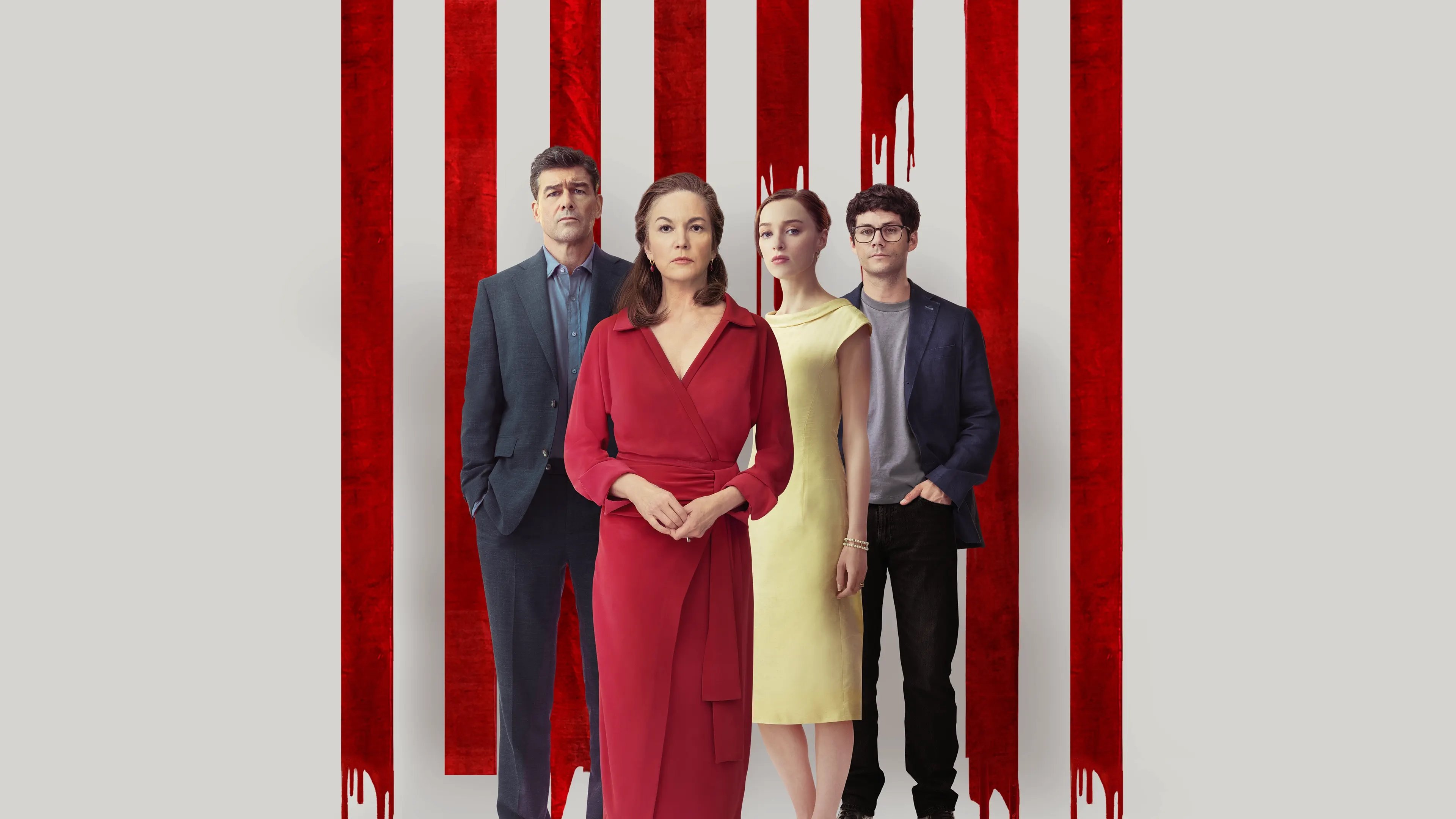
When a film arrives with a premise this sharp, you know you’re in for something that doesn’t let go easily. Anniversary came out in October 2025 as a reminder that the best thrillers don’t need elaborate set pieces or plot twists that strain credibility—they just need the right pressure points between people who thought they understood each other. Director Jan Komasa took what could have been a simple premise about a family gathering and turned it into something that lingers because it asks uncomfortable questions about power, memory, and how quickly intimacy can become a weapon.
The setup is deceptively simple: Ellen and Paul are celebrating 25 years of marriage when their son brings home his new girlfriend, Liz. Here’s where it gets interesting—Liz isn’t a stranger. She’s Ellen’s former student, someone Ellen publicly called out in class years ago for her “radical ideology.” Now she’s back, and suddenly that anniversary party becomes something else entirely. The film earned a 6.7/10 rating from 69 votes, which tells you audiences responded to something genuine here, even if not everyone was entirely convinced.
What makes Komasa’s direction particularly effective is his understanding that the real tension in this story isn’t about plot mechanics. It’s about the gap between how we see ourselves and how others experience us. Ellen probably remembers that classroom moment as nothing—correcting a student, doing her job. Liz has been carrying it as a defining wound for years. That asymmetry is where everything breaks down. At 111 minutes minutes, the film never feels padded because every moment counts toward building that pressure.
Diane Lane anchors the film with the kind of performance that doesn’t announce itself loudly but accumulates weight as you watch. She plays Ellen as someone who’s invested in being the reasonable one, the adult in the room, which makes her gradual unraveling all the more unsettling. You see her trying to maintain control—of the narrative, of the situation, of her own version of events—and watch it slip away in small moments. Kyle Chandler as Paul exists in the space between his wife and the younger generation, and that’s where his character finds his tragic dimension. He’s aware enough to see what’s happening but not equipped to stop it. Madeline Brewer as Liz carries the film’s most dangerous energy—the quiet certainty of someone who has nothing left to lose.
What’s particularly smart about this collaboration is that the film resists making any of these characters simply right or wrong. This isn’t Fatal Attraction or a straightforward “psycho girlfriend” thriller. Komasa and his cast treat all three characters as people with legitimate grievances and blind spots. Ellen did something that had an impact on Liz, but that doesn’t make her a villain. Liz was hurt, and that’s real, but her response isn’t presented as pure justice either. Paul just wants everyone to get along, which is both understandable and fundamentally inadequate.
The production itself—pulled together by Lionsgate, Fifth Season, Nick Wechsler Productions, and the other partner studios—managed to create something intimate and claustrophobic despite being a drama-thriller. There’s no wasted money here on spectacle. Everything goes toward performances and the slow architectural work of building tension through conversation and subtext.
> The film’s central insight is devastating in its simplicity: we’re all the protagonist of our own stories, and those stories don’t always align with how others experienced us.
In terms of cultural resonance, Anniversary lands in a moment when audiences have grown tired of easy villainy. We’ve seen enough thrillers that reduce complex human failures to binary moral categories. This film asks something harder of viewers: recognize yourself in Ellen’s self-justification, understand Liz’s anger, feel Paul’s helplessness. That’s more uncomfortable than a jump scare or a plot twist, and it’s why the film has stuck with people.
The film also taps into something specific about academic spaces and power dynamics that feels increasingly relevant. Teachers have authority in a way that doesn’t disappear just because students graduate. Ellen wasn’t physically threatening Liz, but her position allowed her to shape how others saw her, and that echo continues. Komasa doesn’t make this a polemic—he just shows how these dynamics play out in private, between people, where the real damage happens.
What you remember after watching Anniversary isn’t a shocking reveal or a clever plot turn. It’s the image of a 25-year marriage fracturing not because of infidelity or betrayal in the traditional sense, but because of something that happened years ago that one person has spent all that time thinking about while the other forgot it almost immediately. There’s something deeply true in that asymmetry, and the film’s refusal to offer easy resolution feels honest rather than unsatisfying.
Komasa has made a film that trusts its audience to sit with complicated feelings. In a year with plenty of noise at the box office, Anniversary is the kind of film that finds its audience not through spectacle but through recognition. It’s a reminder that the best thrillers don’t always involve danger in the traditional sense. Sometimes the real danger is already inside the room, built into the foundations of the relationships we take for granted.