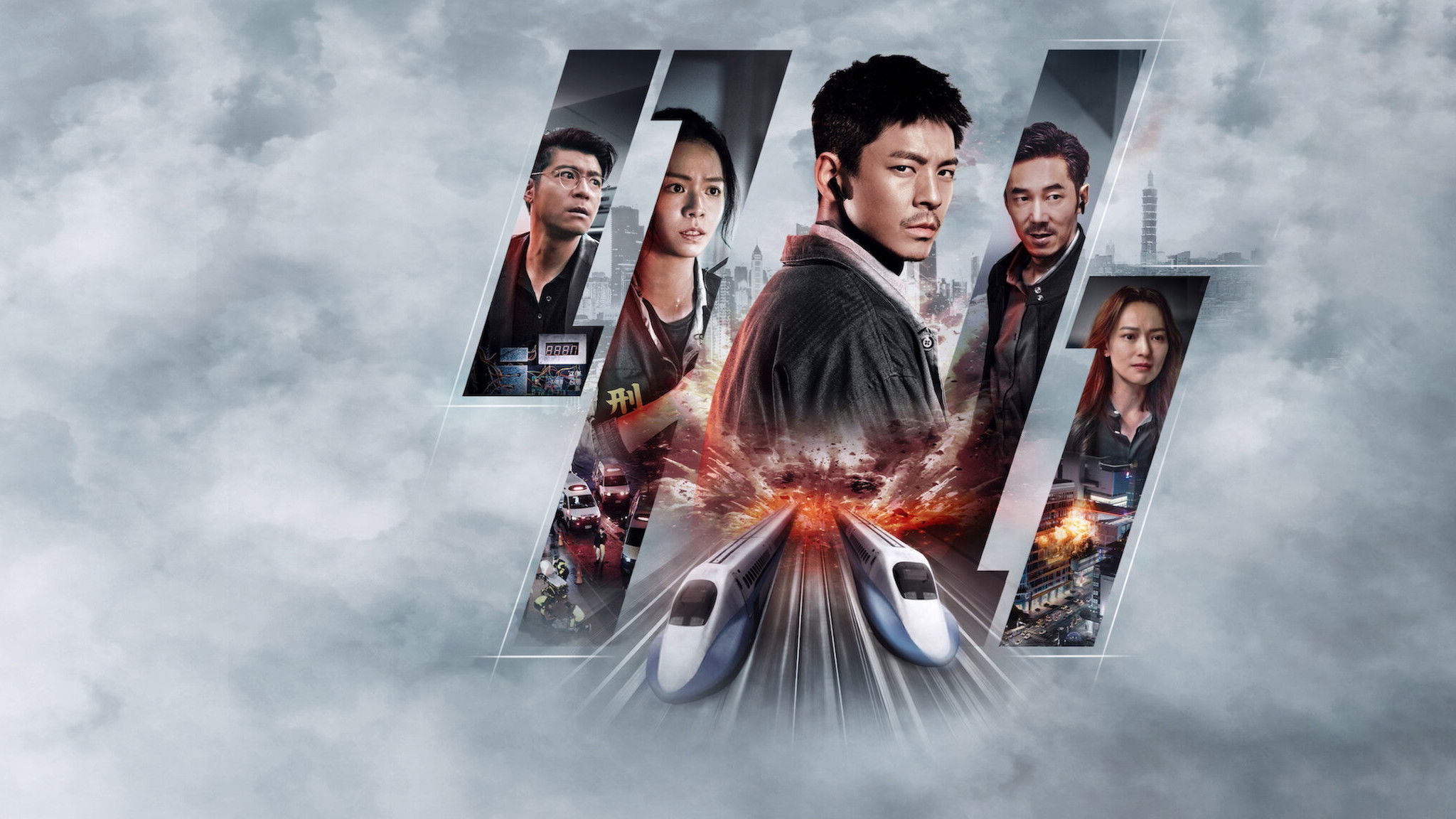
When 96 Minutes premiered on September 5, 2025, Taiwan’s film industry got exactly what it needed—a high-stakes thriller that proved local cinema could compete on an international stage. Director Tzu-Hsuan Hung took a premise that could’ve been a generic disaster flick and turned it into something that actually grabs you: a bomb on a high-speed train with real people who have real problems beyond just survival.
The setup is deceptively simple. Song Kang-Ren, a former bomb disposal expert played by Austin Lin, boards a train with his fiancée Huang Xin (Vivian Sung). But he’s not alone in his crisis—Liu Kai (Edison Wang), a physics teacher caught in an affair scandal, is also on the same train, desperate to win back his wife Ting Juan who left him on an earlier train. When a bomb threat emerges, these parallel emotional narratives suddenly converge with the ticking clock of a 117 minutes-minute runtime that feels far more tense than the numbers suggest.
What makes this work is that Hung refuses to let the action consume the human element. Too many thrillers treat character development as filler between set pieces. Here, the emotional stakes feel genuine. Lin brings a weariness to Kang-Ren—he’s someone who’s seen too much, and the irony of his past expertise becoming relevant again actually matters. Sung plays Xin with real vulnerability, not as a damsel to rescue but as someone with her own internal conflict about this marriage. Wang’s Liu Kai could’ve been a one-note side character, but the film uses him to ask harder questions about redemption and whether love can fix what we’ve broken.
The box office response told a significant story. 96 Minutes became Taiwan’s biggest local film of 2025, earning and proving that audiences in the region were hungry for this kind of film. That’s not a small thing. It means the industry understood what worked and what didn’t—audiences connected with the blend of action and genuine character conflict rather than empty spectacle.
> The film’s critical reception sits at 6.4/10 from 21 votes, which tells an interesting story. It’s not a critically beloved masterpiece, but it’s not a disaster either. What that score really reflects is a film that divides viewers—some loved the emotional complexity, others wanted more pure action.
The technical side is where you see Hung’s control over the material. Keeping most of the action confined to a train could’ve been claustrophobic in the worst way. Instead, it’s claustrophobic in exactly the right way—there’s nowhere to run, nowhere to hide, and that physical constraint mirrors the emotional traps these characters have built for themselves. The pacing doesn’t waste time, which matters when you’re working with a runtime this lean. There’s no bloat, no scenes that exist just to fill time.
What’s interesting about 96 Minutes in the context of 2025 cinema is that it arrived in a landscape where action films were either trying to be blockbuster spectacle or prestige drama. Hung’s film sits in that uncomfortable middle space where it’s asking to be both at once, and it mostly succeeds. It’s not trying to reinvent the thriller—it knows what it is. But it executes the familiar formula with enough intelligence and emotional weight that it feels fresher than it probably should.
The chemistry between Lin and Sung is particularly worth noting because their relationship is the emotional core everything else hinges on. When the bomb threat emerges, we’re not just watching them try to survive—we’re watching them figure out what they want from each other. That’s character work that elevates action beats from “cool” to “meaningful.”
Looking at the broader impact, 96 Minutes proved something important about regional filmmaking in 2025. It didn’t need Hollywood stars or a massive international budget. It needed a clear vision, solid craftsmanship, and characters worth caring about. WOWING Entertainment Group backed a film that trusted its audience to stay engaged during conversations as much as during crisis moments. That’s a bet that paid off commercially and narratively.
The film’s legacy is still being written, but what it represents matters: a reminder that action cinema doesn’t have to choose between thrills and humanity. It can be both. Austin Lin, Vivian Sung, and Edison Wang committed to characters who felt real in a scenario that was increasingly unreal, and that tension between the grounded and the heightened is what makes the film stick with you. Tzu-Hsuan Hung directed a film that moved, that accelerated your heart rate, and that also made you think about whether some bonds can actually survive what breaks them. In a crowded marketplace, that’s its own kind of bomb—the kind that actually detonates exactly when you want it to.