When Merrily We Roll Along premiered in December 2025, it arrived at a peculiar moment in cinema—a moment when the line between theater and film had become increasingly blurred, and audiences were hungry for something that felt both intimate and grand. Maria Friedman’s decision to translate Stephen Sondheim’s beloved musical directly to screen wasn’t just another adaptation; it was a love letter to a show that had already proven its magic on Broadway, now asking a deceptively simple question: can lightning strike twice?
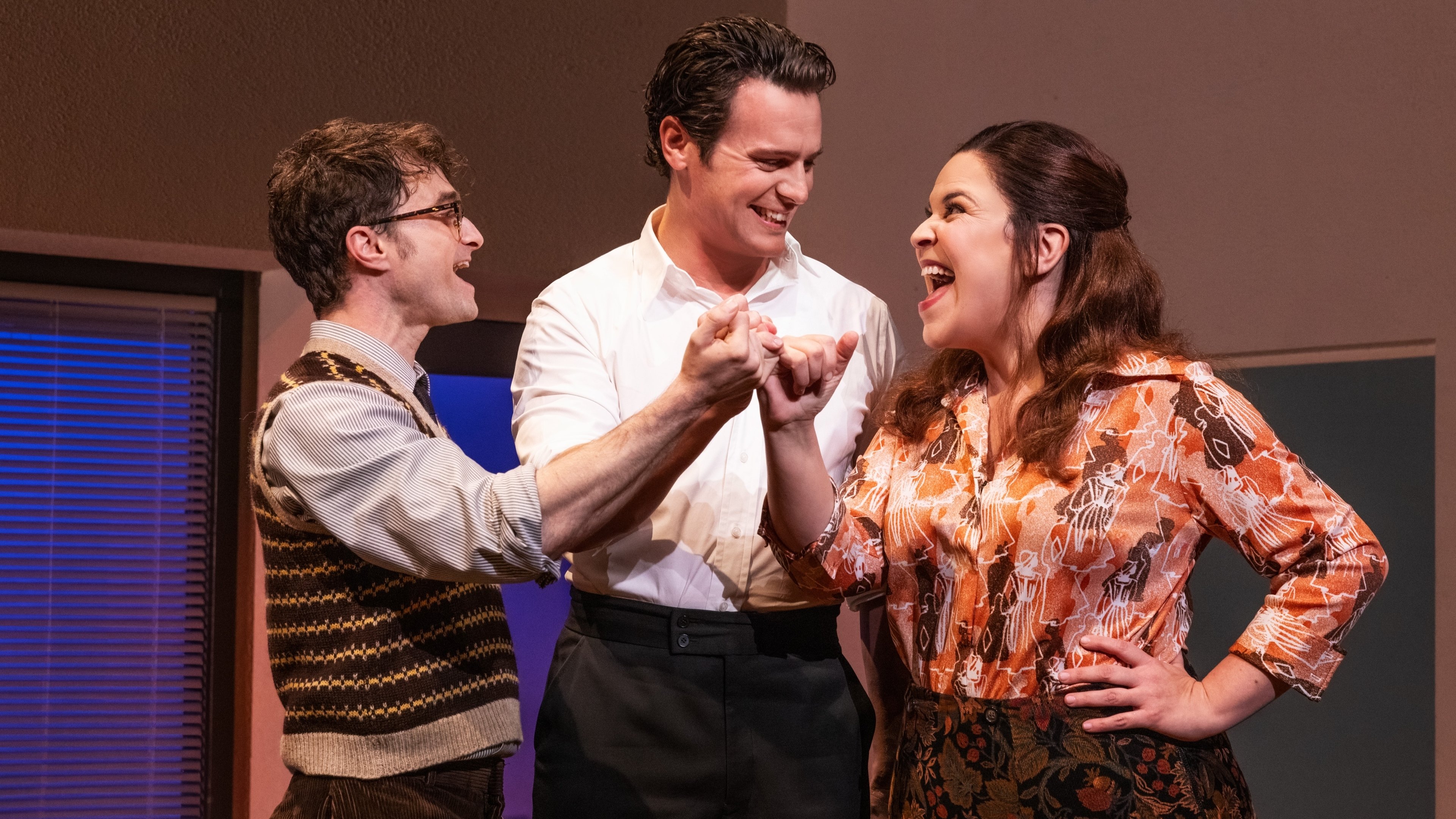
The answer, it turned out, was yes—though perhaps not in the way anyone expected. With Jonathan Groff, Lindsay Mendez, and Daniel Radcliffe anchoring the cast, Friedman assembled a dream team of performers who understood that this wasn’t about recreating a stage production but about discovering what these characters could become when freed from the constraints of a theater’s fourth wall. At 2 hours and 25 minutes, the film moves with an elegant rhythm, never feeling rushed despite the ambitious scope of Sondheim’s storytelling.
The financial trajectory of the film tells an interesting story about the current state of specialized cinema. Opening with just over $1.3 million in its debut weekend as a limited release, Merrily We Roll Along ultimately grossed approximately $2.6 million domestically. Without knowing the production budget, it’s difficult to declare absolute box office victory, but what matters more is what these numbers reveal: there’s still an audience for theatrical musicals on film, and they’ll seek them out even in an era of streaming saturation. The film found its people—those who either loved the original Broadway production or who were drawn to the pedigree of Sondheim’s work and the caliber of the cast.
> “Hey, old friend? How do we stay old friends?”
This tagline captures the emotional core of both the musical and Friedman’s film adaptation. It’s a question that resonates far beyond the narrative of three friends watching their relationship evolve across decades.
What makes Merrily We Roll Along significant in the broader context of contemporary cinema is how it demonstrates that filmed musicals don’t need massive tentpole budgets or mainstream appeal to matter artistically. The critical reception—an 8.0/10 rating—reflects something that’s becoming increasingly clear: audiences and critics alike are valuing authenticity and artistic integrity over spectacle for spectacle’s sake. In this landscape, a film that trusts its performers, its composer’s genius, and its material to speak for itself becomes genuinely countercultural.
The Creative Vision Behind the Film
Maria Friedman didn’t direct this film in the traditional sense of adapting existing material; she curated an experience. Having directed the original Broadway production herself, Friedman brought a unique advantage—she understood not just what worked on stage, but what could be liberated through cinema. Her approach appears to have been one of deliberate intimacy, using the camera to capture micro-expressions and emotional nuances that even the best theatrical staging can only approximate.
The casting choices deserve particular attention. Jonathan Groff, fresh from his transformative work in television and theater, carries the weight of Franklin Shepard with a complexity that suggests both the character’s ambition and his fundamental loneliness. Lindsay Mendez, as Mary Flynn, brings vulnerability and sharp wit in equal measure—she’s the moral compass of the piece, but never sanctimonious. And Daniel Radcliffe, in a role that allows him to showcase his theatrical background, provides the film with an anchor of emotional honesty that prevents the narrative from ever becoming cynical about its characters’ failures.
What Distinguishes This Film
Several elements elevate Merrily We Roll Along beyond being merely a competent stage-to-screen transfer:
-
The Sondheim Factor: Even for those familiar with the original musical, experiencing these songs through cinema feels revelatory. The score—deliberately non-traditional, with lyrics that prize intelligence over sentimentality—finds new resonance in close-ups and montage sequences.
-
Structural Daring: The musical’s central conceit of moving backward through time, from 1980 to 1955, remains narratively complex and emotionally devastating. Friedman’s direction honors this structure while making it cinematically fluid rather than theatrical.
-
Emotional Specificity: This isn’t a film interested in broad comedy or easy catharsis. It’s interested in the small betrayals and compromises that accumulate over a lifetime, making it surprisingly difficult to watch yet impossible to look away from.
The ensemble work surrounding the three leads creates a rich tapestry. The supporting cast—though less widely discussed—provides essential context and mirror images of what these characters might have become with different choices. This web of relationships enriches the film’s meditation on friendship, success, and the cost of ambition.
Legacy and Cultural Resonance
What’s remarkable about Merrily We Roll Along entering cinema now is its continued relevance. The musical was written in 1981, addressing anxieties about artistic compromise and the pressure to succeed commercially. Nearly 45 years later, those concerns haven’t diminished; if anything, they’ve intensified in an era of algorithm-driven entertainment and the constant pressure to monetize creative work. The film’s exploration of how artists navigate between integrity and commercial success feels urgently contemporary.
The involvement of multiple production companies—RadicalMedia, Sonia Friedman Productions, and others, including the Stephen Sondheim Trust—suggests a genuine collaborative effort to honor the material while bringing it to a new medium. This careful stewardship matters. It’s the difference between an adaptation made for market share and one made because people genuinely believed this story needed to be told again, in this way, for this moment.
As theatrical film musicals continue to prove their viability, Merrily We Roll Along will likely be remembered as a turning point—the film that demonstrated that you don’t need $200 million to create something meaningful and artistically substantial. Sometimes all you need is great material, brilliant performers, and a director patient enough to let the work speak for itself.