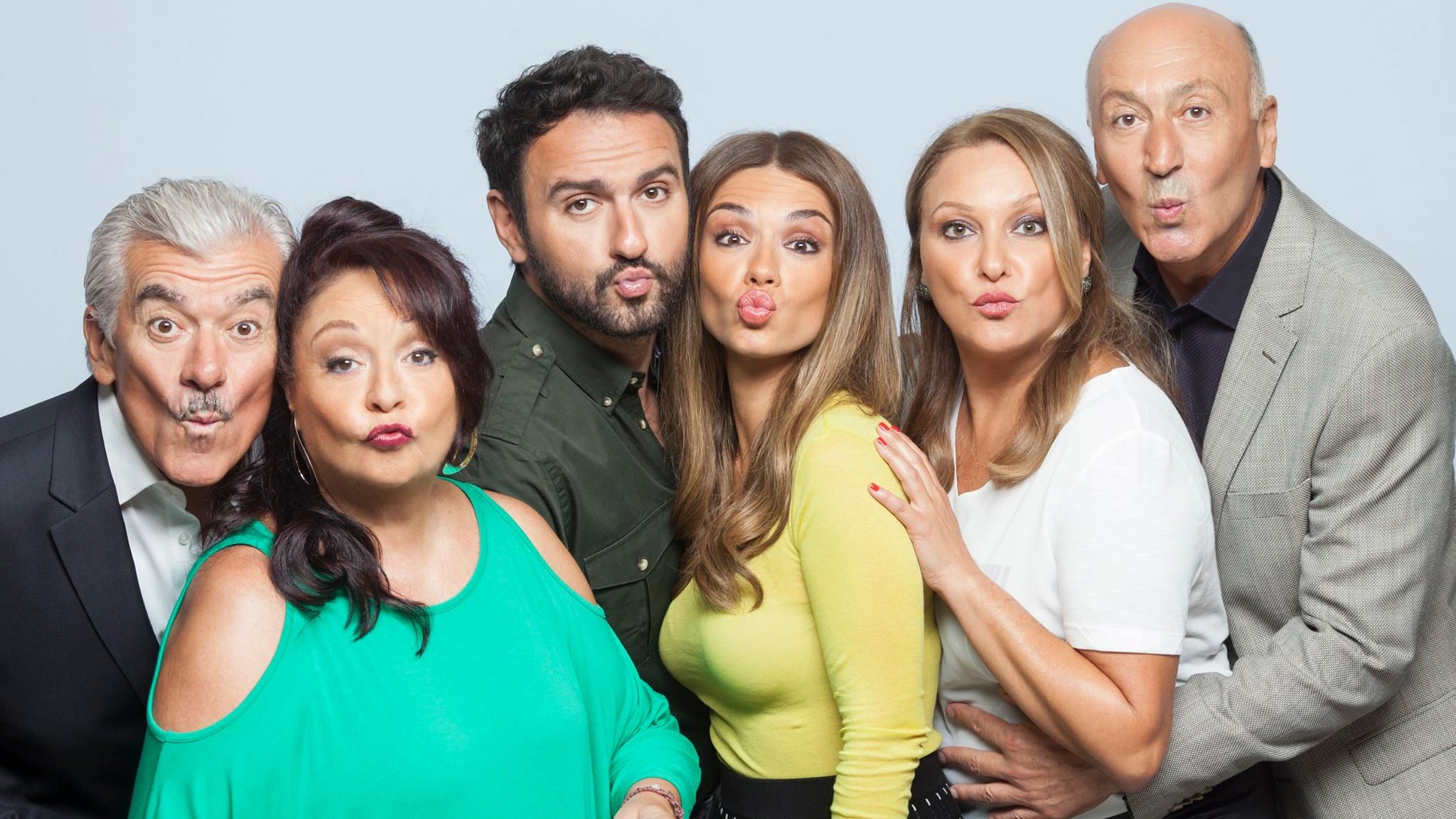
When To Soi Sou premiered on Alpha TV back in October 2014, it arrived as something refreshingly unpretentious—a comedy series about a happily married couple navigating the weekly ritual of visiting relatives. On paper, that sounds deceptively simple, maybe even quaint. But creator Constantine Ganosis recognized something fundamental about human storytelling: the best comedy often emerges from the spaces where love and obligation collide, where family bonds are both the source of our greatest joys and most exasperating frustrations.
What makes To Soi Sou stand out in the crowded landscape of television comedy is its commitment to grounded, character-driven humor. Rather than chasing laugh-track moments or relying on absurdist premises, Ganosis crafted a show that understood the universal experience of managing family relationships. The premise—Savvas and Lydia visiting relatives every Sunday, leading to comedic situations and misunderstandings—became a perfect vessel for exploring authentic human dynamics. The 35-minute runtime was crucial here; it was generous enough to develop genuine emotional stakes, yet disciplined enough to maintain brisk comedic pacing.
Over its impressive run of six seasons and 311 episodes, the show built something increasingly rare: a comedy that balanced consistent humor with actual character growth and relatable storytelling. The 7.8/10 rating on IMDb tells part of the story, but what’s more telling is the type of engagement the show generated. Viewers didn’t just watch To Soi Sou—they discussed it, they related to it, they found themselves reflected in its narrative mirrors. One user review captured this beautifully, noting that despite being a teenager, they found themselves genuinely invested in the show’s smart dialogue and meaningful lessons woven throughout.
> The show’s real genius was understanding that family comedy doesn’t need to punch down or rely on cringe humor—it can be genuinely intelligent while remaining accessible to all ages.
What propelled To Soi Sou through such an extended run was its cultural footprint in the Greek television landscape and beyond. Adapted from the American series Your Family or Mine, Ganosis took the premise and infused it with distinctly Greek sensibilities—the warmth, the chaos, the particular weight of family obligation mixed with deep affection. This localization became its strength rather than a limitation.
The show sparked conversations about several thematic elements that resonated across demographics:
- Family dynamics and compromise – how couples navigate extended family relationships without losing their individual identities
- Generational differences – the recurring tensions between Savvas and Lydia’s approach and their relatives’ expectations
- Authenticity in comedy – proving that you don’t need outlandish scenarios to make audiences laugh
- Marital resilience – showing a couple that genuinely likes each other while still facing realistic challenges
The episodes became more sophisticated as the series progressed, with storylines developing depth that initially seemed impossible given the premise. When Alexandra and Menelaos navigated significant life announcements—moments that could have been treated as throwaway plot devices—the show demonstrated its capacity for genuine emotional storytelling. These weren’t just punchlines; they were inflection points that reminded viewers why these characters mattered.
What’s particularly notable is how To Soi Sou managed its longevity. With 311 episodes across six seasons, the show faced the perennial challenge of repetition—how many variations on “visiting relatives” can you really explore? Yet the consistency of quality and the show’s willingness to let its characters evolve kept audiences invested. It wasn’t resting on comedic formulas; it was genuinely developing these people and their relationships.
Constantine Ganosis demonstrated a nuanced understanding of comedic rhythm and dramatic structure. The 35-minute format became a signature—long enough for real storytelling but short enough that every scene earned its place. There’s no filler in To Soi Sou; every moment, whether comedic or touching, serves the broader narrative and character development.
The show’s cultural impact extended beyond simple entertainment metrics. It contributed to a broader conversation about what television comedy could be in an era increasingly dominated by either high-concept premises or cynical humor. To Soi Sou proved that audiences hungered for smart, warm comedy rooted in authentic human experience. It showed that you could make people laugh while also occasionally making them think, all without sacrificing either element.
The return status as a continuing series speaks to something equally important: the show still has stories worth telling. After a hiatus, the creative team recognized that these characters and this world retained value and relevance. In an industry that often abandons shows prematurely or oversays its welcome, To Soi Sou appears to have found a sustainable equilibrium—returning when it has something meaningful to contribute rather than simply extending itself indefinitely.
For anyone looking for quality television that respects its audience’s intelligence while delivering genuine laughs and heart, To Soi Sou remains a masterclass in character-driven comedy. It’s the kind of show that reminds us why we fell in love with television in the first place.