
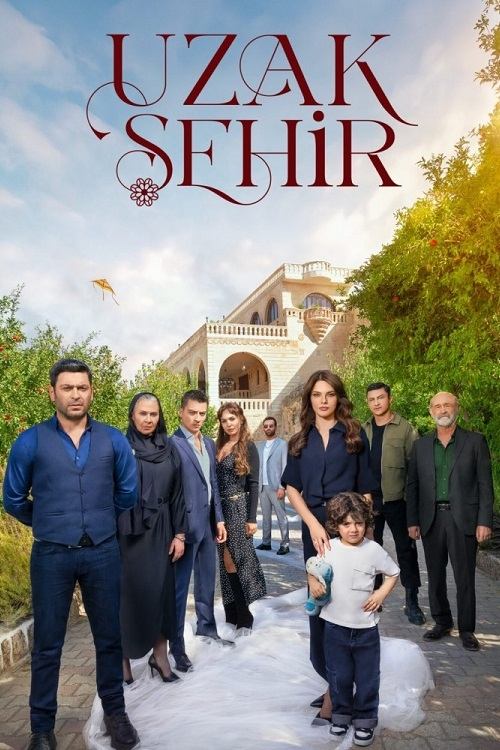
When Far Away debuted on November 11th, 2024, it arrived at a moment when audiences were craving something that could balance intimate emotional storytelling with larger-than-life adventure. Creator Gülizar Irmak understood this instinctively. Rather than choosing between the quiet character work of a family drama and the propulsive energy of action-adventure, she crafted something that needed both—and the 140-minute episode runtime became her secret weapon in making it all breathe.
The show’s premise—centering on a young person running away from home and reconnecting with an old friend—might sound familiar on paper, but Irmak’s execution transformed it into something genuinely distinctive. What could have been a straightforward coming-of-age narrative instead became a sprawling meditation on displacement, family bonds, and the search for belonging. The extended runtime wasn’t just an indulgence; it allowed scenes to develop naturally, letting character moments land with the weight they deserved while still delivering the action-adventure beats that kept viewers hooked week to week.
Across its two seasons and 48 episodes, Far Away proved something important: genre hybridity works when it’s earned through storytelling, not just slapped onto a pitch. The show didn’t feel like it was trying to be everything at once. Instead, Irmak wove drama, family dynamics, and adventure into a coherent whole where each element enhanced the others. When action sequences arrived, they mattered because we understood what was at stake emotionally. When quieter scenes happened, they carried weight because we’d invested in these characters’ arcs.
The reception reflected this careful balancing act. With a solid 7.6/10 rating, the show found its audience—not necessarily the broadest possible viewership, but a dedicated one that recognized what Irmak was attempting. In a crowded streaming landscape where Peacock Premium has quietly become a destination for international drama, Far Away stood out precisely because it refused to be derivative of either Hollywood action templates or typical international family dramas.
> What made Far Away resonate wasn’t novelty for its own sake—it was the recognition that displacement, running away, and reconnection are fundamentally human stories that transcend borders and languages.
The decision to air on Kanal D in Turkey while bringing the show to North American audiences through Peacock, Spectrum On Demand, and Peacock Premium Plus meant that Irmak was essentially introducing Turkish television’s approach to dramatic storytelling to a broader audience. The cultural footprint became less about individual viral moments and more about a quiet shift in how international content could travel. This wasn’t prestige drama maintaining a distance from entertainment; it was prestige entertainment that understood audiences wanted to feel things and be moved by narrative momentum.
The show’s journey to “Returning Series” status matters too. In a television landscape where renewals are treated as victories (and they should be), Far Away’s path from November 2024 to its current status reflects genuine audience investment. This wasn’t a show that needed a massive cultural moment to justify its existence—it built something more sustainable: a fanbase that actually wanted to know what happened next.
What’s particularly noteworthy is how Irmak structured 48 episodes across two seasons. That’s not a six-episode season format or a traditional network drama structure. That’s a creator who had a specific story to tell and the discipline to stretch it appropriately, neither padding it nor rushing through crucial beats. Each episode’s extended length meant that filler felt absent; the show could afford to slow down without losing momentum because it had already earned our attention.
The creative achievement here deserves recognition beyond just “it’s good television.” Irmak demonstrated that you can make ambitious international drama that:
- Honors family and character as much as spectacle
- Uses runtime intentionally rather than wastefully
- Travels across cultural boundaries without flattening its specificity
- Builds slowly enough that payoffs actually matter
- Maintains dramatic tension across multiple seasons without gimmicks
The fact that it premiered on a Turkish network but found distribution across multiple American platforms speaks to something the television industry is still figuring out: audiences don’t actually care where a story comes from—they care whether it’s told well. Far Away was told well enough that it transcended its origin point.
Looking at where Far Away sits in the larger television conversation matters. In a 2024-2025 season where viewership metrics have been unpredictable and audience attention fractured across platforms, a show that earned 7.6/10 across two seasons and sufficient viewership to warrant renewal represents something quietly radical: proof that character-driven international drama with action elements can sustain itself. It’s not the flashiest success story, but it’s perhaps more durable than flash ever is.
As we wait for what comes next, Far Away stands as a reminder that television doesn’t need to shout to be significant. Sometimes the most important shows are the ones that premiere almost quietly, build their following steadily, and prove that when you trust your story and your audience—giving both the time and space they need—something genuinely meaningful emerges.


![Trailer [Subtitled]](https://img.youtube.com/vi/9BAs4nDhJH8/maxresdefault.jpg)