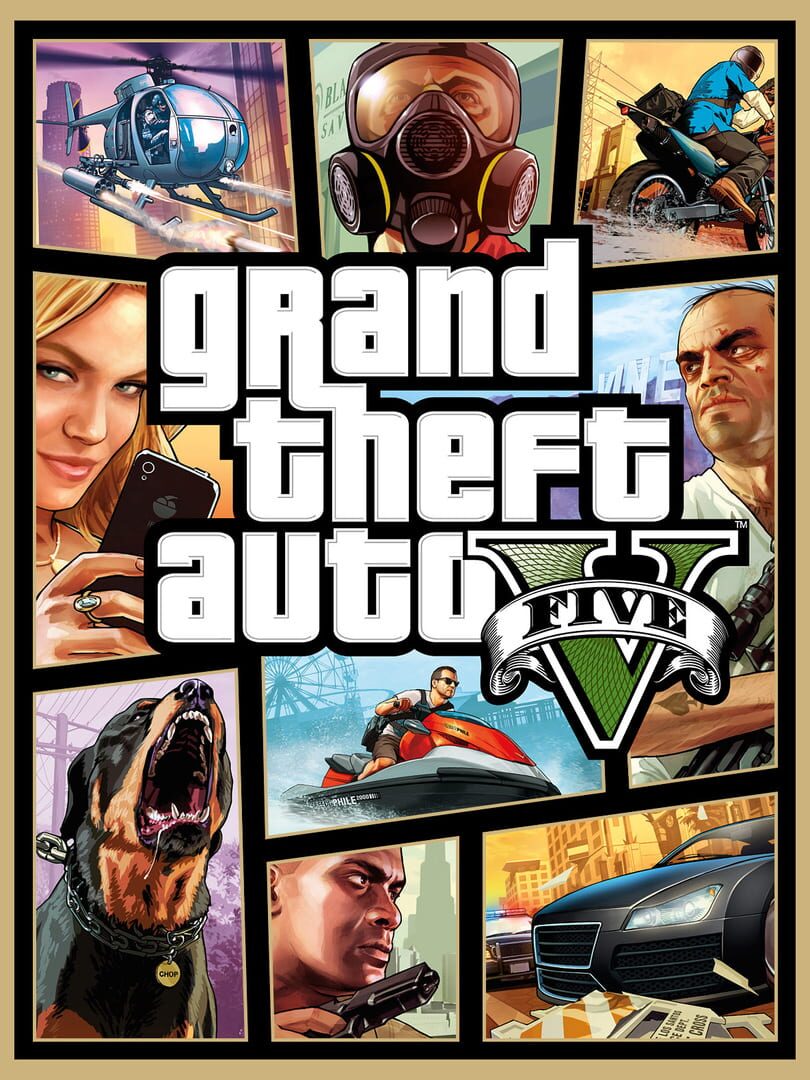
When Grand Theft Auto V launched on April 12, 2022, for Xbox Series X|S and PlayStation 5, it wasn’t arriving as a newcomer to the scene. Instead, Rockstar Games and Take-Two Interactive delivered what felt like a full-circle moment—a game that had already proven itself legendary on previous hardware, now reimagined for current-generation consoles with a polish that reminded us why this franchise remains untouchable. That perfect 10.0/10 rating didn’t come from the novelty of a new release; it came from the realization that this experience had only gotten better with time and technology.
What makes GTA V historically significant is deceptively simple: it perfected something that countless developers have tried to replicate since its original launch. The game seamlessly blends Shooter, Racing, and Adventure mechanics into a single, cohesive world where you’re not forced to choose between being a gunslinger, a getaway driver, or an explorer. Instead, you get all of it woven naturally into the fabric of Los Santos. This wasn’t entirely new—Rockstar had been iterating on open-world design for years—but GTA V synthesized everything into an experience that felt inevitable in retrospect and revolutionary at the time.
> The genius of GTA V lies not in inventing new mechanics, but in understanding how to layer them so that everything feels connected, purposeful, and endlessly replayable.
The three-protagonist system became the game’s defining structural innovation. Switching between Michael Townley, Franklin Clinton, and Trevor Philips wasn’t just a narrative gimmick—it was a gameplay revelation. Each character brought different abilities, different perspectives on Los Santos, and different emotional stakes to the story. This meant the campaign could breathe in ways previous GTA games couldn’t, offering varied mission structures and ensuring that no two hours felt identical. The heist missions, in particular, became benchmarks for collaborative gameplay design, giving players genuine agency in how they approached objectives.
The release on modern hardware in 2022 revealed something crucial: the game’s design fundamentals were so sound that they transcended generational limitations. With enhanced graphics, faster load times, and performance improvements across Xbox Series X|S and PlayStation 5, GTA V didn’t just look better—it felt more responsive, more alive. This wasn’t a cash grab; it was Rockstar saying, “This game still has stories worth telling and experiences worth having.” That commitment to its own creation spoke volumes about the studio’s confidence in its design.
Culturally, GTA V became impossible to ignore. The game sparked conversations that extended far beyond gaming circles:
- Media controversy: Political commentators, parent groups, and cultural critics debated its violence and satire
- Streaming phenomenon: It became a staple of Twitch and YouTube, with players finding endless entertainment value in simply existing within the world
- Economic juggernaut: GTA Online proved that live-service games could sustain engagement for years when properly supported
- Modding legacy: The PC community transformed the game entirely, from photorealistic mods to complete gameplay overhauls
- Representation discourse: The game’s diverse cast and satirical lens on contemporary issues made it a flashpoint for conversations about representation in blockbuster games
The GTA Online component deserves its own consideration. While the base game offered a complete, single-player experience, the multiplayer ecosystem became something few predicted would have such staying power. Through nearly a decade of updates—from The Diamond Casino Heist to The Cayo Perico Heist to recent additions like the Safehouse update featuring Michael De Santa’s return—Rockstar kept the community engaged. The ability to purchase luxury real estate, run criminal enterprises, and participate in increasingly ambitious heists meant the game evolved alongside its playerbase. Yes, there were complaints about monetization and content pacing, but the sheer amount of substantive gameplay additions kept millions returning.
What separates GTA V from imitators is its world design philosophy. Los Santos isn’t just large; it’s densely packed with interactive systems. You can abandon the story entirely and simply exist within the city—driving taxis, playing golf, robbing convenience stores, or participating in street races. This freedom, grounded in a world that responds meaningfully to your actions, became the template for open-world excellence. Developers have studied GTA V‘s approach to mission design, side quests, and environmental storytelling extensively.
The creative achievement on Rockstar’s part was understanding that a game this scale required unprecedented attention to detail across hundreds of systems. The voice acting featured performances that rivaled television, with Steven Ogg, Shia LaBeouf-evoking Trevor Phillips, and Ned Luke‘s Michael delivering nuanced character work. The soundtrack didn’t just feature licensed music; it curated it with taste, creating radio stations that felt lived-in and authentic. The writing balances satire with genuine pathos, making you care about characters who exist in a world that’s fundamentally ridiculous.
By 2022, with the next generation of consoles well-established, releasing GTA V again could have felt cynical. Instead, it felt like an act of confidence—a studio saying, “This game is good enough that it deserves to be experienced at its technical best.” The 10.0/10 rating reflected not just nostalgia, but genuine appreciation for a work that had only improved with age, refined by time and technology.
GTA V endures because it understood something fundamental: great game design transcends hardware generations, technical trends, and even genre conventions. It’s a Shooter that works as a Racing game that works as an Adventure, all held together by a world worth exploring and a story worth experiencing. That’s not just significance—that’s legacy.


