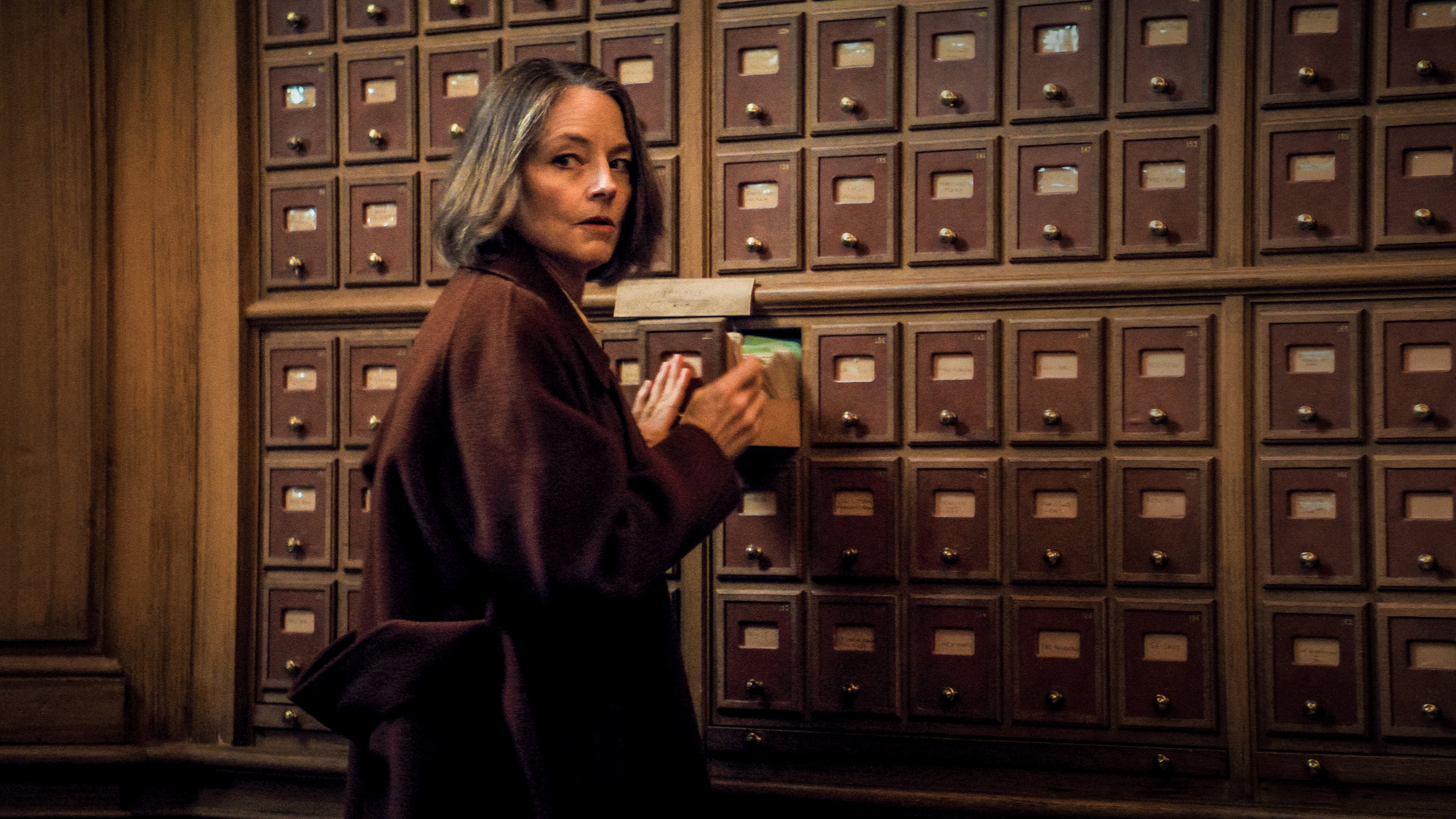
When A Private Life premiered in September 2025, it arrived quietly—the kind of film that doesn’t announce itself with marketing fanfare but rather settles into your consciousness like a secret someone trusted you with. Directed by Rebecca Zlotowski, the French filmmaker known for her nuanced character work, this 1 hour 47 minute drama represents something increasingly rare in contemporary cinema: a character-driven mystery that trusts its audience to sit with ambiguity rather than spell everything out.
The collaboration between Jodie Foster, Daniel Auteuil, and Virginie Efira feels almost inevitable in retrospect, though it must have been delicate to assemble. Foster, working in French cinema, brings a particular weight to her role—the kind of presence that suggests layers of experience and quiet authority. Auteuil, a veteran of French film, grounds the narrative with his naturalistic approach, while Efira provides a dynamic counterpoint, her performance suggesting both vulnerability and hidden reserves of strength. Zlotowski orchestrates these three performers with the precision of someone who understands that sometimes the most powerful moments happen in the spaces between dialogue.
> What makes A Private Life significant isn’t necessarily what happens on screen, but what it refuses to explain—a deliberate narrative choice that divided audiences and critics alike.
The film’s reception tells an interesting story about where cinema stands right now. With a 5.8/10 rating from 75 voters, the film clearly didn’t achieve consensus—and that’s actually part of its merit. In an era where algorithms push toward films with broad appeal and comfortable resolutions, A Private Life dares to be divisive. Some viewers found Zlotowski’s measured approach frustratingly opaque; others recognized in that opacity something closer to how mysteries actually function in real life—not as puzzles with neat solutions, but as ongoing questions that shape how we understand people.
The financial performance of the film—with both budget and box office figures remaining unknown—reflects a changing landscape in European cinema. Production companies like Les Films Velvet, France 3 Cinéma, and Auvergne-Rhône-Alpes Cinéma are investing in smaller, more intimate projects that may not generate blockbuster returns but carry significant artistic weight. This film wasn’t designed to compete with franchise entertainment; it was designed to be watched, to create space for contemplation.
What Zlotowski brings to this material is a distinctly European sensibility—a willingness to let scenes breathe, to favor implication over exposition. Consider her directorial choices:
- Pacing: The 1h 47m runtime is lean, suggesting nothing is wasted, yet the film moves without rushing
- Visual language: Working with crisp, observant cinematography rather than stylistic flourish
- Character psychology: Building understanding through behavior rather than backstory exposition
- Ambient tension: Creating unease through what’s not said as much as what is
The film’s place in the crime-mystery-drama landscape is notably unconventional. Rather than following the procedural template or the psychological thriller formula, A Private Life seems more interested in how secrets reshape relationships, how privacy itself becomes a kind of mystery. It asks: what do we really know about the people closest to us?
This thematic core resonates particularly in 2025, a moment when privacy feels increasingly theatrical and when revelation seems to be the default mode of existence. The film suggests that some things—perhaps the most important things—remain knowable only in fragments, and that’s not a flaw in the human condition but rather its defining characteristic.
The critical reception, while modest in raw numbers, has revealed something about the film’s staying power. Initial responses ranged from dismissive to deeply appreciative, with little middle ground—critics either felt the elliptical narrative was a feature or a bug. What’s notable is that A Private Life has sparked conversation about what drama can be, particularly in the context of an American actress (Foster) working within French cinema traditions. The film becomes almost meta, addressing questions about identity and performance.
- Its refusal of conventional catharsis – The film doesn’t resolve toward emotional clarity
- The intergenerational tensions layered throughout between the three leads
- The visual economy that makes every frame count
- The understated performances that suggest complex inner lives
- The final ambiguity that recontextualizes everything before it
What makes this collaboration memorable isn’t that every viewer will love the film—they won’t. What’s memorable is that Foster, Auteuil, and Efira committed to a project that prioritizes artistic vision over audience comfort, and that Zlotowski was given the space to realize that vision fully. In a streaming-dominated era where films are often consumed as background entertainment, A Private Life demands and rewards full attention.
The legacy of this film may not be measured in awards or box office numbers, but in its influence on filmmakers considering what’s possible within genre constraints. For actors considering late-career work, it demonstrates that there’s genuine artistry in playing people whose motivations remain slightly beyond our reach. And for audiences, it serves as a reminder that not every film needs to explain itself to be meaningful—sometimes the most private life on screen is the one that keeps its secrets closest.


![Official Trailer [Subtitled]](https://img.youtube.com/vi/HbIEbJbEpF4/maxresdefault.jpg)
![Clip [Subtitled]](https://img.youtube.com/vi/e3RSzFziCHo/maxresdefault.jpg)