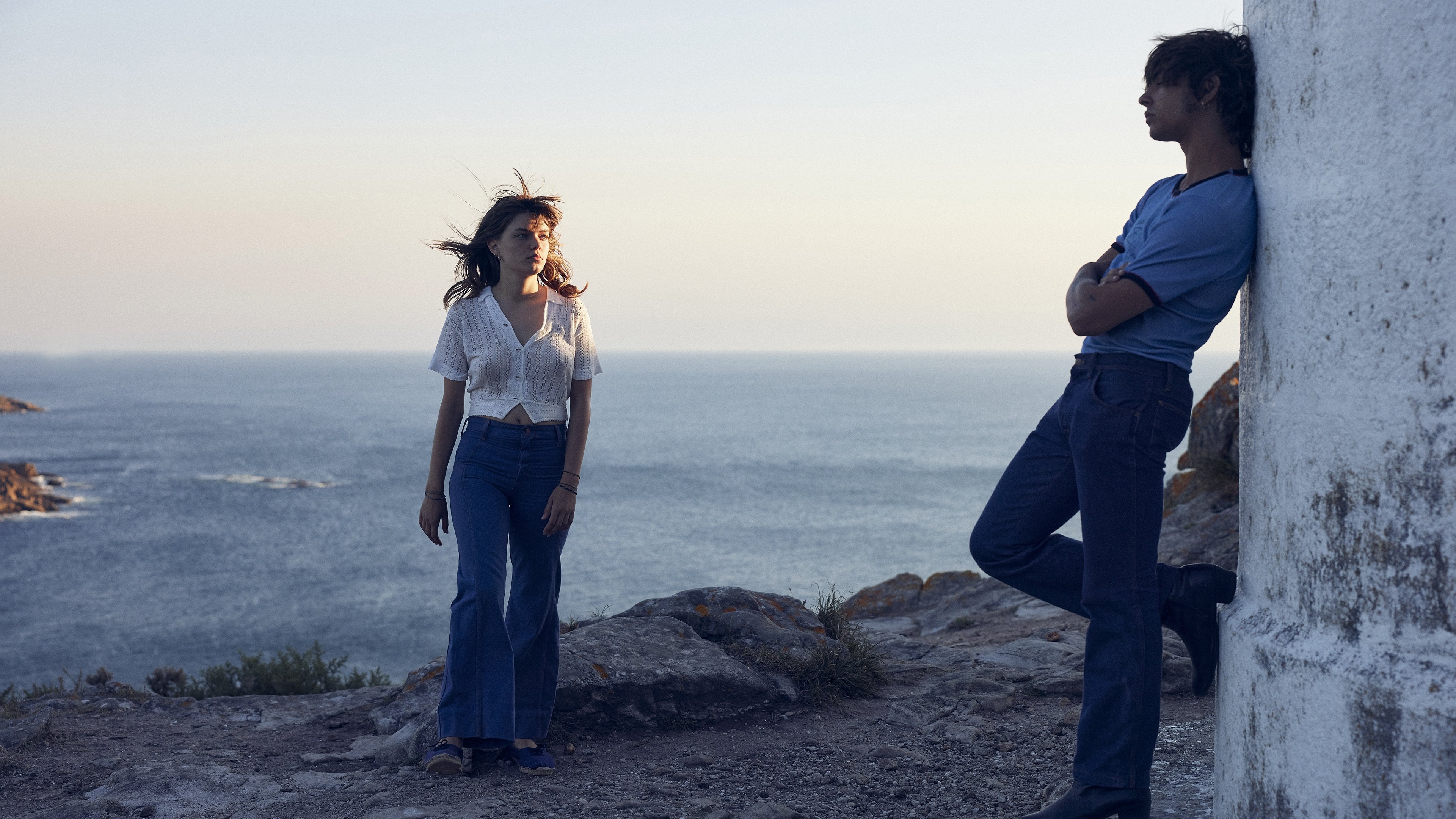
Carla Simón’s Romería arrived at the 2025 Cannes Film Festival as a quiet but undeniable emotional force. The film premiered in the main competition on May 21st, where it immediately caught the attention of major distributors—Janus Films picked it up for North American release, a significant vote of confidence in what is ultimately a very personal, intimate story about family, loss, and the search for answers in unexpected places.
The premise sounds simple enough: Marina, an 18-year-old orphan, travels to Spain’s Atlantic coast to secure a signature from paternal grandparents she’s never met for a scholarship application. But Simón, working from her own experiences, understands that simple premise is just the entry point into something much deeper. What unfolds over the 114 minutes-minute runtime is a careful excavation of memory, belonging, and the complicated ways families hold onto—or suppress—their pain. Marina doesn’t just need a signature. She’s looking for context, for pieces of a story about her father that might explain who she is.
The film’s emotional architecture is what gives it staying power. Rather than delivering easy answers or neat resolutions, Simón lets scenes breathe. The ensemble of aunts, uncles, and cousins doesn’t function as a Greek chorus offering wisdom. They’re contradictory, sometimes evasive, occasionally warm, frequently complicated. There’s real tension in watching Marina navigate these relationships—you’re never quite sure if she’ll be welcomed or rejected, and neither is she. That uncertainty drives everything.
Llúcia García, in her performance as Marina, has to carry the weight of unspoken expectations. She plays a young woman caught between wanting to belong and protecting herself from disappointment. What’s remarkable is how García avoids turning this into a tragedy narrative. Marina isn’t a victim performing suffering for the audience. She’s observant, sometimes skeptical, occasionally dry-witted. Tristán Ulloa and Mitch round out the cast as family members with their own complicated histories and reasons for the silence that surrounds Marina’s father. Their work isn’t about grand emotional displays—it’s about what goes unsaid, the way people deflect, how grief can masquerade as normalcy.
The critical reception has been genuinely positive. The film earned a 6.5/10 rating from 35 votes on IMDb, which reflects a more niche but committed audience, while it’s pulled an 86% on Rotten Tomatoes—that’s the kind of critical consensus that suggests the film is doing something right even if it doesn’t have mainstream crossover appeal.
What matters about Romería is its approach to family drama. The genre can feel exhausted—we’ve seen countless films about broken families, lost connections, and emotional reckoning. But Simón isn’t interested in catharsis for its own sake. The film doesn’t resolve Marina’s search for understanding into a neat emotional climax. Instead, it acknowledges something true: some questions don’t get answered. Some relationships remain fractured. Some truths about our parents stay buried, not because of cruelty necessarily, but because of how people cope with loss.
There’s also something quietly radical about making a film where not much happens in the conventional sense. No major plot twists. No heated confrontations that blow everything open. Just conversations at kitchen tables, silences during car rides, the accumulation of small moments that slowly reveal character and history. In an era of plot-driven cinema, this kind of patient storytelling can feel almost countercultural.
The production involved multiple European partners—Elastica Films, Ventall Cinema, Dos Soles Media, ZDF/Arte, and Romería Vigo—suggesting this is a genuinely international co-production. That collaborative effort shows in the film’s careful construction. It doesn’t feel like a vanity project despite being so clearly rooted in Simón’s personal history. Instead, it feels like the director found collaborators who understood her vision: make something intimate without being insular, personal without being self-indulgent.
Romería likely won’t be the film everyone talks about at year’s end. It doesn’t have the commercial trajectory or the awards-season momentum of bigger releases. But that’s precisely what makes it important. This is cinema that trusts its audience to sit with ambiguity, to find meaning in small gestures, to recognize that family is often a place where we’re most uncertain and most vulnerable. Simón has made a film about inheritance—not of money or property, but of unresolved wounds and the complicated work of trying to understand where we come from. In doing so, she’s created something that will linger with people long after they leave the theater.


![Teaser [Subtitled]](https://img.youtube.com/vi/nIKZtoN8VMU/maxresdefault.jpg)