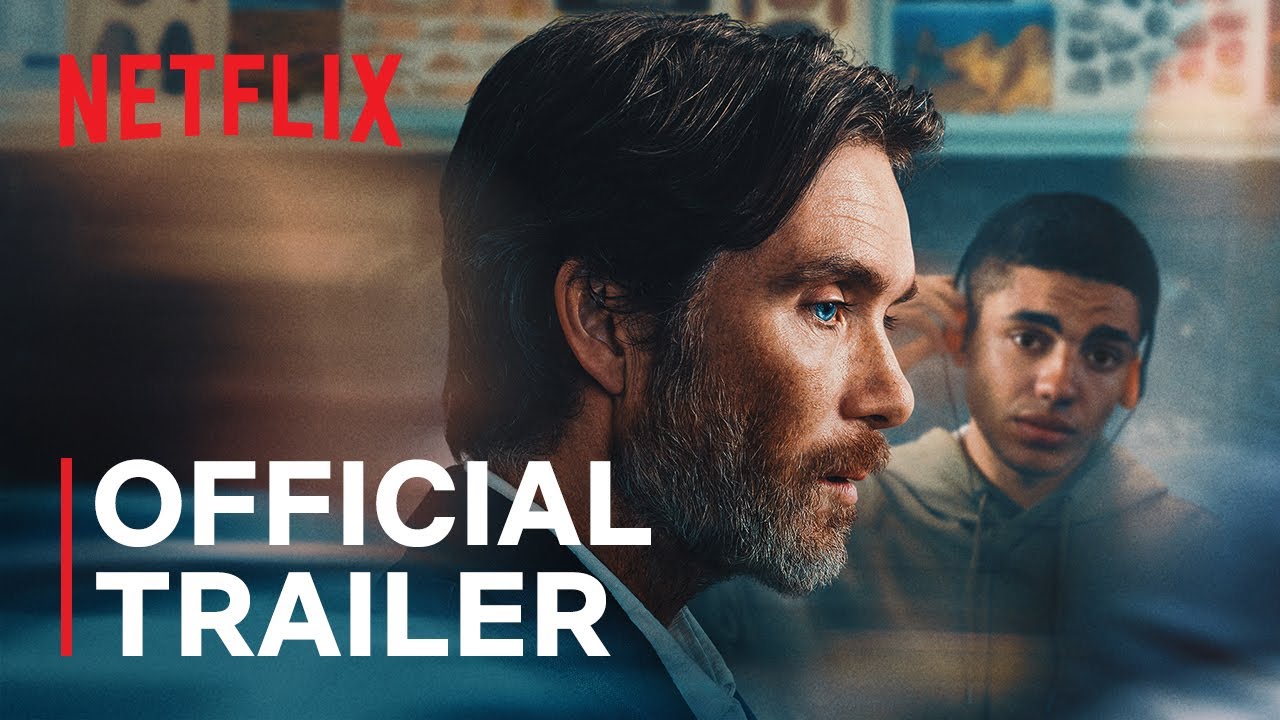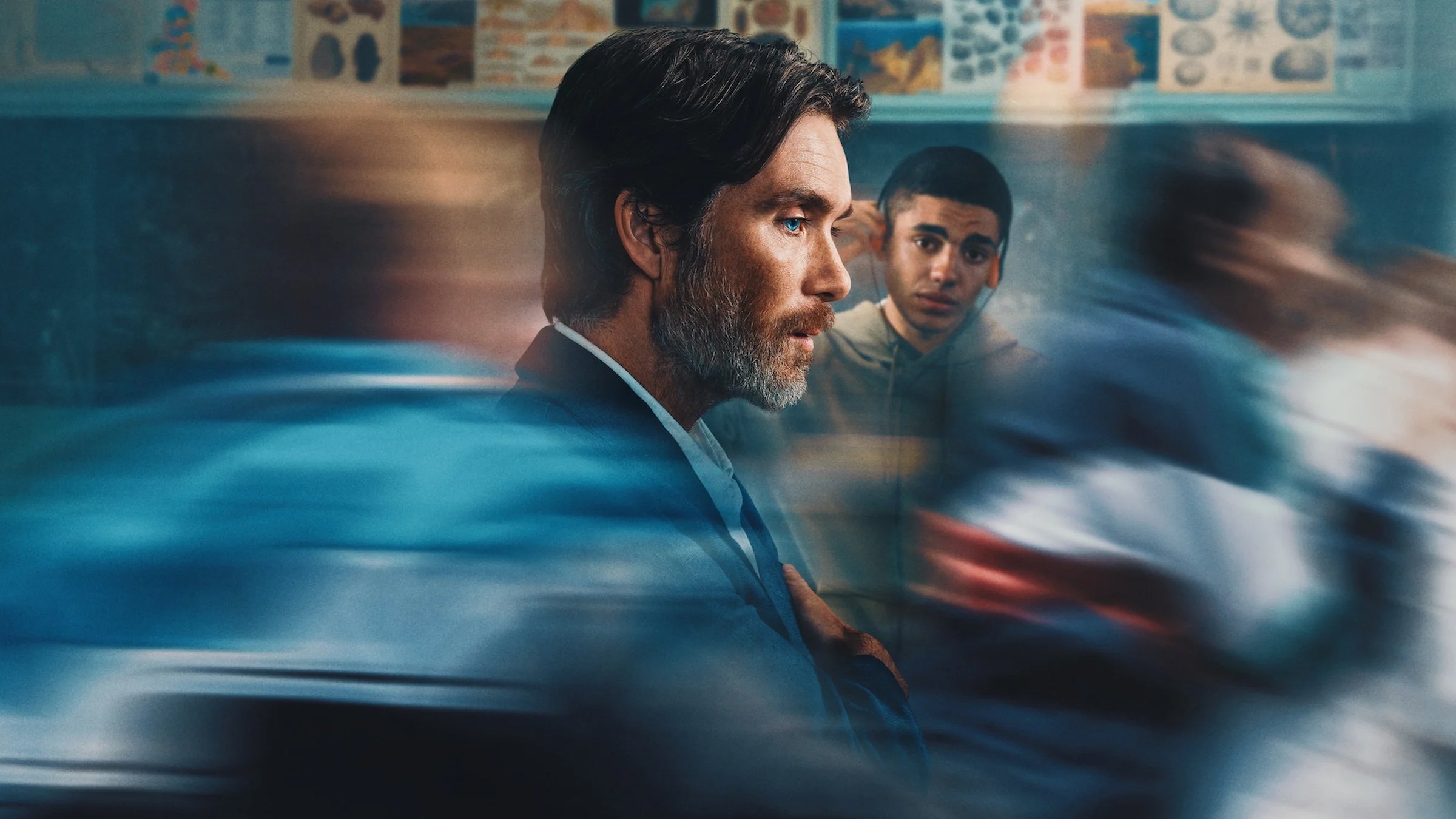
When Steve came out in September 2025, it arrived quietly—which seems appropriate for a film about someone trying to hold things together in the face of overwhelming pressure. Tim Mielants directed this 92 minutes-minute drama with the kind of restraint that could easily be mistaken for understatement, but the real power of the film lies in what it refuses to exploit. This is a story about a reform school headteacher managing crises on every front, and it’s as much about what remains unspoken as what gets said aloud.
The film earned a 6.4/10 rating from 222 votes, which tells you something interesting right away. It’s not a film that’s won over everyone, and there’s something honest about that mixed response. Steve doesn’t reach for easy emotional beats or inspirational speeches. Instead, it sits uncomfortably in the space between compassion and exhaustion, between wanting to help and knowing you’re not enough.
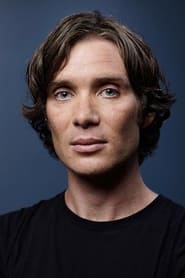
Cillian Murphy is the center of this story, and he brings a particular kind of weariness to the role of Steve that feels earned rather than performed. This comes on the heels of his Oscar win for Oppenheimer, so there was potential for him to coast or reach for something showy. He doesn’t. Murphy understands that the character’s power comes from restraint—the tightness around his eyes, the careful control in his voice, the way he moves through his day like someone managing an invisible weight. Working with Mielants for the second time after their collaboration on Small Things Like These, there’s a comfort between them that allows for subtlety. They’re not trying to convince you that Steve is a hero. They’re trying to show you what it actually looks like to care about people in a system designed to make you fail.
Tracey Ullman and Jay Lycurgo complete the central trio, and the dynamics between these three actors create the film’s emotional core:
- Ullman brings a grounded presence that grounds the film’s broader anxieties about institutional collapse and personal responsibility
- Lycurgo, as a student named Shy, mirrors Steve’s own internal struggles—caught between violence and fragility, between what he wants to become and what the system has told him he is
- The contrast between the experienced teacher and the young student becomes a conversation about whether change is possible, whether anyone can actually be reached
What makes this collaboration memorable is how much these actors trust silence. There are scenes that should explode emotionally but don’t. Instead, they compress into something smaller and more devastating. You understand more from what these characters don’t say than from what they do.
Mielants brings a visual approach that matches the script’s emotional restraint. The film doesn’t look like it’s trying to be important. It looks like a documentary of an ordinary day—one that just happens to contain several different crises. The cinematography is functional rather than beautiful, which somehow makes it more beautiful. You’re not distracted by composition. You’re just watching people move through a system that’s failing them.
The cultural moment for a film like this is curious. Steve premiered at the Toronto International Film Festival before getting a limited theatrical release in the UK and US on September 19th, followed by a streaming debut on Netflix on October 3rd. That trajectory—festival premiere, theatrical run, then Netflix—is becoming standard for prestige dramas, but it does mean the film reached audiences through very different experiences. Some people saw it on a big screen where the silence and stillness could feel oppressive. Others watched it at home where the emotional distance might have felt different. There’s no definitive way to experience Steve, which is perhaps why it resists easy categorization.
The film’s significance isn’t about breaking new ground or changing the industry. It’s about persistence—the idea that making a serious, unglamorous film about teaching and mental health matters even when nobody’s paying attention. This is a film that could have been maudlin. It could have turned Steve into a savior figure or Shy into a redemption arc. Instead, it commits to ambiguity:
- It shows the system failing without proposing solutions or assigning blame to any one person
- It avoids the inspiring-teacher trope by making clear that good intentions aren’t enough
- It takes mental health seriously as something ongoing and messy, not something you overcome in 92 minutes
- It trusts the audience to sit with discomfort rather than resolving tension neatly
That’s not necessarily going to make Steve a film people remember with affection. It’s the kind of film you remember because it stayed with you in ways you didn’t expect, because some scene kept recurring in your mind weeks later. The mixed critical reception reflects this—people who wanted a more traditional drama might have found it frustrating. People who connected with its emotional precision found something genuinely moving.
What endures about Steve is its refusal to be comfortable. In an era when prestige television and streaming films often reach for catharsis or at least clarity, Mielants and Murphy have made something that ends with more questions than answers. The headteacher survives his day. The student survives his day. Nothing is solved. The system remains broken. And somehow, that honesty—that unwillingness to pretend one day or one person can fix something this large—is what makes the film matter. It’s a quiet storm of emotion, exactly as promised.