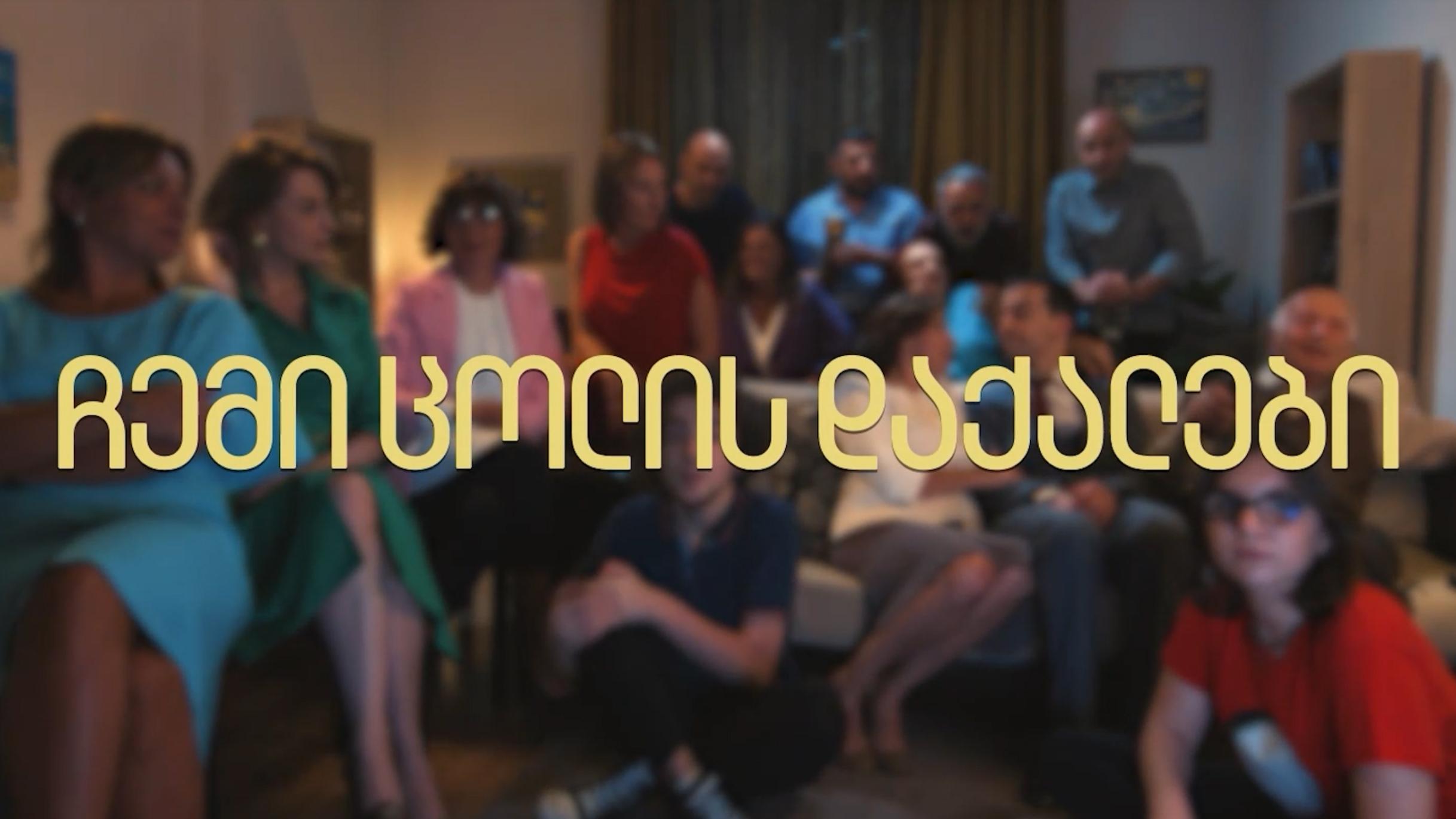
When My Wife’s Girlfriends premiered on October 22, 2012, it arrived with a simple but potent premise: three childhood friends navigating adulthood together while their lives grow increasingly complicated. What started as a concept rooted in Georgian reality became something far more expansive over time, eventually expanding to include additional characters and storylines that deepened the show’s exploration of friendship, identity, and the messy realities of modern life. The creators—Keti Devdariani, Giorgi Liponava, and Misha Mshvildadze—understood that intimate character drama doesn’t require grand gestures. Sometimes it just needs time, space, and the right people in a room together.
The show’s longevity speaks volumes. Over 18 seasons and 916 episodes, My Wife’s Girlfriends built something genuinely rare: a serialized drama that could sustain viewer interest across nearly a decade of storytelling. That’s no accident. The 30-minute runtime was essential to how this show worked. It’s long enough to develop real dramatic tension and emotional depth, yet short enough that each episode lands with purpose. There’s no bloat here—every conversation matters, every conflict feels earned, and the pacing forces the creators to be economical with their storytelling.
What really distinguishes this series is how it treats female friendship as the central dramatic engine rather than a supporting element. The core trio—Nina, a housewife; Tina, a feminist; and Kato, an aging event manager—came together as childhood friends, and that foundation gave their conflicts real weight. These aren’t women bonding over how much they hate men or struggling with shallow romantic entanglements. Instead, they genuinely challenge each other’s worldviews while remaining fundamentally committed to one another. That’s a harder trick to pull off than it sounds.
The show understood something crucial about character-driven drama:
- Consistency of voice – Across nearly 1,000 episodes, the characterizations remained grounded and recognizable
- Relationship evolution – The friendships deepened and fractured in ways that felt natural rather than manufactured for ratings
- Thematic coherence – Whether exploring career ambitions, romantic complications, or personal growth, everything connected to larger questions about how women define themselves
- Smart casting additions – The introduction of Natashka in Season 5, Anka in Season 7, and later Nato showed the creators understood how new dynamics could refresh the narrative without abandoning what made the show work
The critical reception—a 6.8/10 rating from 3 votes—suggests audiences found something worthwhile here, even if the show never became a cultural phenomenon on the level of mainstream prestige dramas. That’s actually fine. My Wife’s Girlfriends cultivated something more valuable than viral moments: genuine viewer investment. People kept watching because they cared about these characters and wanted to know what happened to them next.
There’s something admirable about a show that commits to a vision and stays true to it for 916 episodes. Not every project can sustain that kind of output without completely losing its way. Yet My Wife’s Girlfriends managed it, which suggests the creators had something real to say about friendship, ambition, feminism, and female adulthood that extended well beyond a single season’s arc.
The introduction of the cafe—a business venture that became increasingly important to the narrative—represented a natural evolution of the story. It gave the characters a shared project that could generate both opportunity and conflict. Business partnerships between close friends is a complicated dynamic, and the show mined it for all its dramatic potential. The stakes became personal and professional simultaneously, which is exactly when character drama gets most interesting.
What makes the show’s Returning Series status as a returning series particularly significant is that it suggests there’s still an audience hungry for this kind of storytelling. In an era dominated by limited series, true crime documentaries, and streaming’s obsession with high-concept pitches, a show about a group of women navigating their lives together—without a killer to catch or a mystery to solve—is quietly radical. It’s just people, and their problems, and how they choose to face them together or apart.
For anyone who believes the best television happens in the spaces between big plot moments, in the conversations that reveal character, in the small betrayals and quiet reconciliations that define real relationships, My Wife’s Girlfriends is worth tracking down. It’s a show about what it means to grow up, to change, to hold onto friendships while becoming different versions of yourself. Over nearly a thousand episodes, that’s a lot of ground to cover. The fact that it still feels like the creators had more to say suggests they were doing something that mattered.