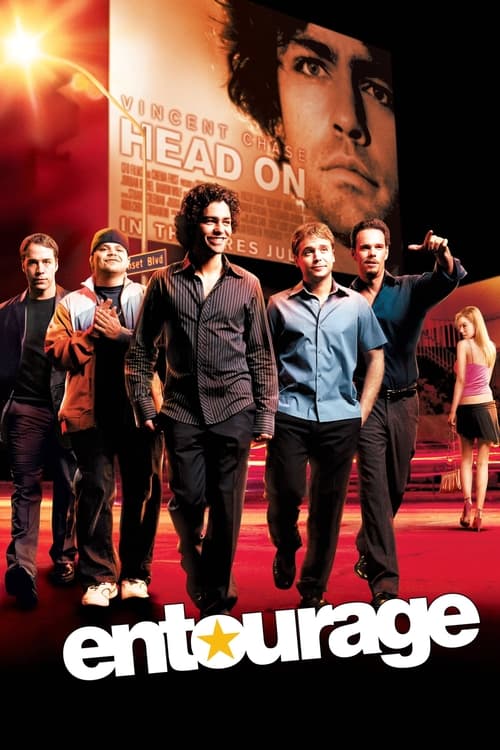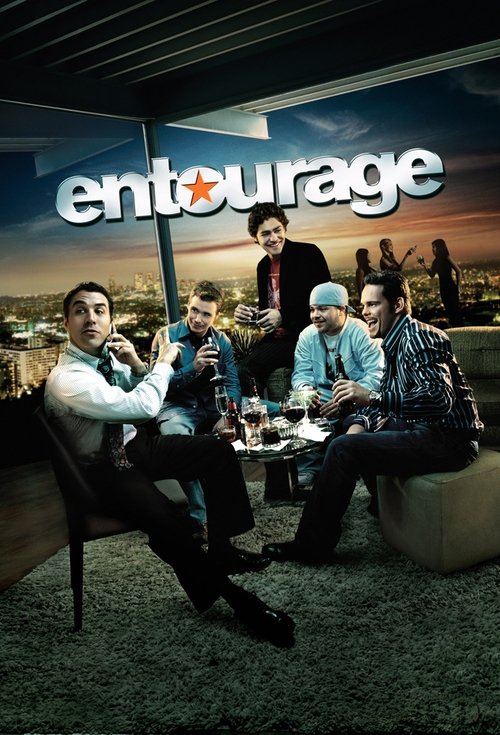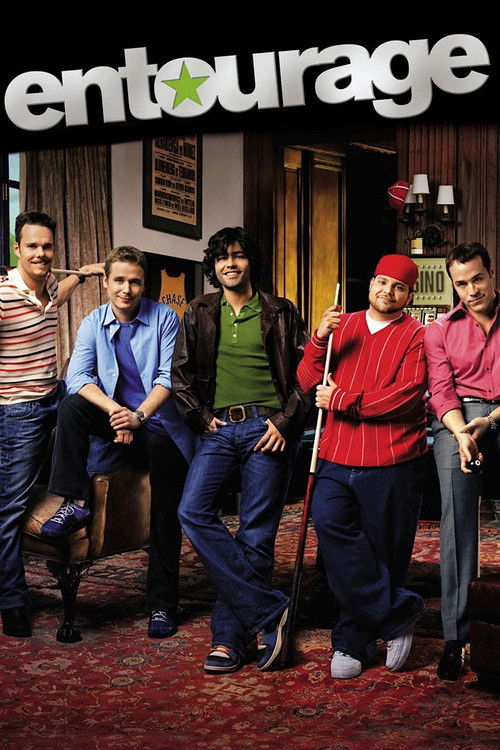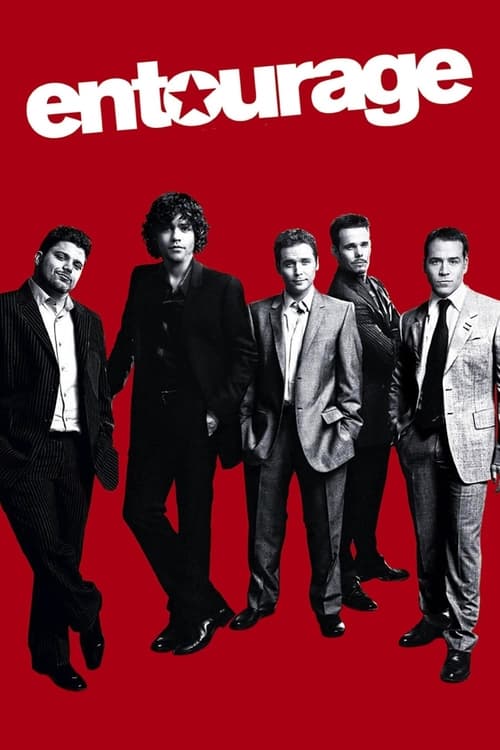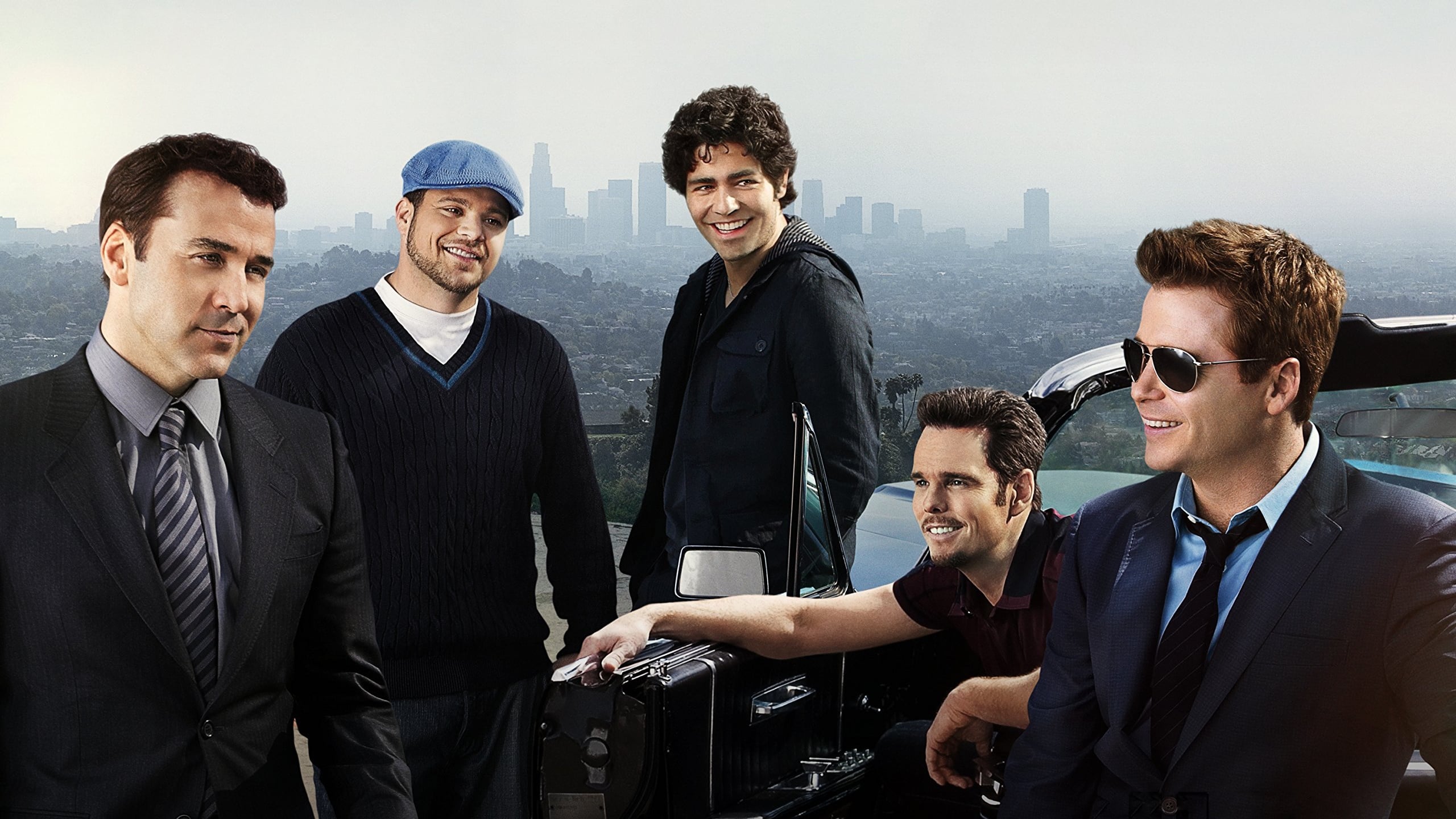
When Entourage premiered on HBO in July 2004, it arrived at exactly the right moment. The early 2000s were hungry for insider glimpses into worlds most of us would never access, and this show knew exactly how to deliver that fantasy. Created by Doug Ellin, Entourage followed film star Vince Chase and his tight-knit group of friends as they navigated the absurdities of Hollywood. What made it work wasn’t just the premise—it was the way Ellin crafted something that felt like you were watching real friendships, real struggles, even if the setting was completely aspirational.
The show’s eight-season run spanning 96 episodes proved that HBO had tapped into something audiences genuinely wanted. This wasn’t prestige television in the way The Sopranos or The Wire were prestige television. Entourage was leaner, faster, more fun. It prioritized entertainment and character chemistry over weighty social commentary, and that approach earned it a 7.4/10 rating from a substantial audience base. For a show that could have been dismissed as shallow fluff about privileged young men, it managed to build real loyalty.
What made Entourage stand out in the broader television landscape was its willingness to treat Hollywood as both comedy and drama simultaneously. The show rarely felt didactic or preachy about the industry’s problems. Instead, it showed them—the ego clashes, the financial desperation hiding behind designer suits, the way friendships bend under pressure when career success becomes uneven. Vince’s journey wasn’t a morality play. It was complicated. Sometimes he won. Sometimes he lost. And his friends sometimes helped, sometimes hindered.
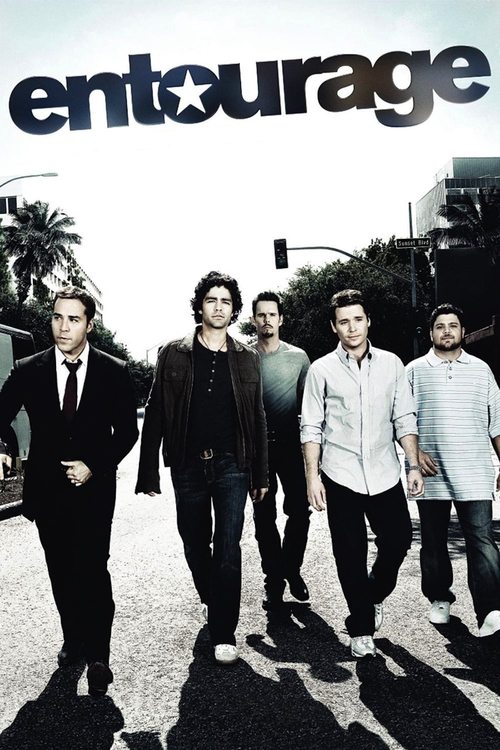
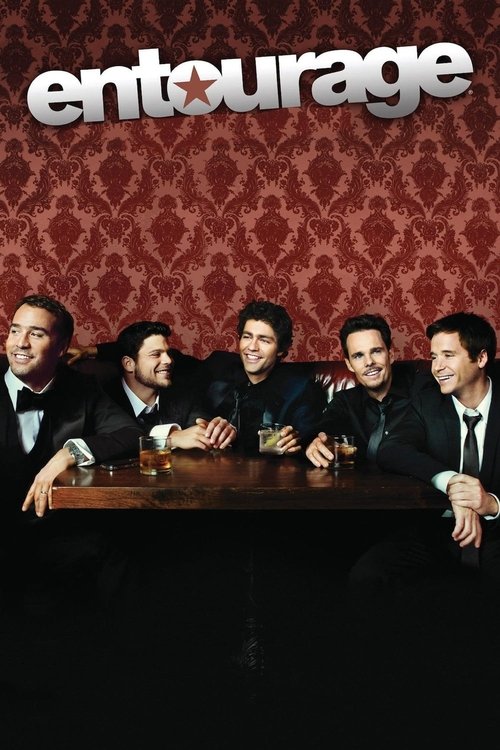
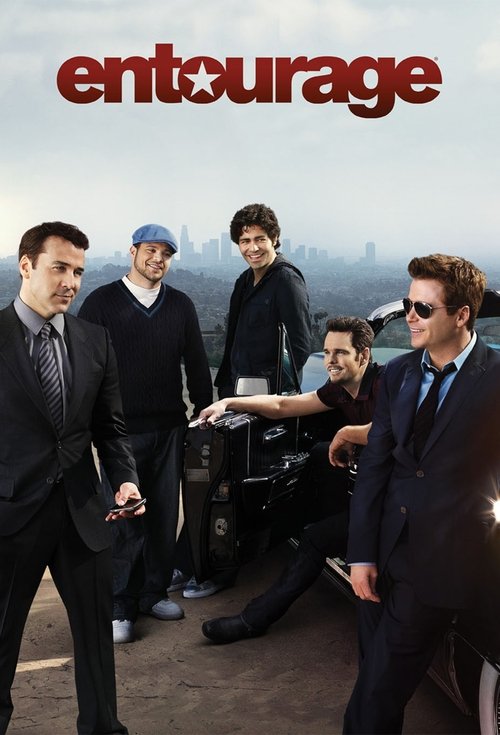
The creative chemistry between the core cast was electric. The ensemble had genuine warmth that could have collapsed into something irritating if handled poorly, but the writing kept it grounded:
- Vince (Adrian Grenier) embodied the appealing but flawed lead—talented but impulsive, often making decisions his team had to manage
- Drama (Kevin Dillon) walked the line between comic relief and genuinely sympathetic character dealing with rejected auditions
- Turtle (Jerry Ferrara) represented the everyman constantly scrambling to stay relevant
- E (Kevin Connolly) served as the moral center, often wrestling with the tension between loyalty and doing the right thing
These dynamics shifted over eight seasons. The show wasn’t static. Relationships evolved. Priorities changed. Characters made mistakes they couldn’t undo.
What’s particularly interesting about Entourage is how it influenced perceptions of Hollywood storytelling on television. It proved you didn’t need to wag your finger at the industry to make compelling television about it. The show could celebrate certain aspects of Hollywood excess while simultaneously showing how hollow that excess could feel. That duality is harder to pull off than it looks, and Ellin maintained it across the entire run.
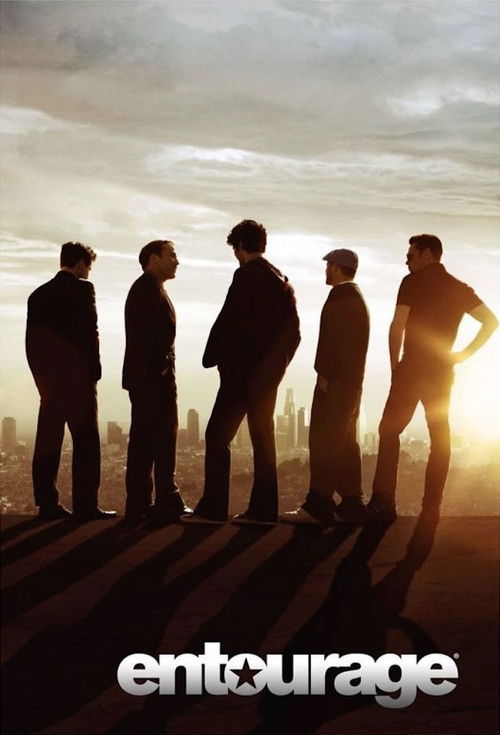
The cultural footprint the show left is still visible today. Entourage became shorthand for a certain kind of male friendship story—the group that operates as almost a single organism, where individual success is everyone’s success and failure hits the whole unit. That framework has been replicated countless times since, though not always with the same light touch.
> The show worked because it understood that Hollywood’s absurdity is actually funnier and more interesting than any invented plot device could be. Real industry moments often outpace fiction.
Part of Entourage‘s enduring appeal is that it resisted the urge to become something it wasn’t. As television evolved toward darker, grittier storytelling, Entourage remained committed to its core tone. Some viewers found that consistency refreshing; others felt the show became repetitive. The mixed reception toward the later seasons reflected this divide. Yet the fact that audiences debated the show’s quality across eight seasons—rather than abandoning it entirely—suggested something was working.
The runtime choices (varied throughout the series) also deserve mention. Without adhering to a fixed structure, Entourage could breathe. Some episodes felt like quick bursts of energy; others lingered on character moments. That flexibility allowed Ellin to serve both comedy and drama without feeling obligated to maintain balance in every single episode.
Now that Entourage has concluded and is available across HBO Max and other platforms, it exists in a different context than when it aired. We can watch the full eight seasons in sequence and see how the show evolved, where it succeeded, and where it stumbled. That retrospective view doesn’t diminish what made it significant. Entourage still deserves attention because it understood its audience, trusted its cast, and refused to apologize for being fundamentally about male friendship and career ambition. In an era when television often struggled to balance entertainment with substance, Entourage made that balance look almost effortless.