

High school romance anime has a special way of capturing those butterflies-in-your-stomach moments that make first love so unforgettable. Whether you’re craving a slow-burn romance that’ll have you screaming at your screen or a heartwarming love story that restores your faith in relationships, these 20 series deliver emotional journeys you won’t forget.
From shy confessions under cherry blossoms to unexpected connections that change everything, you’re about to discover the anime that perfectly capture what it feels like to fall in love for the first time.
These aren’t just your average school romance stories—each series brings something unique to the table, whether it’s realistic character development, laugh-out-loud comedy, or tear-jerking drama that’ll have you reaching for tissues. Ready to add some serious romance to your watchlist?
1. Horimiya
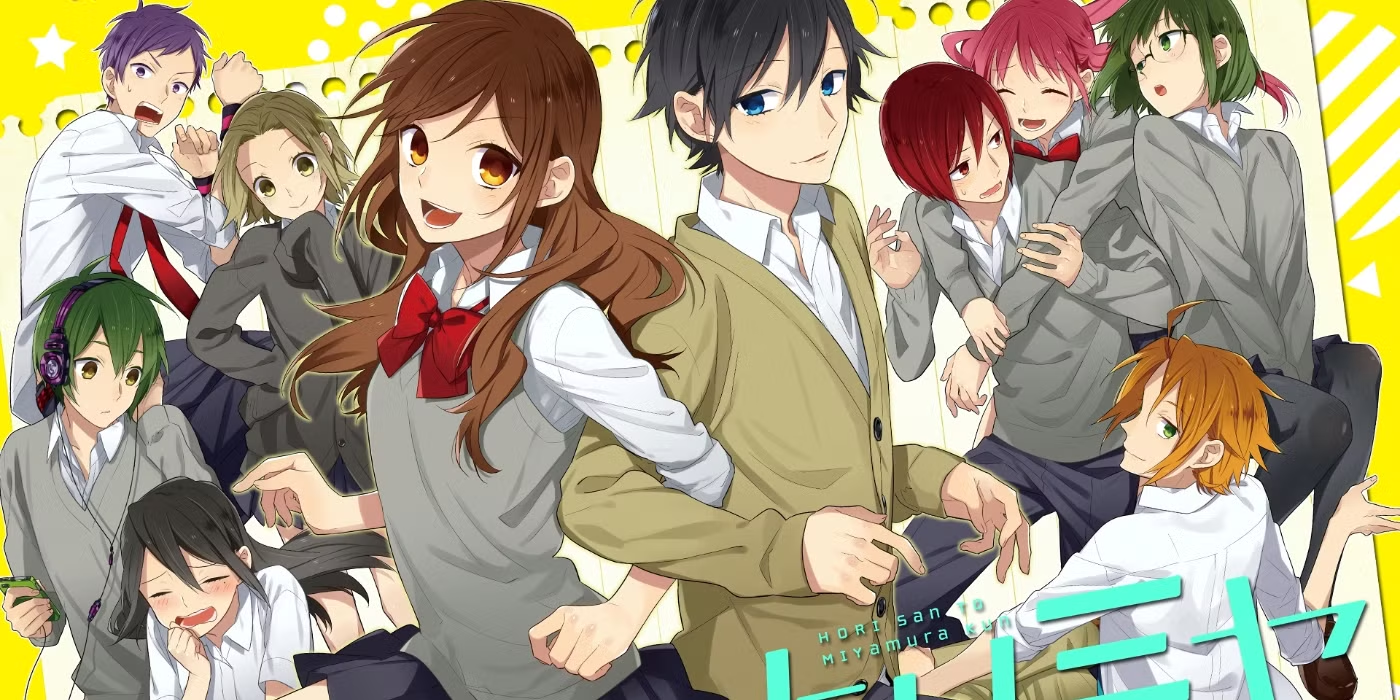
You’ll fall head over heels for the refreshing authenticity of Horimiya, a series that proves the best relationships start when you see someone’s true self. Kyoko Hori seems like the perfect popular student, but at home she’s a house-proud caretaker with zero time for her usual image. When the quiet, pierced-up Izumi Miyamura discovers her secret, their unlikely friendship blossoms into something beautifully real.
What makes Horimiya stand out from typical high school anime series is how it handles the relationship progression. Instead of dragging out the “will they, won’t they” tension for entire seasons, the couple actually gets together and explores what comes after—the comfortable silences, the playful teasing, and the genuine support that defines healthy relationships.
Pro Tip: Watch the 2021 CloverWorks adaptation for the most complete experience, as it covers significantly more content than the earlier OVA series.
The supporting cast adds incredible depth too, with each friend group member getting meaningful development and their own romantic subplots. According to CBR’s analysis of high school romance anime, Horimiya excels at balancing multiple relationship dynamics without losing focus on the central couple.
2. Toradora!
Toradora! delivers one of anime’s most satisfying slow-burn romances wrapped in a deceptively simple premise. Ryuuji Takasu looks like a delinquent but he’s actually a cleaning-obsessed softie, while tiny Taiga Aisaka has earned the nickname “Palmtop Tiger” for her fierce temperament. When they discover they each have crushes on the other’s best friend, they form an alliance to help each other—and you can probably guess where this is heading.
The genius of Toradora! lies in how it gradually shifts your expectations. What starts as a comedic partnership evolves into genuine emotional dependence, with both characters growing in ways that feel earned rather than forced. The Christmas episode alone has become legendary in the anime community for its emotional gut-punch.
| Aspect | What Makes It Special |
|---|---|
| Character Growth | Both leads overcome personal insecurities and family issues through their relationship |
| Comedy Balance | Physical comedy and misunderstandings never overshadow emotional development |
| Supporting Cast | Friends feel like real people with their own complex motivations and feelings |
| Ending Satisfaction | Conclusive resolution that doesn’t leave you hanging or feeling cheated |
The series explores themes of self-acceptance and the courage it takes to be vulnerable with someone. If you appreciate romance anime that balance humor with genuine emotional stakes, Toradora! absolutely deserves a spot on your romance anime watchlist.
3. My Dress-Up Darling
My Dress-Up Darling injects fresh energy into the high school romance genre by centering the story around cosplay culture and celebrating passionate hobbies. Wakana Gojo is a talented hina doll craftsman who hides his interests from classmates, while Marin Kitagawa is an outgoing gyaru who’s unapologetically obsessed with anime and cosplay. When Marin discovers Gojo’s sewing skills, she recruits him to help create her cosplay dreams—sparking a relationship built on mutual respect and shared creativity.
What sets this series apart is how it portrays a genuinely supportive relationship where both characters lift each other up. Marin’s enthusiastic acceptance of Gojo’s traditionally “feminine” hobby challenges gender stereotypes, while Gojo helps Marin bring her passion projects to life. Their chemistry feels natural and wholesome, with plenty of adorable moments that’ll have you grinning at your screen.
Key Insight: The series thoughtfully explores different facets of otaku culture, from eroge to magical girl anime, showing how diverse interests can bring people together rather than divide them.
The animation quality from CloverWorks is absolutely stunning, especially during the cosplay sequences where attention to detail really shines. Each costume recreation shows the care and effort that goes into the hobby, making it feel authentic to anyone familiar with cosplay communities.
4. Kimi ni Todoke
Kimi ni Todoke captures the painfully sweet experience of first love through Sawako Kuronuma, a girl whose resemblance to Sadako from “The Ring” has left her isolated and misunderstood. When the popular and genuinely kind Shouta Kazehaya starts showing interest in her, Sawako begins the slow journey of opening up and discovering her own worth.
This series is the definition of slow-burn romance, and that’s exactly what makes it so rewarding. Every tiny step forward in their relationship—each smile, each moment of understanding—feels like a major victory. You’ll find yourself celebrating when Sawako makes a new friend or manages to express her feelings, even in small ways.
The shoujo art style perfectly complements the gentle, heartwarming tone of the story. Soft color palettes and expressive character designs enhance the emotional moments, making even simple conversations feel significant. According to Ranker’s comprehensive ranking of high school romance anime, Kimi ni Todoke consistently ranks among the most beloved series for its authentic portrayal of social anxiety and personal growth.
The supporting cast adds wonderful depth, particularly Sawako’s friends Ayane and Chizuru, who provide both comic relief and genuine emotional support. Their friendship dynamic shows how important platonic relationships are in helping us navigate romantic ones.
5. Ao Haru Ride
Ao Haru Ride (Blue Spring Ride) explores the bittersweet reality of reconnecting with your first love after years apart—and discovering that both of you have changed. Futaba Yoshioka liked being girly in middle school until it made her a target for female bullies, so she reinvented herself as “one of the guys” in high school. When she unexpectedly reunites with Kou Mabuchi, the boy she had feelings for in middle school, she barely recognizes the now-distant and guarded person he’s become.
The series excels at portraying how past trauma and family circumstances shape who we become. Kou’s transformation from a gentle middle schooler to a withdrawn teenager isn’t just for drama—it’s rooted in real grief and loss that he’s struggling to process. Watching Futaba try to reach the person she remembers while accepting who he is now creates genuine emotional tension.
Common Mistake: Don’t expect a perfectly wrapped-up ending from the anime adaptation—the manga continues the story with more resolution, so consider reading it after watching if you want complete closure.
The visual storytelling uses weather and seasonal imagery beautifully, with rain often symbolizing emotional barriers and sunshine representing moments of connection. These artistic choices enhance the already emotionally charged narrative without feeling heavy-handed.
6. My Little Monster
My Little Monster throws you into a chaotic romance between two social outcasts who couldn’t be more different. Shizuku Mizutani is a grade-obsessed student with zero interest in anything beyond academic success, while Haru Yoshida is an unpredictable troublemaker who was suspended on his first day of high school. When Shizuku is tasked with delivering class printouts to Haru, he immediately declares her his friend—and things escalate quickly from there.
The relationship development here is refreshingly unconventional. These aren’t characters who slowly realize their feelings over 12 episodes—Haru confesses his love almost immediately, throwing Shizuku’s carefully controlled world into complete disarray. The series then explores what happens when someone who’s never considered romance suddenly has to confront unfamiliar emotions.
What makes this pairing work is how they balance each other. Haru’s impulsive nature pushes Shizuku out of her comfort zone, while her grounded personality helps him navigate social situations he doesn’t naturally understand. Their growth feels mutual rather than one character “fixing” the other, which is explored in depth by GameRant’s analysis of high school romance dynamics.
The supporting cast includes equally quirky characters dealing with their own relationship complications, from unrequited crushes to complicated love triangles. These subplots add depth without distracting from the main romance, creating a fuller picture of teenage relationships in all their messy glory.
7. Oregairu (My Teen Romantic Comedy SNAFU)
Oregairu takes a cynical approach to high school romance that gradually transforms into something surprisingly profound. Hachiman Hikigaya is a jaded loner who’s given up on the social hierarchy and genuine human connection—until his teacher forces him to join the Service Club alongside the ice queen Yukino Yukinoshita and the bubbly Yui Yuigahama.
This isn’t your typical feel-good romance anime. The series dissects social dynamics, codependency, and the difference between genuine relationships and comfortable lies. Hachiman’s self-sacrificing solutions to other people’s problems mask his own inability to be vulnerable, creating a fascinating character study wrapped in a romantic comedy framework.
The love triangle between the three main characters develops with unusual complexity. Rather than relying on misunderstandings or drama for drama’s sake, the tension comes from each character’s fundamentally different understanding of what they want from relationships. Yukino seeks independence, Yui craves belonging, and Hachiman doesn’t believe he deserves either.
| Season | Focus | Character Development |
|---|---|---|
| Season 1 | Establishing dynamics and Hachiman’s cynical worldview | Introduction to self-destructive problem-solving methods |
| Season 2 | Challenging surface-level relationships and forced positivity | Characters confront what they actually want versus what’s comfortable |
| Season 3 | Resolution and accepting vulnerability as strength | Growth toward authentic communication and genuine connection |
The dialogue is sharp and introspective, with Hachiman’s internal monologues offering biting social commentary that’ll resonate if you’ve ever felt like an outsider. If you’re looking for romance anime that challenge conventional storytelling, Oregairu delivers intellectual depth alongside emotional payoff.
8. Say “I Love You”
Say “I Love You” tackles the vulnerability required for real intimacy through Mei Tachibana, a girl who’s spent years without friends after being betrayed in elementary school. When the popular Yamato Kurosawa takes an unexpected interest in her—even kissing her to ward off a stalker—Mei’s carefully constructed walls begin to crack.
The series doesn’t shy away from the darker aspects of high school social dynamics. Mei faces jealousy from other girls, deals with a model who tries to sabotage their relationship, and confronts her own deep-seated trust issues. These challenges feel genuine rather than manufactured drama, grounding the romance in realistic emotional stakes.
Important Note: The series addresses some mature themes including stalking, manipulation, and emotional abuse in relationships, making it more suitable for older teens and adults who can appreciate the nuanced handling of these topics.
Yamato stands out as a love interest because he’s patient without being a doormat. He respects Mei’s boundaries while gently encouraging her to take risks on friendship and love. Their relationship progression shows how healthy partnerships require both people to meet in the middle, with Mei learning to trust and Yamato learning that popularity doesn’t equal genuine connection.
9. Blue Spring Ride
Blue Spring Ride (the English title for Ao Haru Ride) deserves its own spotlight for how it captures the specific pain of adolescent identity crisis. The series asks tough questions: Can you recapture feelings from the past? Should you try to change someone back to who they used to be? How do you reconcile the person you’ve become with the person you wanted to be?
Futaba’s character arc is particularly compelling as she navigates the exhausting performance of being someone she’s not. Her masculine mannerisms and deliberate avoidance of anything feminine stem from self-protection, but they’ve also trapped her in a role that doesn’t fit. The series explores how we sometimes lose ourselves trying to avoid pain, only to create different problems.
The group dynamics add another layer, with Futaba forming genuine friendships with classmates who each have their own romantic complications. These relationships show how friend groups naturally form around shared experiences and how those bonds can either support or complicate romantic pursuits.
The watercolor-style backgrounds and soft character designs create a dreamy atmosphere that matches the nostalgic, bittersweet tone. Visual metaphors like Kou’s hair color change (from black to blonde) externalize his internal transformation, making character development visible even before dialogue confirms it.
10. Nisekoi
Nisekoi brings harem comedy energy to the high school romance formula with a twist—the main couple is forced into a fake relationship to prevent a gang war. Raku Ichijou, son of a yakuza boss, and Chitoge Kirisaki, daughter of a rival gang leader, must pretend to date despite absolutely despising each other. Add in a mysterious childhood promise, a locked pendant, and multiple girls who might hold the key, and you’ve got a recipe for romantic chaos.
The “fake dating” trope gets maximum mileage here as Raku and Chitoge’s constant bickering gradually reveals genuine chemistry. Their reluctant partnership forces proximity, creating those classic moments where pretending to be in love starts feeling a little too real. The comedy comes from their terrible acting and the increasingly elaborate lies they have to maintain.
What keeps the series engaging across multiple seasons is the mystery element woven through the romance. The locked pendant and childhood promise create an ongoing puzzle that connects multiple characters, giving viewers a reason to invest beyond just shipping their favorite pairing. Each girl in Raku’s orbit has a distinct personality and legitimate claim to being the promised girl, making the competition feel less like a forgone conclusion.
The animation by Studio Shaft brings their signature visual flair, with dynamic camera angles and creative scene transitions that elevate what could have been standard romantic comedy fare. If you enjoy romance anime with comedy and don’t mind harem elements, Nisekoi offers plenty of entertainment.
11. The Dangers in My Heart
The Dangers in My Heart subverts expectations by starting with an edgy premise and transforming it into one of the most wholesome romance stories in recent years. Kyoutarou Ichikawa is a chunibyo middle schooler who fantasizes about dark scenarios—until his morbid daydreams are interrupted by Anna Yamada, a tall, beautiful classmate who keeps invading his library sanctuary to eat snacks.
The brilliance of this series lies in how it deconstructs Kyoutarou’s carefully constructed loner persona. His “dangerous” thoughts are revealed as the defensive mechanism of an insecure kid who doesn’t know how to connect with others. As Anna consistently treats him with kindness and genuine interest, his edgy facade crumbles to reveal someone surprisingly thoughtful and caring.
Pro Tip: Pay attention to the background details and character expressions—the manga and anime are packed with subtle visual storytelling that reveals character feelings before they’re verbalized.
Anna herself is a refreshing female lead who’s confident without being perfect. She’s comfortable with her body, enjoys eating, and isn’t ashamed of her interests—but she also has insecurities about being seen as just a pretty face. The relationship develops through small, authentic interactions rather than dramatic confessions, making their growing connection feel earned.
12. Just Because!
Just Because! captures the specific melancholy of final-year high school students facing the end of their youth. When Eita Izumi transfers back to his hometown for his last semester, he disrupts the careful emotional equilibrium of his former middle school friends. Unrequited feelings, missed opportunities, and the pressure of college entrance exams create a pressure cooker of emotions that can’t be ignored anymore.
The series excels at portraying realistic teenage communication—or rather, the lack thereof. Characters struggle to express their feelings, miss obvious signals, and make choices based on fear of rejection rather than hope for connection. This frustrating realism is exactly what makes the eventual moments of honesty so cathartic.
Unlike many high school romance anime, Just Because! acknowledges that life continues after graduation. The characters aren’t just worried about confessing their feelings; they’re grappling with the reality that their social circles will scatter, potentially making any confession pointless. This adds weight to every interaction and decision.
The baseball and photography club subplots provide perfect metaphors for the main themes—capturing fleeting moments before they’re gone forever, and the bittersweet beauty of endings. According to The Gamer’s analysis of romance anime themes, Just Because! stands out for its mature handling of transition periods and the courage required to be vulnerable when the future is uncertain.
13. Tsuki ga Kirei
Tsuki ga Kirei delivers one of the most realistic portrayals of middle school romance in anime, following Kotarou Azumi and Akane Mizuno as they navigate their first relationship with all the awkwardness and sweetness that entails. These aren’t smooth-talking protagonists—they’re genuinely shy kids who struggle with eye contact and stumble over their words, making every small victory in their relationship feel monumental.
The series nails the specific anxiety of early adolescent romance. The agonizing wait for text message replies, the terror of talking on the phone, the careful choreography of walking home together without making it obvious—every detail rings painfully true. You’ll cringe at the awkward moments and cheer for the small triumphs in equal measure.
What sets Tsuki ga Kirei apart is its commitment to showing a relationship that actually works. There’s no manufactured drama or love triangles designed to extend the story—just two people genuinely trying to understand each other while dealing with normal teenage pressures like exams, family expectations, and future plans.
| Realistic Element | How It’s Portrayed |
|---|---|
| Communication | Heavy reliance on LINE messaging, with realistic typing patterns and response times |
| Physical Intimacy | Gradual progression from hand-holding to first kiss, each step feeling significant |
| Social Dynamics | Classmates gossip and tease, but it impacts the relationship in believable ways |
| Family Involvement | Parents are present and aware, adding realistic complications to dating |
The ending provides rare closure for the genre, following the couple beyond high school to show whether their relationship survives real-world challenges. This commitment to resolution makes Tsuki ga Kirei a standout among romance anime with satisfying conclusions.
14. Lovely★Complex
Lovely★Complex proves that opposites attract through the comedic romance between Risa Koizumi, a tall girl, and Atsushi Ootani, a short guy. Their height difference becomes the running joke that evolves into something deeper as they discover they have way more in common than just their insecurities about physical appearance.
The series tackles body image issues with humor and heart, showing how societal expectations about gender and appearance can mess with your self-confidence. Risa’s struggle with feeling “unfeminine” because of her height and Ootani’s complex about his stature create genuine obstacles to their relationship that go beyond typical romantic comedy misunderstandings.
What makes their dynamic work is the foundation of genuine friendship. Before any romantic feelings develop, they’re already comfortable roasting each other, sharing music recommendations, and providing emotional support. This groundwork makes the transition to romance feel natural rather than forced, even as Risa struggles with unrequited feelings for an extended period.
Key Insight: The Osaka dialect and cultural references are integral to the series’ humor and charm—watching with good subtitles that preserve these elements enhances the experience significantly.
The late 2000s animation style and fashion choices give the series a distinct nostalgic feel that complements its themes about accepting yourself and finding someone who appreciates you exactly as you are. The soundtrack features upbeat J-pop that perfectly captures the energetic, optimistic tone.
15. Clannad
Clannad starts as a high school romance and transforms into something much more profound, following delinquent Tomoya Okazaki as he’s pulled out of his apathetic routine by the strange, isolated Nagisa Furukawa. What begins as a typical setup—helping a girl achieve her dream of reviving the drama club—gradually reveals layers of emotional depth that’ll wreck you in the best way.
The first season focuses on high school life and various character routes adapted from the visual novel source material. Each girl in Tomoya’s orbit has a compelling story dealing with family trauma, personal loss, or identity struggles. While this structure can feel episodic, it builds a rich understanding of the supporting cast that pays off later.
Where Clannad truly distinguishes itself is the sequel series, Clannad: After Story, which follows the characters beyond high school into adult life. This continuation explores marriage, parenthood, career struggles, and loss with emotional honesty rarely seen in anime. The relationship between Tomoya and Nagisa matures from teenage romance into adult partnership, showing how love evolves when faced with real-world challenges.
The supernatural elements woven throughout—particularly the parallel world segments—might seem disconnected initially, but they serve as powerful metaphors for the themes of family, legacy, and the cycles we inherit from our parents. Viewers who appreciate anime series that blend romance with deeper themes will find Clannad’s emotional journey unforgettable.
16. Golden Time
Golden Time shifts the high school romance formula to college, following Banri Tada as he starts fresh at a Tokyo law school after a motorcycle accident left him with amnesia. When he befriends Mitsuo Yanagisawa, he’s immediately swept into the chaos of Mitsuo’s obsessive childhood friend Kouko Kaga, setting off a romance complicated by forgotten memories and past relationships.
The college setting allows for more mature relationship dynamics than typical high school anime. Characters deal with living independently, managing finances, and navigating romantic and sexual relationships with less parental oversight. The exploration of what happens after you successfully get together with someone—rather than ending at the confession—provides refreshing territory for the genre.
Banri’s amnesia isn’t just a plot device; it’s a meaningful exploration of identity and whether we’re defined by our memories or our present choices. The appearance of “Ghost Banri” representing his lost memories creates genuine conflict about which version of himself is “real” and which relationship is more authentic—his forgotten first love or his current girlfriend.
Common Mistake: Don’t expect the same tone as Toradora! despite sharing the same creator—Golden Time deals with more mature themes and has a different emotional rhythm that some viewers find divisive.
The series doesn’t shy away from showing relationship difficulties including jealousy, communication breakdowns, and the challenge of supporting a partner through mental health struggles. These realistic complications make the romance feel grounded even when supernatural elements enter the picture.
17. ReLIFE
ReLIFE offers a unique twist on high school romance by having its protagonist actually be a 27-year-old NEET who’s given the chance to relive his final year of high school. Arata Kaizaki takes an experimental pill that makes him look 17 again, returning to high school as part of a rehabilitation program designed to help him rejoin society.
The premise creates fascinating dramatic irony as Arata navigates teenage social dynamics with adult perspective. He can see the petty drama for what it is, understand the long-term consequences of short-sighted decisions, and recognize emotional patterns that his classmates are too young to identify. Yet he’s still bound by the rules of the experiment and his teenage appearance.
The romance develops between Arata and Chizuru Hishiro, a socially awkward girl who’s also hiding secrets. Their relationship unfolds with unusual maturity because both characters are dealing with deeper issues than typical teenage angst. The question of what happens when the experiment ends—and Arata returns to his adult appearance—adds genuine stakes to their growing feelings.
Supporting characters each have their own complete arcs dealing with unrequited love, friendship boundaries, and personal growth. The series treats teenage emotions with respect while acknowledging the wisdom that comes with age and experience, creating a balanced perspective on high school life.
18. Rent-A-Girlfriend
Rent-A-Girlfriend embraces its absurd premise fully: Kazuya Kinoshita, freshly dumped and desperate, rents a girlfriend through an app and ends up entangled in an increasingly complicated web of lies. When his rental girlfriend Chizuru Mizuhara turns out to be his neighbor and fellow university student, maintaining the charade becomes exponentially more difficult.
The series is divisive among anime fans, largely due to Kazuya’s character—he’s intentionally written as insecure, impulsive, and prone to poor decisions. However, this flawed protagonist creates genuine tension as he repeatedly sabotages his own happiness through overthinking and cowardice. His growth (or lack thereof, depending on who you ask) drives much of the story’s conflict.
What keeps viewers engaged is the question of authenticity in relationships built on deception. Chizuru’s professional persona as a rental girlfriend contrasts sharply with her real personality, and watching those walls gradually break down provides the emotional core. The other rental girlfriends who enter Kazuya’s orbit each represent different relationship fantasies and force him to confront what he actually wants.
The animation quality is consistently high, with particular attention paid to facial expressions and body language that reveal character emotions even when their words say something different. If you enjoy romance anime that lean into cringe comedy and complicated relationship dynamics, Rent-A-Girlfriend delivers plenty of both.
19. Komi Can’t Communicate
Komi Can’t Communicate centers on Shouko Komi, a beautiful and elegant girl who seems perfect until you discover she has severe social anxiety that makes communication nearly impossible. When Hitohito Tadano becomes the first person to truly understand her condition, he pledges to help her achieve her dream of making 100 friends.
The series approaches social anxiety with surprising sensitivity, showing how debilitating it can be even in seemingly simple situations. Komi’s internal panic during everyday interactions is portrayed with both humor and empathy, never making her the butt of the joke. Her communication through writing, gestures, and eventually tentative words shows gradual progress that feels authentic.
Tadano stands out as a love interest precisely because he’s aggressively average. He’s not the most handsome, athletic, or academically gifted—he’s just genuinely kind and perceptive enough to see past Komi’s beautiful exterior to the struggling person inside. Their relationship develops through small moments of understanding and mutual support rather than grand romantic gestures.
| Character Type | Role in Story | Contribution to Romance |
|---|---|---|
| Eccentric Classmates | Comic relief and friendship candidates | Create low-pressure social situations for Komi to practice communication |
| Najimi Osana | Childhood friend and social butterfly | Facilitates interactions between Komi and Tadano while adding comedic chaos |
| Rival Love Interests | Competition for Tadano’s attention | Force both leads to recognize and confront their growing feelings |
The visual comedy is exceptional, with creative panel layouts and exaggerated reactions that make the humor accessible even when dealing with internal emotional states. Fans of wholesome romance with genuine character growth will find plenty to love, and the series connects well with other slice-of-life anime focused on personal development.
20. Orange
Orange takes high school romance into science fiction territory with a time travel twist that adds urgency to every interaction. Naho Takamiya receives a letter from her future self warning her about a new transfer student, Kakeru Naruse, and the tragic fate that awaits him. Armed with knowledge of the future, Naho tries to change events and save Kakeru’s life while navigating her own developing feelings.
The series tackles heavy themes including depression, suicide, and the weight of regret with remarkable sensitivity. Kakeru’s struggles are portrayed as complex and deeply rooted in grief over his mother’s death, not something that can be fixed with simple friendship or romance. The story acknowledges that saving someone requires more than just caring about them—it requires understanding, support systems, and sometimes professional help.
What makes the romance compelling is how it’s intertwined with the larger mission of changing the future. Naho’s feelings for Kakeru are genuine, but they’re complicated by the knowledge of what could happen and the fear of making things worse by deviating from the letter’s instructions. Her friend group’s collective effort to support Kakeru shows how important community is in preventing tragedy.
Important Note: Orange deals extensively with themes of suicide and depression. While handled thoughtfully, viewers who are sensitive to these topics should approach with awareness and self-care.
The time travel mechanics create interesting narrative tension as characters debate whether changing small events will have ripple effects or if certain outcomes are inevitable. The exploration of parallel timelines and the consequences of choices gives the romance philosophical depth beyond typical genre offerings, making it resonate with fans who appreciate romance anime that tackle serious themes.
These 20 high school romance anime prove that the genre has incredible range—from lighthearted comedy to emotional drama, from realistic slice-of-life to supernatural twists. Whether you’re looking for a quick binge or a series to savor slowly, there’s something here that’ll capture your heart and remind you why first love stories hit differently. Now grab some snacks, settle in, and prepare for all the feelings these unforgettable love stories will bring.