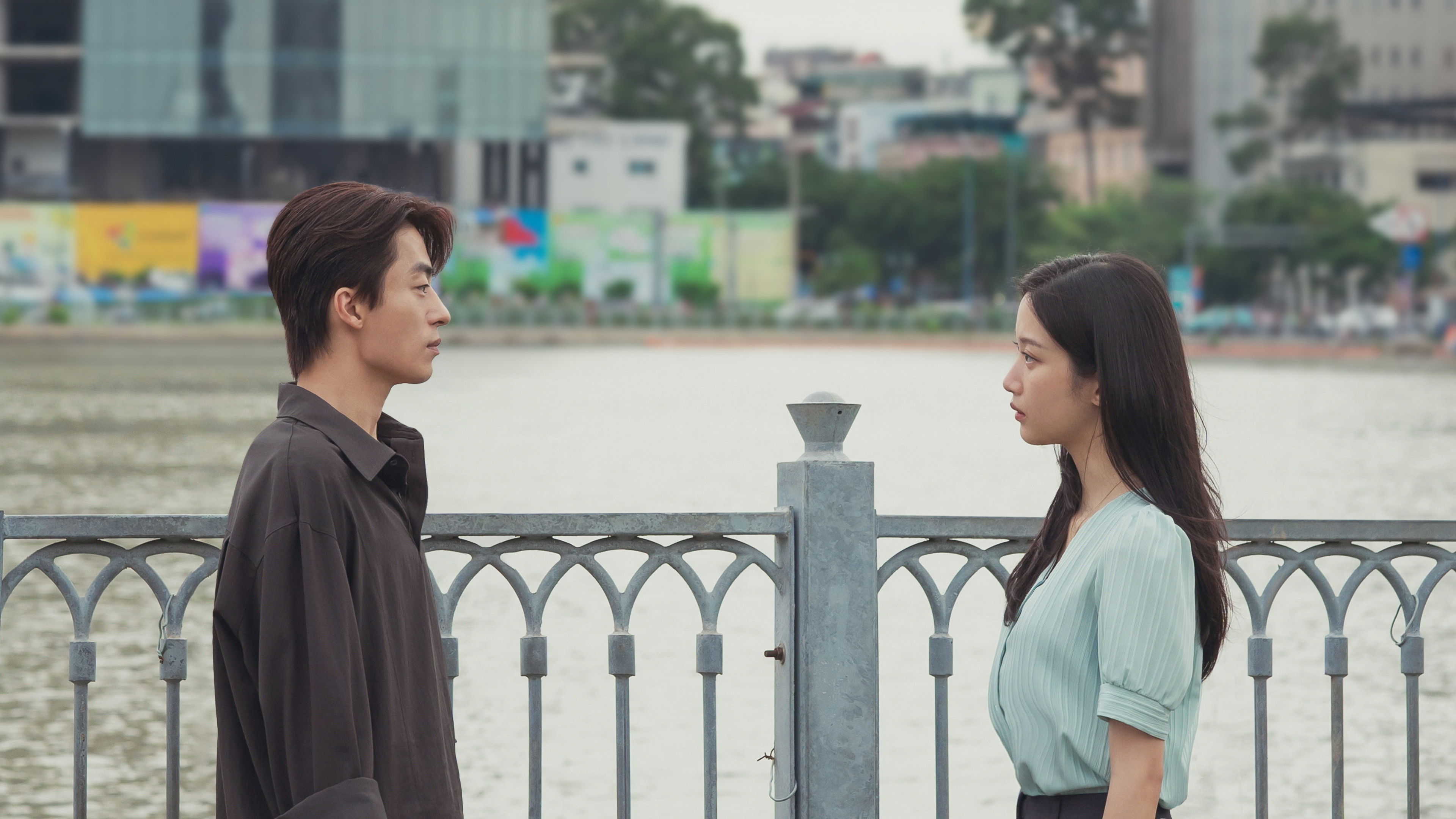
There’s something quietly powerful about a film that arrives at the absolute tail end of a year and somehow manages to capture the hearts of audiences so completely that it topples blockbuster franchises. Once We Were Us, which premiered on the final day of 2025, became exactly that kind of unexpected phenomenon—a romance drama that defied every conventional prediction about what audiences supposedly want from cinema.
Director Kim Do-young crafted something deceptively intimate within a runtime of just under two hours. In an era where films stretch to three hours and beyond, there’s a particular artistry to telling a complete emotional arc in 115 minutes. This isn’t minimalism for its own sake; it’s purposeful storytelling that trusts the material and its audience enough to avoid excess. The film’s lean structure forces every scene to earn its place, every moment of dialogue to resonate with intention.
> “When the love shines us the most” — a tagline that captures the film’s central thesis without resorting to melodrama or false poetry.
What makes Once We Were Us genuinely significant isn’t just that it succeeded commercially—though its performance was nothing short of remarkable. The film opened on December 31st and immediately claimed the top position at the Korean box office, crossing 1.5 million admissions within its opening weekends and maintaining its dominance for two consecutive weeks. More impressively, it dethroned Avatar: Fire and Ash after that blockbuster’s three-week winning streak. In an industry saturated with franchise spectacles and visual excess, a character-driven romance claimed the crown.
The creative synergy between director Kim Do-young and his ensemble cast proved to be the film’s greatest strength. Koo Kyo-hwan and Mun Ka-young carry the emotional weight of the narrative with a quiet intensity that feels earned rather than performed. There’s a maturity in their performances—no grand gestures or histrionic breakdowns, just the subtle erosion and reconstruction of a relationship that defines real human connection. Shin Jung-keun rounds out the ensemble, adding layered support that enriches the film’s thematic exploration.
What makes this collaboration memorable:
- The chemistry between leads that suggests genuine history rather than manufactured romance
- Restrained direction that allows performances to breathe and develop naturally
- A script that finds profound emotion in everyday moments—conversations in cars, stolen glances, silences that speak volumes
- Supporting cast work that deepens rather than complicates the central narrative
The film’s reception—holding steady at an 8.0/10 rating—represents something more meaningful than a simple numerical score. In a landscape where ratings have become increasingly polarized, this represents genuine consensus. It suggests the film connected with critics and audiences alike, transcending the usual divisions that plague contemporary cinema discourse.
Kim Do-young’s vision seems rooted in a fundamental belief that intimate storytelling still matters. Rather than competing with blockbuster spectacle on its own terms, Once We Were Us offers something the market was clearly starving for: authenticity. The film asked audiences to sit with characters and genuinely feel their struggles, their growth, their rediscovery of connection. That this approach resonated so powerfully at the conclusion of 2025—a moment when people are often reflective about relationships, time, and change—wasn’t coincidental. It was perfectly calibrated.
The film’s cultural impact extends beyond box office numbers, though those are certainly noteworthy. It demonstrated that in South Korean cinema, there remains an audience hungry for sophisticated romance narratives that treat adult relationships with complexity and respect. Rather than positioning romance as either comedic fodder or tragic destiny, Once We Were Us explores it as an ongoing negotiation—something that requires constant choosing, forgiveness, and recommitment.
The film’s lasting significance lies in several key areas:
- Genre reinvigoration — proving that romance drama can compete with and surpass blockbuster entertainment
- Directorial voice — establishing Kim Do-young as a filmmaker capable of extracting profound performances and crafting emotionally intelligent narratives
- Performance excellence — showcasing actors who understand that subtlety and restraint often communicate more powerfully than intensity
- Timing and resonance — demonstrating the power of releasing films at moments when audiences are most receptive to their particular emotional frequencies
Looking back on Once We Were Us as it settles into 2025’s film history, it represents a crucial reminder that cinema’s greatest power isn’t always found in spectacle. Sometimes it’s found in two people in a room, a conversation about what was and what could be, and the difficult, beautiful work of remembering why you loved someone in the first place. That’s the kind of cinema that matters—not because it’s technically flashy or narratively complex, but because it speaks to something universally human.
In dethroning bigger-budget competition and maintaining audience interest for multiple weekends, Once We Were Us proved that audiences—at least in South Korea, and likely beyond—are ready for films that ask them to feel deeply rather than think spectacularly. That’s a legacy worth celebrating.