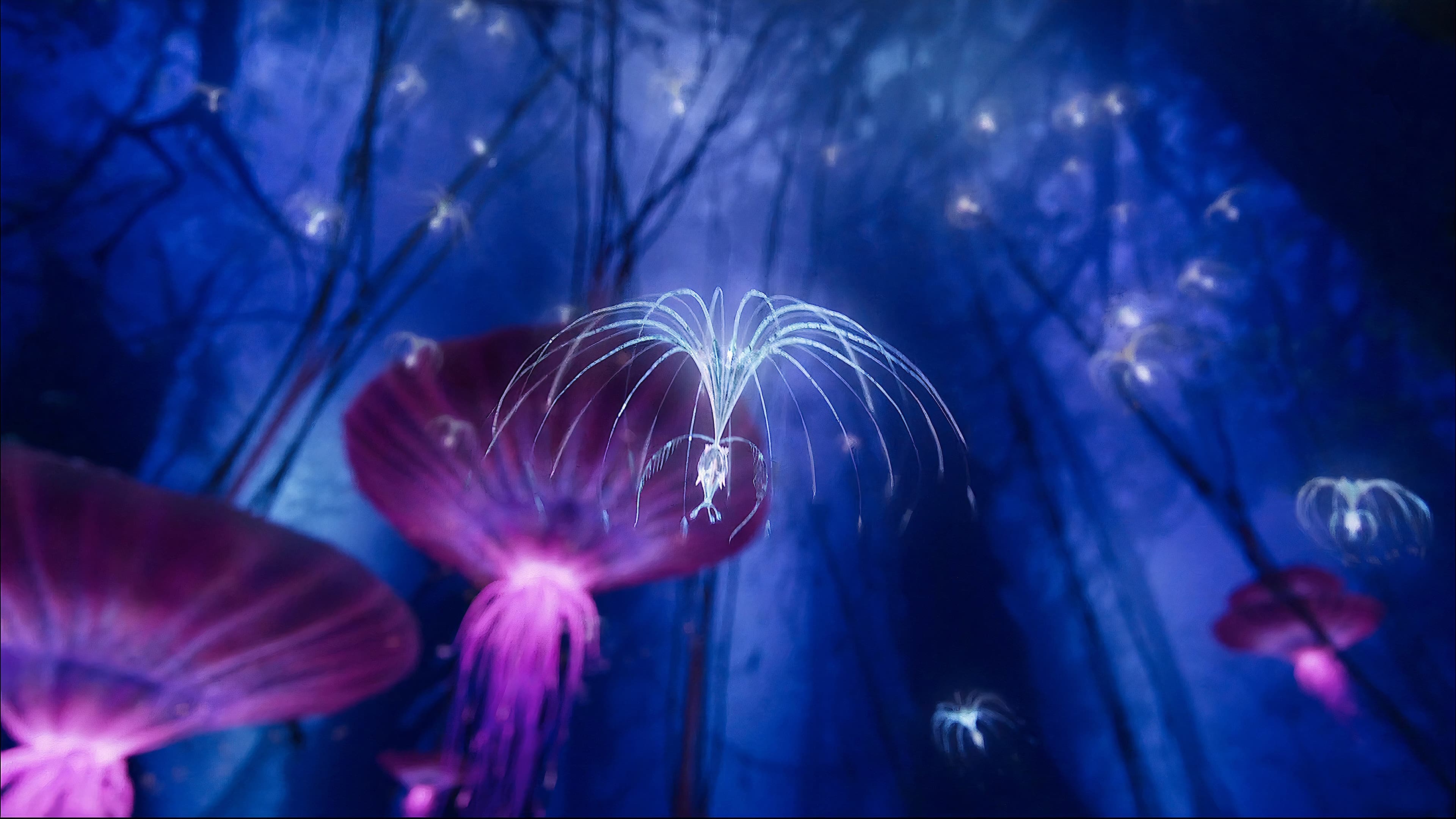
When Avatar premiered in December 2009, it didn’t just break box office records—it fundamentally shifted what audiences believed was possible in cinema. The film went on to become a cultural phenomenon, eventually earning $2.923 billion worldwide and dethroning Titanic as the highest-grossing film of all time.
But the story of how that visual masterpiece came to life? That’s where “Avatar: Creating the World of Pandora” enters the conversation. Released just two months later in February 2010, this 23-minute documentary proved that the making of cinematic history could be just as captivating as the finished product itself.
Director Thomas C. Grane understood something fundamental: audiences didn’t just want to see Pandora—they wanted to understand how it was built. By assembling a crew that included James Cameron himself, alongside visual effects pioneers like Richard Baneham and sound designer Christopher Boyes, Grane created a behind-the-scenes window that felt less like a typical “making of” featurette and more like a masterclass in digital filmmaking. The documentary brought together the architects of an entirely new world, allowing them to walk viewers through their creative process.
What makes this documentary remarkable isn’t just its subject matter—it’s that it captured a pivotal moment in cinema history when filmmaking technology fundamentally transformed what storytellers could accomplish.
The creative approach here was surprisingly intimate for such a massive production. Rather than overwhelming viewers with technical jargon, Grane let the artists speak about their work with genuine passion:
- James Cameron’s vision came across as both visionary and meticulous—a director who’d been conceptualizing this world since 1994, waiting for technology to catch up to his imagination
- Richard Baneham’s contributions showed how character design became an exercise in worldbuilding; the Na’vi weren’t just blue aliens, but inhabitants with their own biological logic
- Laz Alonso and the motion-capture performers revealed the often-invisible artistry of bringing digital characters to life through physical performance
- The collaborative energy between departments demonstrated that groundbreaking cinema required seamless communication across dozens of specialized teams
This was a documentary about process as much as product. For 23 minutes, viewers got to witness the conversations, decisions, and technical problem-solving that transformed Avatar from concept art into a $2.8+ billion phenomenon. The modest runtime became an asset rather than a limitation—it respected audience attention while delivering concentrated insight into why this film mattered.
Critically, the documentary didn’t receive mainstream blockbuster attention. It earned a 6.4/10 rating on IMDb, which honestly tells you more about the limitations of rating systems than about the film’s actual value. This wasn’t a traditional narrative documentary designed to entertain casual viewers; it was a specialized look at craft and technique aimed at filmmakers, students, and serious cinema enthusiasts. That distinction matters. A film engineer’s blueprint isn’t meant to score like a feature film, yet both serve essential purposes.
What did resonate widely was the documentary’s Emmy nomination. At the 2010 Primetime Emmy Awards, “Avatar: Creating the World of Pandora” received a nomination for Outstanding Special Class Programs—recognition that it occupied a unique space in television and documentary work. This acknowledgment validated what Grane had accomplished: creating something that transcended typical promotional material.
The legacy of this documentary extends beyond the accolade itself. Consider what it accomplished:
- Demystified breakthrough technology at a moment when audiences were genuinely confused about how motion-capture and digital cinematography worked
- Legitimized behind-the-scenes content as something worthy of serious critical consideration, not just DVD bonus material
- Documented a specific moment in cinema history when digital tools finally matched directorial ambition, shifting the entire industry toward 3D filmmaking and motion-capture performance
In the years following 2010, countless documentaries attempted to replicate this formula—offering intimate looks at blockbuster filmmaking. But few captured the sense of genuine innovation that Grane managed here. This was filmed at a moment when Avatar‘s impact was still reverberating, when audiences were still processing what they’d witnessed, and when filmmakers worldwide were scrambling to understand the technology Cameron had pioneered.
What resonates most about “Avatar: Creating the World of Pandora,” looking back now, is its role as historical documentation. The film industry had shifted. Motion-capture technology, virtual cinematography, and digital worldbuilding had moved from experimental fringe techniques to the mainstream toolkit of blockbuster filmmaking. This documentary captured that threshold moment—the exact instant when cinema transformed.
The collaboration between Grane’s directorial vision, Cameron’s creative authority, and the technical brilliance of artists like Baneham created something that works on multiple levels. For casual viewers, it’s fascinating window-dressing on a beloved film. For industry professionals and students, it’s essential viewing—a masterclass in how to execute a creative vision at an unprecedented scale. For film historians, it’s invaluable primary source material about early-21st-century cinema evolution.
Even with modest box office figures and a modest critical rating, Avatar: Creating the World of Pandora accomplished something that truly significant work often does: it became indispensable to anyone genuinely interested in how cinema works. That’s a legacy that outlasts any rating or award, proving that the most important documentaries sometimes go under-appreciated by casual audiences while becoming absolutely essential to serious students of film.