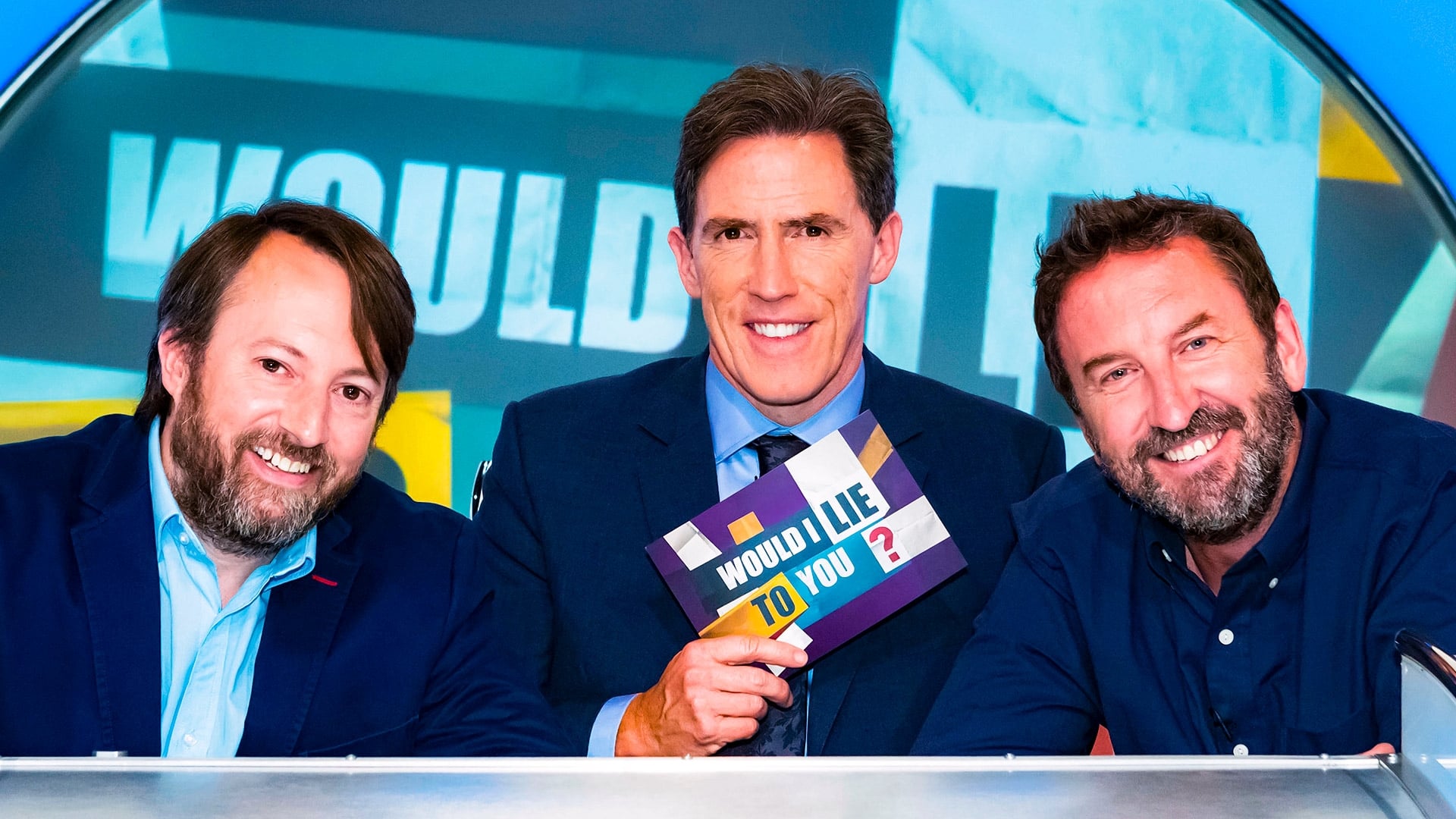
If you’ve somehow missed Would I Lie to You? over the past 17 years, you’re in for a genuine treat—and honestly, it’s one of those shows that deserves far more mainstream attention than it typically receives. When Peter Holmes created this deceptively simple format and it premiered on BBC One back in 2007, nobody could have predicted it would become the kind of cultural fixture that spawns 183 episodes across 19 seasons. But that’s precisely what makes it remarkable: in an era obsessed with high-concept drama and expensive spectacle, this show proved that brilliant comedy could emerge from something refreshingly unpretentious.
At its core, Would I Lie to You? operates on the most elegant premise imaginable. Two teams of comedians face off, tasked with determining whether their opponents are telling the truth or spinning elaborate fabrications. That’s genuinely it. And yet, within that constrained framework, Holmes created something that feels endlessly generative—a format so clever it practically writes itself, allowing comedians to showcase their wit, creativity, and improvisational prowess in equal measure.
> The show’s genius lies not in what it asks of its guests, but in how it trusts them to be funny without relying on scripted punchlines or elaborate sketches.
What makes the show’s 30-minute runtime so perfectly calibrated is that it never overstays its welcome. Each round moves briskly, maintaining momentum while giving every panelist space to breathe and riff. That constraint actually becomes a creative advantage—comedians learn to maximize their material, and the competition between teams naturally escalates the entertainment value. You get the density of comedy that might otherwise be diluted across a longer format.
The show’s influence on British television comedy cannot be overstated. It essentially resurrected the panel show as a genuinely relevant entertainment format at a moment when the genre felt somewhat stale. Rather than relying on trivia questions or celebrity gossip, Would I Lie to You? made the panelists themselves the entertainment—their personalities, their relationships with each other, their ability to think on their feet. This shifted the entire landscape of how comedians were deployed on television.
Over nearly two decades, the show accumulated a devoted fanbase that spans generations, achieving that increasingly rare feat of being both critically respected and genuinely beloved by audiences. The 7.8/10 rating it maintains reflects this genuine affection—not stratospheric enough to indicate hype-driven viewing, but solid enough to demonstrate that people consistently derive real pleasure from it. That’s the rating of a show that’s earned its audience, not one that’s manufactured viral moments.
What makes individual episodes memorable isn’t adherence to a rigid formula, but rather the unpredictable chemistry between panelists:
- Episodes featuring long-standing rivalries between comedians who’ve appeared multiple times take on an extra competitive edge
- Stories that venture into deeply personal or absurd territory—the weirder and more specific, the better—become instantly quotable
- Moments when a panelist’s reputation or known eccentricities become central to whether their claim seems credible
- The rare instances where someone’s lie is so convincing that it fools everyone, or conversely, when an outlandish truth somehow rings authentic
Perhaps most importantly, the show’s success stems from how it treats its audience’s intelligence. There’s no canned laughter track dictating when something is funny. There’s no manufactured drama or contrived tension. Instead, Holmes created a space where genuine wit and cleverness become the commodity, where being funny on the spot matters more than being famous. This has allowed the show to maintain freshness across 19 seasons—it’s not about the novelty of celebrity appearances, but about watching skilled comedians operate at their best.
The show’s ability to consistently return season after season speaks to something deeper about its construction. It’s a format that doesn’t require massive production investment, doesn’t rely on topical humor that ages poorly, and doesn’t depend on any particular celebrity being available. What it does require is a steady stream of intelligent, quick-witted comedians willing to play the game with genuine stakes. The UK comedy scene has proven more than capable of providing that.
The cultural impact extends beyond the comedy world itself:
- It’s influenced how comedy is understood and valued in mainstream entertainment—as a performance-based skill rather than just a delivery mechanism for jokes
- The show has become a proving ground for comedians, a place where reputation is either cemented or challenged in real time
- It’s spawned international adaptations, proving that Holmes’ core concept transcends cultural boundaries
- Among comedy enthusiasts, appearing on the show represents a particular kind of credibility
What Would I Lie to You? ultimately reminds us is that television doesn’t need to be complicated to be brilliant. It needs to be clever, it needs to understand its format, and it needs to trust that audiences will respond to authentic entertainment. That a show built on such a simple premise could sustain itself across 183 episodes is a testament not just to Peter Holmes’ original vision, but to the enduring appeal of watching smart people doing what they do best. In an increasingly fragmented television landscape, that’s something genuinely worth celebrating.