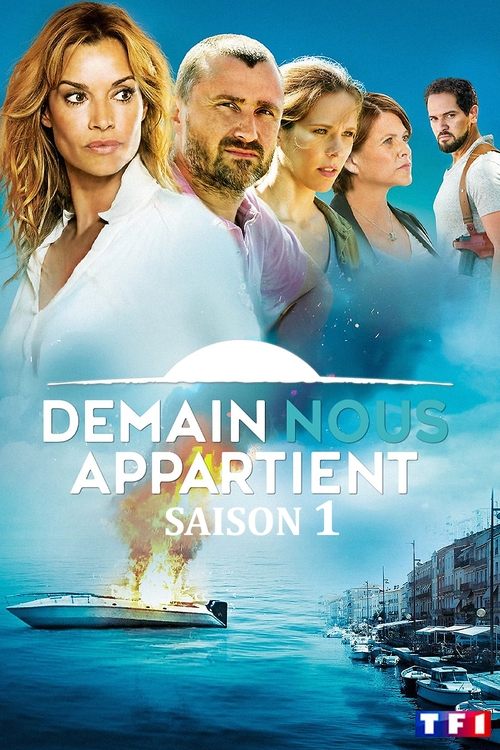
You know that feeling when you discover a show that just keeps giving, episode after episode, and you can’t quite put your finger on why it works so well? That’s exactly what Tomorrow Is Ours managed to achieve when it premiered on July 17, 2017, on TF1. This French drama, created by the collaborative team of Frédéric Chansel, Laure de Colbert, Nicolas Durand-Zouky, Eline Le Fur, and Fabienne Lesieur, debuted with a premise that felt deceptively simple—a mother searching for her missing son after a catastrophic explosion in the bay of Sète—but what unfolded was something far more complex and captivating than anyone anticipated.
What strikes you immediately about Tomorrow Is Ours is how it operates at the intersection of soap opera sensibilities and grounded crime drama. Yes, the show carries that melodramatic DNA we associate with soap operas—the interwoven character arcs, the ongoing mysteries that keep viewers theorizing between episodes—but it never feels cheap or exploitative. Instead, the creators used that 25-minute runtime with surgical precision, crafting episodes that feel both self-contained and part of a larger tapestry. There’s real craft in that balance.
The explosive bay incident that opens the series isn’t just a plot device—it’s a thematic anchor that reverberates through every season, reminding us that one catastrophic moment can upend entire lives and families for years to come.
The show’s premise, centered on Chloé desperately searching for her son Maxime while simultaneously uncovering that her estranged sister’s body has washed ashore, created an engine for storytelling that proved endlessly renewable. This wasn’t a mystery designed to be solved in one season. Instead, it became a springboard for exploring how trauma ripples through communities, how secrets fester in small towns, and how ordinary people respond when their worlds shatter.
Across its two seasons spanning an impressive 2,125 episodes, the show demonstrated remarkable resilience and audience loyalty. Now, we should acknowledge the elephant in the room—the 6.3/10 rating reflects what many viewers felt: a show that didn’t always hit the mark consistently, that sometimes indulged in melodrama when restraint would have served better, and that occasionally prioritized plot momentum over character credibility. That’s fair criticism. But here’s what that rating doesn’t capture: the commitment of viewers who stuck around, who invested in these characters’ lives, who theorized and discussed and genuinely cared about what happened next.
- Season 1 established the fractured Delcourt family dynamics and the mystery surrounding the explosion
- Season 2 deepened the investigation while introducing new threats and character complications
- The dual narrative structure—personal investigation intercut with procedural crime elements—kept audiences engaged across both seasons
What deserves real recognition is how Tomorrow Is Ours found its audience not through critical acclaim but through genuine fan engagement. This is appointment television for a specific demographic, the kind of show that spawned active fan communities, online discussions, and passionate debates about character motivations. The Amazon Prime Video presence on France Channel has allowed it to reach audiences beyond traditional broadcast, maintaining its relevance and creating new discovery pathways for international viewers.
The creative vision from Chansel, de Colbert, Durand-Zouky, Le Fur, and Lesieur was fundamentally democratic in its approach to storytelling. Rather than centering purely on protagonists or antagonists, Tomorrow Is Ours treats its ensemble cast with equal narrative weight. Secondary characters develop their own story arcs, supporting players become central to emotional moments, and the show trusts its audience to care about multiple storylines simultaneously. That’s not always easy to pull off, especially across 2,125 episodes, but it’s the secret sauce that kept people watching.
The show’s return as a Returning Series speaks volumes about TF1’s confidence and audience demand—this wasn’t canceled and forgotten, it was a deliberate pause and continuation, suggesting there’s more story to tell.
The crime and drama elements weren’t there simply for plot mechanics either. By grounding the soap opera genre in authentic criminal investigation, the show elevated what could have been pure melodrama into something that resonated with viewers’ real anxieties about safety, justice, and institutional trust. When a violent explosion occurs, when bodies are discovered, when suspects emerge—these consequences matter because the show treats them seriously rather than as mere catalyst devices.
Looking at Tomorrow Is Ours from a broader television perspective, it represents something we don’t discuss enough: the legitimacy of genre hybridity. In an era where critics often dismiss shows that blend soap opera elements with prestige drama conventions, this series unapologetically lived in both worlds simultaneously. It proved that you didn’t need prestige network approval or critical consensus to tell stories that mattered to audiences. The show found its people and deepened its relationship with them across multiple seasons.
The 25-minute episode structure deserves particular praise here. That runtime—longer than a sitcom but shorter than a traditional drama hour—created a specific narrative rhythm. Episodes could accommodate personal moments, investigative developments, and relationship complications without feeling bloated. This constraint actually fostered creativity; the writers learned to maximize emotional impact within defined parameters.
As we look at the current status as a Returning Series, there’s real anticipation about what comes next. The creators built something durable, something that proved it could sustain viewer interest across hundreds of episodes, something that navigated the tricky balance between serialized storytelling and episodic satisfaction. Sure, not every moment worked perfectly—that 6.3 rating is evidence of that—but the willingness to experiment, to prioritize emotional truth over commercial polish, and to trust audiences with complex narratives that don’t resolve neatly is exactly the kind of approach television needs more of right now.