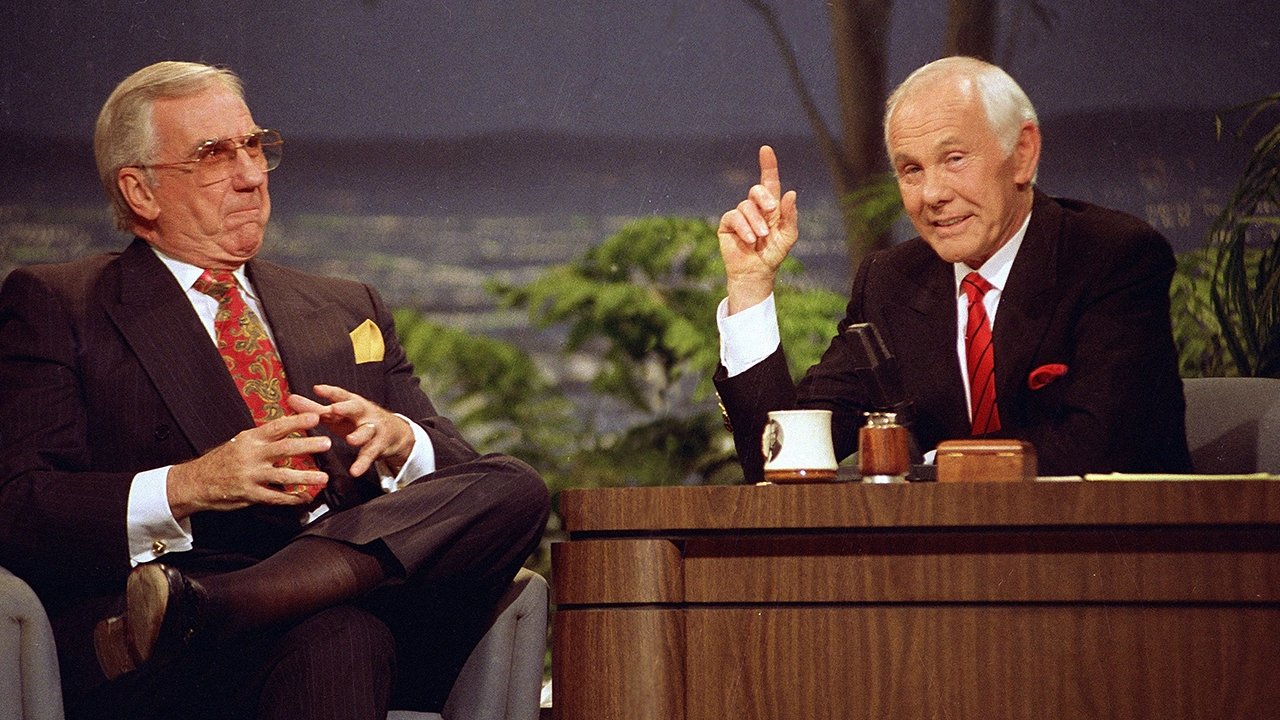
When The Tonight Show Starring Johnny Carson premiered on October 1st, 1962, television audiences had no idea they were about to witness the birth of an institution. What started as an experiment in late-night entertainment would become the defining talk show of an era, a nightly ritual that shaped how Americans consumed celebrity, comedy, and conversation for three decades. Over 31 seasons and 3,689 episodes, the show didn’t just entertain—it fundamentally changed what television could be during prime time’s quieter hours.
The genius of the show lay partly in its timing. Sylvester Weaver and Steve Allen envisioned something that hadn’t quite existed before: a show that could blend the intimacy of late-night with the production values and star power of network television. By the time Carson took over the hosting duties, the format had been refined into something almost deceptively simple—a 60-minute window where anything could happen. That runtime became crucial. It was long enough to develop genuine conversation, to let sketches breathe, to welcome multiple guests and let personalities clash and complement each other in ways that shorter formats simply couldn’t accommodate.
What made Carson’s tenure particularly remarkable was his ability to make the format feel both structured and spontaneous. The show had a clear formula—monologue, sketches, celebrity guests, comedy bits—but within that framework, there was room for genuine surprise. You never quite knew what would happen when a guest sat down, and that unpredictability became addictive. Audiences tuned in night after night not just to see their favorite stars, but to see how Johnny would interact with them, what jokes would land, what moments would become the next day’s water-cooler conversation.
> The show’s cultural footprint was enormous. It didn’t just reflect popular culture—it actively shaped it. Comedians launched careers on that couch. Musicians debuted songs. Politicians and actors used the show as a platform to rehabilitate or enhance their images. The Tonight Show became the most important stage in entertainment.
The ratings tell a story of sustained excellence across three decades. While the show maintained a solid 7.5/10 rating across its entire run, the consistency itself is remarkable—hovering between 6.7 and 8.0 in the sampled seasons suggests an audience that remained engaged and loyal. This wasn’t a flash in the pan; this was appointment television at its most fundamental. Night after night, year after year, people chose to end their day with Johnny Carson. That kind of loyalty speaks to something deeper than mere entertainment value.
Carson’s particular brand of charm became inseparable from the show’s identity. He was a performer who understood the grammar of television intimately—how to use a raised eyebrow, how to play with timing, how to make millions of people feel like he was speaking directly to them. But he was also a skilled interviewer who could adapt to any guest, whether it was Groucho Marx introducing him, or Joan Crawford, Mel Brooks, Tony Bennett, and Rudy Vallee gracing the couch. He made stars feel comfortable enough to be themselves, which in turn made the show feel vital and unpredictable.
The show’s influence on television landscape cannot be overstated. It established the template that late-night talk shows still follow today. The opening monologue, the celebrity interviews, the comedy bits, the band—these elements became so ingrained in our understanding of late-night television that it’s easy to forget they were innovations. Every talk show host who came after, from David Letterman to Conan O’Brien to today’s hosts, built their shows on the foundation that Carson established.
Beyond format, the show became a cultural barometer. It was where you went to understand what America was laughing about, what stories mattered, who had captured the public imagination. The conversations that happened on that stage rippled through the culture. When a major figure appeared on Carson’s couch, it mattered. The show had earned enough cultural capital to make appearances meaningful—they could launch careers, salvage reputations, or create memorable moments that would echo for years.
The 3,689 episodes represent an almost incomprehensible amount of content. Night after night, Carson and his team had to deliver. There were undoubtedly nights that were stronger than others—the creative peaks and valleys that any long-running show experiences. Yet the show maintained its relevance across changing entertainment landscapes, through shifts in comedy styles, through cultural upheaval. The fact that it ran from 1962 to 1992 meant it spanned the Vietnam War, the civil rights movement, Watergate, the rise of rock and roll, and countless other seismic cultural shifts.
What’s particularly striking is how the show remains accessible today. While the series has concluded, viewers can still discover these episodes across multiple streaming platforms—fuboTV, PlutoTV, and dedicated streaming channels devoted to the archive. This means new generations can experience what made the show matter, can understand why Carson became an American icon, and can appreciate the quality of entertainment that sustained an audience for three decades.
The 7.5/10 rating, while respectable, perhaps doesn’t fully capture what this show accomplished. Ratings are snapshots, but The Tonight Show Starring Johnny Carson was about the cumulative impact of thousands of hours of entertainment, the countless moments that became part of the cultural fabric, the nightly ritual that millions built their evenings around. That legacy—the innovation, the consistency, the cultural resonance—is what truly defines why this show deserves attention, not just as a historical artifact, but as a masterclass in how to create television that matters.