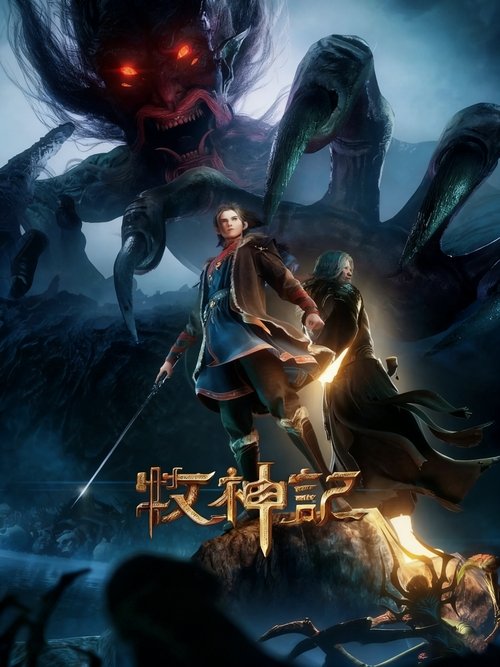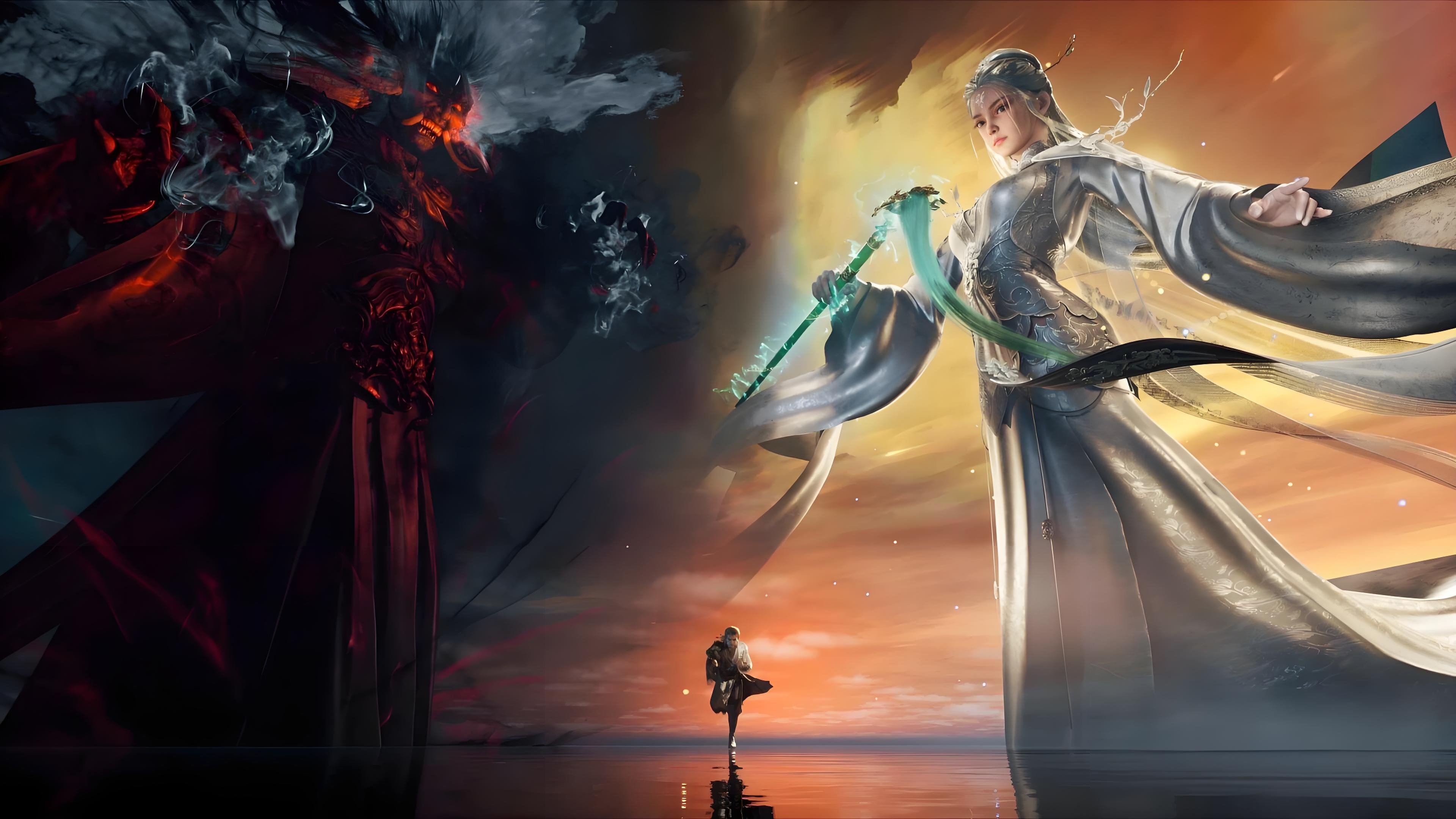
When Tales of Herding Gods premiered on October 27, 2024, it arrived with the kind of quiet confidence that only comes from exceptional storytelling. Created by Zhai Zhu and released through bilibili, this 78-episode first season immediately signaled something special was happening in the animated sci-fi fantasy space. With an 8.2/10 rating that’s held remarkably steady across its run, the show has become the kind of series that gets compared to the absolute titans of the genre—and honestly, those comparisons aren’t hyperbole.
What makes this show genuinely noteworthy is how it managed to accomplish something rarely seen: telling a complete, ambitious narrative across 78 episodes while respecting the viewer’s time through its lean 20-minute runtime. There’s a discipline to that constraint that forces every scene, every line of dialogue, every character moment to earn its place. Zhai Zhu’s creative vision clearly understood that pacing isn’t just about speed—it’s about maximizing impact. The show doesn’t meander, doesn’t pad its runtime with filler, and that focused approach became its greatest strength.
> The series proved that you don’t need bloated episode counts to tell epic stories; you need clarity of vision.
The sci-fi and fantasy elements blend seamlessly rather than competing with each other, creating a world that feels both grounded and wondrous. The action sequences showcase the strengths of animation as a medium—there’s a fluidity and creativity here that live-action simply can’t match, and the show leans into that advantage without ever sacrificing narrative coherence.
What audiences connected with most deeply:
- A protagonist journey that manages to be both intimate and cosmically significant
- World-building that unfolds organically without exposition dumps
- Action set pieces that advance character development simultaneously
- Supporting cast members who feel genuinely integral rather than decorative
- Thematic depth about power, responsibility, and what it means to transcend limitations
The cultural conversation around Tales of Herding Gods developed in interesting ways. Fans didn’t just discuss individual episodes—they engaged with the show’s larger philosophical questions. Viewers compared it to Battle Through the Heavens, Mortal Journey to Immortality, and Soul Land, and while those are distinguished properties in their own right, the discussion revealed something important: audiences recognized they were watching something that belonged in that conversation. That’s not casual praise; that’s positioning a brand-new show alongside established classics.
The episode-to-episode consistency is actually remarkable when you examine the ratings trajectory. Starting strong at 8.5 with the premiere, the show improved as it progressed, hitting 8.8 and 8.9 in subsequent episodes. That’s a pattern you rarely see—usually series either maintain or slightly decline as audiences filter out. Here, the show kept earning viewer trust and investment, suggesting that Zhai Zhu’s long-form storytelling strategy was paying dividends. By the time viewers reached the deeper narrative arcs, they were more invested, not less.
The 20-minute runtime warrants special attention when discussing creative achievement. This constraint forced the writers to make different choices than traditional episode structures demand. There’s no room for scene-setting that doesn’t do double duty; every moment carries narrative, thematic, or character weight. The action sequences had to be designed differently too—shorter doesn’t mean simpler, but rather more economical. The animation team clearly understood this, delivering fight choreography that’s striking precisely because it’s distilled to its essential elements.
What makes Tales of Herding Gods stand apart in the current landscape:
- Narrative efficiency – 78 episodes that feel essential, not padded
- Tonal balance – Epic scope never overwhelms intimate character moments
- Visual storytelling – Animation that enhances rather than merely illustrates the narrative
- Thematic sophistication – Ideas about transcendence, ambition, and immortality explored with nuance
- Consistent quality – Ratings that climb or hold rather than decline
The show’s “Returning Series” status speaks to something significant as well. In an industry often fragmented between one-off productions and endless renewals, this project immediately signaled confidence in its own narrative while promising more to come. That’s the posture of creators who know they’ve built something substantial—there’s more story to tell, and the foundation is solid enough to support it.
What’s particularly striking about Tales of Herding Gods is how it respects its source material while translating it for a contemporary audience. The show doesn’t apologize for its genre conventions; instead, it reinvigorates them. When viewers talk about wanting more from their animated fantasy series, they’re increasingly pointing to shows like this one—productions that understand that animation’s strengths lie in its ability to visualize the impossible while maintaining emotional authenticity.
The journey from its October premiere to its current status represents something worth celebrating: a show that proved you could tell ambitious, sophisticated, genre-spanning narratives with discipline and care. Tales of Herding Gods doesn’t demand endless hours; it demands attention and rewards it completely. That’s not just good television—that’s television done with purpose, and it’s exactly the kind of show that influences how the medium evolves next.