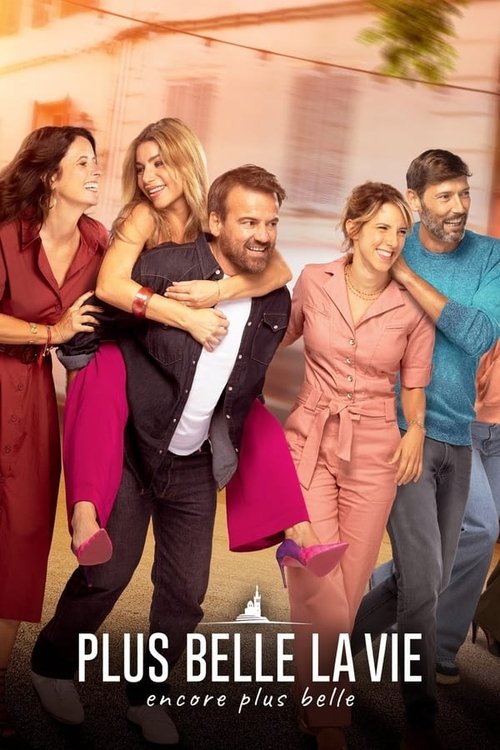
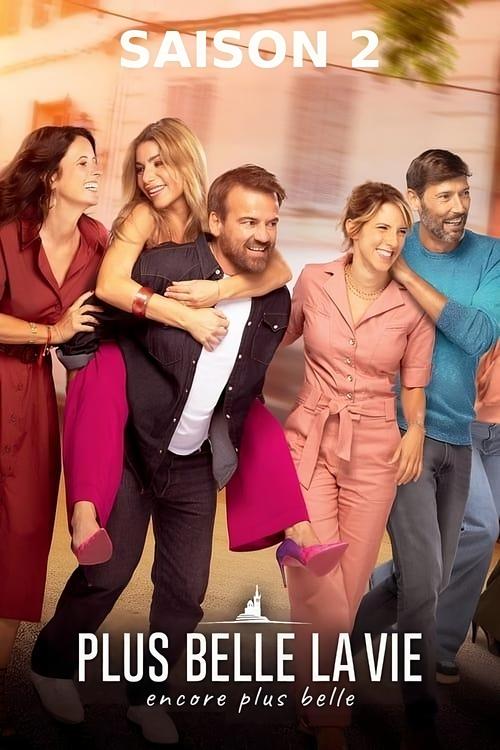
When Plus belle la vie, encore plus belle premiered on January 8th, 2024, it arrived as something more than just another revival. Here was a show tasked with an almost impossible mission: to resurrect one of French television’s most beloved franchises while honoring nearly two decades of storytelling that had come before. Hubert Besson understood that this wasn’t simply about bringing back familiar faces and locations—it was about creating a genuine continuation that could stand on its own merits while respecting the legacy of the original series that had captivated audiences since 2004.
The creative decision to reimagine the show as Plus belle la vie, encore plus belle (even more beautiful, this life) was inspired. By keeping the spiritual DNA of the original while explicitly signaling evolution in the title itself, Besson gave himself permission to push the narrative forward rather than retreating into nostalgia. The 20-minute episode format proved to be a crucial constraint that actually enhanced the storytelling. Where many contemporary soaps sprawl and meander, this tighter runtime forced writers to distill drama into its purest form—every scene had to earn its place, every emotional beat had to land with precision.
What makes this show genuinely worth discussing is how it tackled the aftermath of genuine tragedy. The premise—that one year had passed since the collapse of the Mistral building—wasn’t just a plot device. It was a tonal anchor that gave the entire revival direction and purpose. This wasn’t a reset button. The collapse had consequences, real damage that the characters had to navigate. Characters like Mirta, now working as a caretaker in Massalia, a student residency, represented how life moved forward differently for different people. That kind of specificity, that commitment to showing how trauma reshapes lives, elevated the show beyond typical soap opera tropes.
> The show’s cultural footprint emerged precisely because it refused to play it safe with a legacy property. Instead of retreading the Mistral as if nothing had changed, the writers leaned into the weight of what had happened and made that the emotional bedrock of the new era.
Across three seasons and 490 episodes, Plus belle la vie, encore plus belle built something that resonated with audiences despite landing with a 5.7/10 rating—a score that deserves some context. That number tells us the show wasn’t universally beloved, and that’s actually worth examining rather than dismissing. A 5.7 on IMDb suggests an engaged but divided viewership, which often happens when a show takes genuine creative risks. Some viewers wanted the comfort of the familiar. Others wanted something bolder. The fact that the show navigated that tension for three full seasons speaks to a creative team that knew exactly what they were trying to accomplish.
The storytelling choices became increasingly ambitious as the series progressed. Blanche and Luna’s decision to create an organization for women represented the show’s commitment to letting secondary characters become agents of their own narratives. This wasn’t a soap opera that simply reacted to male-driven plot machinery—it was one that deliberately positioned women as architects of social change. That thematic throughline, woven across multiple seasons, demonstrated that Besson’s vision extended far beyond surface-level melodrama.
Key elements that defined the show’s approach:
- Structural anchoring: The collapse of the Mistral provided genuine narrative weight rather than easy reset mechanics
- Character specificity: Characters moved to new locations (Mirta’s residency placement) that reflected realistic consequence and adaptation
- Social consciousness: Stories about women’s organization and support networks felt organic rather than imposed
- Temporal commitment: Three seasons and 490 episodes showed genuine faith in long-form storytelling
What’s particularly interesting about tracking this show’s journey from its January 2024 premiere to its current status as a Returning Series is how it established itself in the French television landscape. TF1’s commitment to continuing the property—even with a modest rating—suggests the network understood something about cultural loyalty that raw numbers don’t capture. The show had created something worth coming back to, even if not everyone was fully convinced.
The fact that the series maintained enough momentum to return tells us something important about how television impact gets measured in the modern era. Ratings don’t tell the whole story, especially for serialized dramas with established fanbases. Plus belle la vie, encore plus belle had carved out a space where meaningful storytelling could happen—where the collapse of a building could echo through episodes, where characters could build organizations dedicated to supporting women, where the passage of a single year could transform everyone’s trajectory.
Looking at what Besson accomplished across these 490 episodes, what strikes most is the refusal to either completely reinvent or completely retreat. The show inherited a massive responsibility but treated that inheritance as something living rather than something to be preserved in amber. That balance—respecting what came before while being brave enough to move beyond it—is genuinely difficult to execute in television, particularly in the soap and drama genres where audiences can be intensely protective of what they love.
The show’s current streaming availability on TV5 Unis means new audiences can discover it on their own terms. They’ll encounter a series that swings for the fences, that makes structural choices that don’t always work for everyone but that clearly come from a place of genuine artistic conviction. They’ll see three seasons of a show that wasn’t afraid to let its world be complicated, damaged, and still worth fighting for.