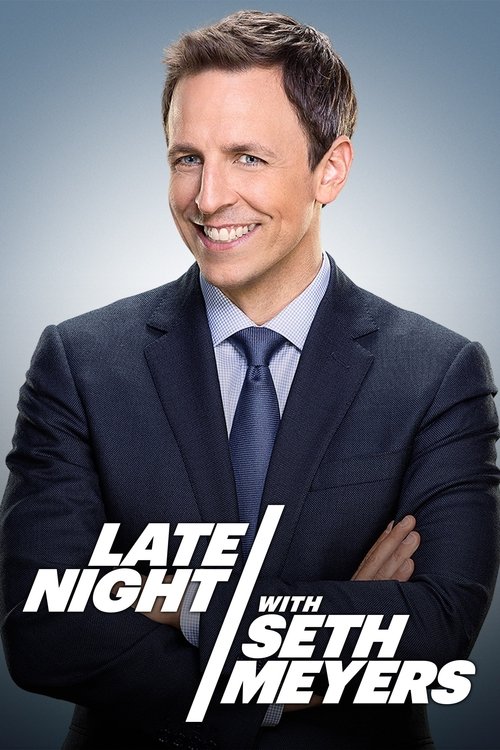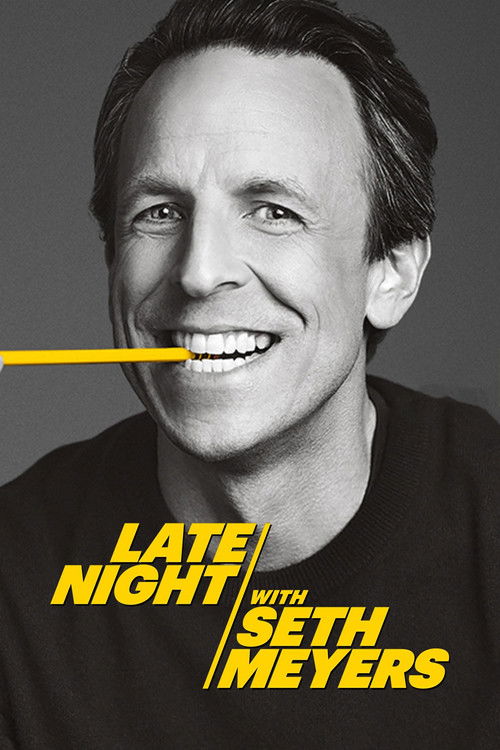
When Late Night with Seth Meyers premiered back on February 25, 2014, it arrived with significant shoes to fill—literally stepping into the NBC late-night slot vacated by legends. What’s remarkable, though, is how the show didn’t just survive that transition; it carved out its own distinct identity within the crowded landscape of comedy and current events commentary. Over thirteen seasons and 1,757 episodes, Meyers and his team built something genuinely worth discussing, even if the 5.3/10 aggregate rating doesn’t immediately capture what makes the show resonate with its dedicated audience.
The show’s greatest strength has always been its willingness to blend sharp political satire with genuine human connection. Unlike some talk shows that feel like obligatory promotional vehicles, Late Night manages to feel both timely and intimate—a feat that shouldn’t be underestimated in today’s fractured media landscape. The format itself, anchored by Meyers’ desk and his sharp comedic timing, echoes classic talk show traditions while the show’s approach to comedy segments feels distinctly modern and responsive to current events.
Consider the trajectory of how the show found its footing:
- Early seasons (2014-2016) established Meyers as a capable host while he still felt somewhat overshadowed by his SNL legacy
- Mid-run (2017-2020) transformed the show during the Trump presidency, when late-night comedy became urgent and culturally necessary
- Recent seasons (2021-present) have allowed for greater experimentation and confidence in the format
One of the most consequential elements nobody talks about enough is the supporting cast and production design. Fred Armisen’s commitment as a band member, the 8G Band’s musical presence, and the rotating creative team behind segments like “A Closer Look” created a production ecosystem that elevated the entire enterprise. These aren’t just background elements—they’re integral to why the show maintains its distinctive voice across nearly a decade and a half of episodes.
The show’s cultural footprint extends beyond traditional ratings metrics. It became a space where serious political analysis could live alongside sketch comedy without feeling jarring or contradictory.
What’s particularly interesting is examining how the show evolved in response to its audience and the cultural moment. The early seasons (with ratings hovering around 4.4-4.9) felt like the show was still discovering itself. But starting with Season 3 through Season 6, something clicked—ratings climbed to the 5.5-6.0 range as the show became more confident in its satirical voice and more willing to dedicate significant airtime to deep-dive political commentary wrapped in comedy.
The creative decision to keep runtime flexible deserves recognition too. Rather than strict adherence to a predetermined segment length, the show allowed segments to breathe or compress based on their needs. This fluidity made it feel more like a living, breathing program than a rigidly formatted machine—which matters more than you’d think for maintaining audience investment across 1,757 episodes.
What the show has consistently achieved is something increasingly rare in contemporary television:
- Intellectual rigor wrapped in accessible comedy
- Cultural relevance without sacrificing genuine humor
- Consistency across a massive episode count without feeling formulaic
- Vulnerability from the host, making the show feel personal despite the professional distance between host and audience
The broadcasting landscape has shifted dramatically since 2014. Traditional late-night viewership has contracted across the board—viewers have fragmented into YouTube clips, streaming services, and social media. That Late Night with Seth Meyers has sustained itself across thirteen seasons while maintaining a 5.3/10 aggregate rating tells you something important: the show has found a core audience that values what it does, even if that audience is smaller than the network might ideally want.
Availability on Peacock Premium has also modernized how audiences engage with the show. The shift from appointment television to on-demand streaming has actually suited Late Night well—viewers seeking specific segments or monologues can find them easily, which builds a different but potentially more engaged audience relationship than traditional broadcast television fostered.
Looking at the show’s journey, what becomes clear is that Late Night with Seth Meyers succeeded not by chasing ratings or trying to be something it wasn’t, but by perfecting a specific approach to late-night comedy and commentary. The show understood that in an era of information overload, audiences valued hosts who had something to say—not just guests to promote and banter with. That intellectual ambition, paired with Meyers’ genuinely funny comedic sensibility, created something that endured.
The show’s continued status as a Returning Series suggests it has found sustainable stability in the modern television ecosystem. That’s no small achievement when you consider the seismic shifts in how people consume media since 2014. For fellow TV enthusiasts who value smart comedy and unafraid political commentary, Late Night with Seth Meyers remains essential viewing—proof that thoughtful, ambitious late-night television can still find and maintain an audience worth keeping around.