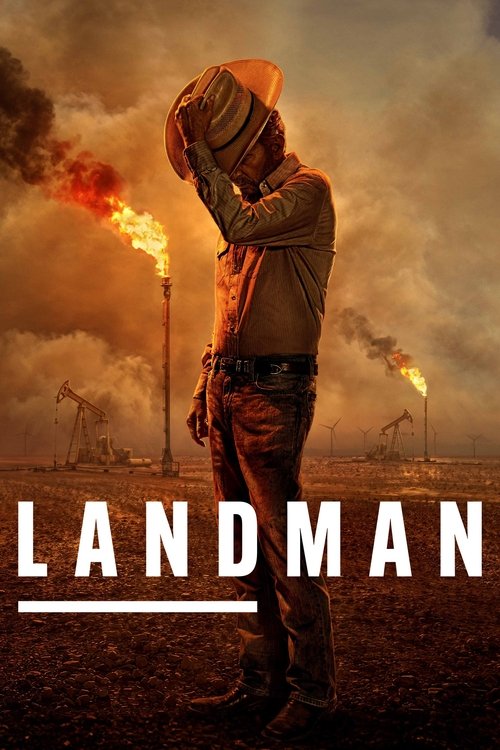
If you haven’t jumped into Landman yet, you’re missing one of the most compelling dramas to emerge from the streaming landscape in recent memory. When Taylor Sheridan and Christian Wallace premiered this series on November 17th, 2024, they didn’t just launch another prestige drama—they tapped into something that audiences have been craving: a gritty, character-driven exploration of American capitalism wrapped in the oil and gas industry. What makes this show particularly fascinating is how it’s managed to become a genuine cultural phenomenon while simultaneously sparking heated conversations about what modern storytelling should be.
The core appeal of Landman lies in its refusal to moralize. This isn’t a story designed to lecture you about environmental concerns or corporate greed. Instead, Sheridan and Wallace created a narrative that respects their audience’s intelligence, diving deep into the world of landmen—the professionals who negotiate mineral rights and navigate the complicated relationships between oil companies and landowners. It’s a niche subject matter that shouldn’t work on television, yet the 8.0/10 rating and the audience’s sustained engagement through 20 episodes across two seasons proves that authenticity and character depth transcend genre boundaries.
What audiences discovered: A show willing to complicate morality, avoid easy answers, and treat its ensemble cast with genuine narrative weight rather than reducing them to archetypes.
The streaming numbers tell part of the story—9.2 million viewers in the Season 2 premiere’s first two days, 1.6 billion minutes viewed in a single week, nearly 10 billion minutes by Q4 2024. But numbers don’t capture why people keep returning to Landman. The show’s pacing and structure, which unfolds with an Unknown runtime that occasionally stretches beyond traditional television constraints, allows scenes to breathe and characters to reveal themselves organically. This creative choice—letting episodes run as long as the story demands rather than conforming to rigid time slots—fundamentally changed how the narrative could operate.
The journey from that November premiere to its current status as a Returning Series has been remarkable precisely because the show refused to soften its edges for mass appeal. Instead, it doubled down on complexity, which is why Season 2 found audiences so divided. Some viewers praised the narrative’s willingness to explore uncomfortable territory and moral ambiguity, while others craved more conventional dramatic satisfaction. This division isn’t a weakness—it’s proof the show is doing something substantial enough to provoke genuine response.
Why Landman captured audiences:
- Authentic world-building in an unexplored industry
- Multi-dimensional characters with competing moral codes
- Refusal to provide easy resolutions or judgments
- Strong ensemble cast delivering layered performances
- Narrative complexity that respects viewer intelligence
What Taylor Sheridan brought to Landman alongside Wallace is his signature approach to character-driven drama, honed through previous successes but deployed here with particular precision. The show operates on the principle that ordinary people navigating extraordinary circumstances create compelling television. Your protagonist isn’t a superhero or a tragic antihero designed for maximum emotional manipulation—he’s a professional trying to maintain his relationships and his integrity in an industry that constantly tests both. This restraint, this refusal to amplify drama artificially, is what distinguishes Landman from more conventional streaming fare.
The cultural footprint this show has left is particularly interesting because it succeeded without becoming a water-cooler phenomenon in the traditional sense. Instead, it built a devoted audience that actively debated its merit, its morality, and its direction. The divisiveness around Season 2 actually speaks to the show’s strength—it created enough compelling material to inspire genuine critical conversation rather than passive consumption. In an era of streaming saturation, that’s increasingly rare.
The show’s strategic advantages:
- A creator with proven track record leveraging deeper storytelling
- A subject matter with inherent complexity and built-in conflict
- Streaming flexibility that enhanced narrative potential
- An ensemble approach that distributed narrative weight
- Willingness to embrace audience division over universal appeal
The technical achievement shouldn’t be overlooked either. With 20 episodes spanning two seasons, Landman maintained momentum without overstaying its welcome or losing focus. The Unknown runtime became a storytelling tool—some episodes needed 45 minutes, others could stretch to 65. This flexibility meant that pacing served narrative rather than the other way around. It’s a subtle creative choice that most viewers never consciously register, but it fundamentally impacts how the story lands emotionally and intellectually.
As one observer noted, Landman proved that audiences would invest deeply in a show about the business of mineral rights if the characters and storytelling were sufficiently compelling. That’s not a small achievement in contemporary television.
What makes Landman endure isn’t that it solved the formula for perfect television—it’s that it trusted its audience enough to present complex scenarios without hand-holding. It built characters we could understand without necessarily liking, and situations we could analyze without clear moral resolution. In doing so, it carved out meaningful space in the drama landscape for stories that prioritize authenticity and character over spectacle. Whether you’re drawn to the industry details, the character work, or the larger questions about American enterprise that the show circulates, Landman rewards sustained attention. That’s why people keep watching, keep talking about it, and why its divisiveness feels like validation rather than criticism. It made us care enough to argue.