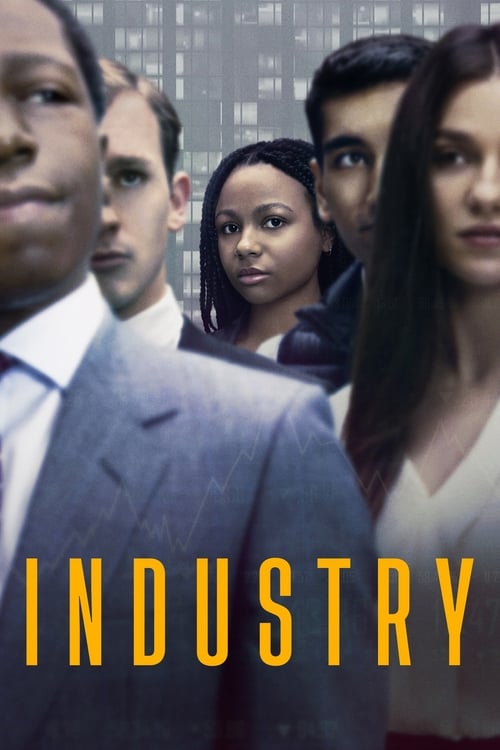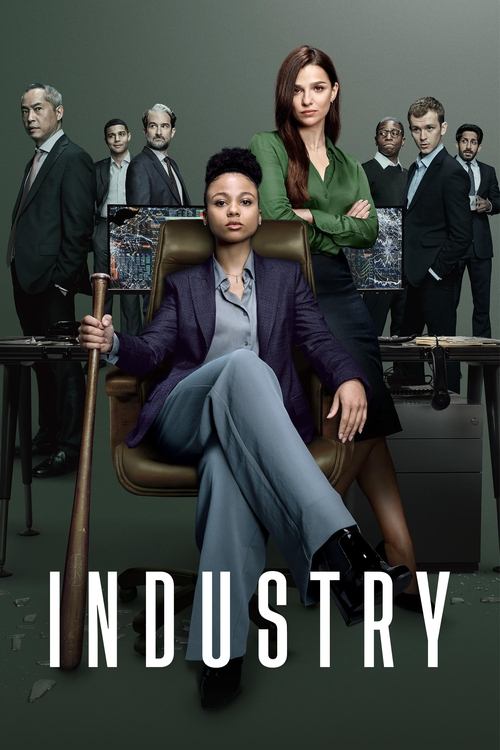
When Industry debuted on HBO in November 2020, it arrived with quietly ambitious intentions—to dissect the ruthless world of high finance through the eyes of sharp, flawed, morally complicated young professionals. What creators Mickey Down and Konrad Kay crafted wasn’t just another prestige drama about money and ambition; it was a show willing to get uncomfortably close to its characters’ vulnerabilities while maintaining a laser focus on the institutional systems that shape them. Over four seasons and 32 episodes, the series has evolved from a promising entry point into HBO’s catalogue into something far more impressive: a culturally resonant examination of power, ambition, and survival that audiences keep coming back for.
The show’s journey through its ratings arc tells a fascinating story about how television can deepen and improve as it finds its footing. Industry premiered to a solid foundation, but what’s remarkable is how it built from there. Season 1 established the premise—a cohort of ambitious graduates competing for permanent positions at a major investment bank—but it was Seasons 2 and 3 where the show truly hit its stride, with ratings climbing to an impressive 7.8 and then 8.7 respectively. The recent Season 4 premiere, which drew 800,000 viewers and a 20% jump from Season 3’s premiere, signals something crucial: audiences aren’t just sticking around out of habit. They’re actively seeking out what Down and Kay are building.
What makes Industry stand out in the crowded landscape of prestige drama is its refusal to moralize. Unlike shows that position their anti-heroes as cautionary tales, Industry treats its characters—particularly Harper Stern, Robert Spattley, and the rest of the Pierpoint crew—with genuine complexity. These aren’t people we’re meant to judge from a distance; they’re people we understand, sometimes disturbingly so. The show’s 50-minute runtime gives each episode breathing room to develop character motivations across multiple scenes, moving between the personal and professional with a sophistication that lesser dramas struggle to achieve. You see a character betray someone on the trading floor, then watch them grapple with it in a quiet moment alone, and suddenly the moral calculus becomes far more interesting.
> The series distinguishes itself by rejecting the “bad situation of the week” formula that plagues lesser dramas. Instead, consequences ripple across episodes and seasons, creating a narrative momentum that rewards close viewing.
The cultural footprint Industry has left on television is harder to quantify than viewership numbers, but it’s undeniably there. The show sparked ongoing conversations about workplace toxicity, gender dynamics in finance, and the psychological cost of ambition that extended far beyond traditional television criticism. Social media discussions following major plot developments felt genuinely invested rather than performative—people were debating character choices with the fervor typically reserved for prestige television’s biggest moments. The show earned discussions about power, manipulation, and survival that felt urgent and contemporary.
What’s particularly striking about the show’s evolution is how it managed the difficult feat of getting better. Many HBO dramas peak early or plateau; Industry seemed to understand its own potential and leaned into it. The writing became sharper, the character arcs more intricate, and the thematic resonance deeper. By Season 3, the show had transcended its initial premise—the competition for permanent positions resolved seasons ago—and instead became an unflinching look at how institutions corrupt, how ambition sustains, and how people rationalize their own complicity.
The creative vision of Down and Kay deserves particular attention here. These are writers who understood that a show about finance could actually be a show about power dynamics, moral compromise, and the performance of competence. The mechanics of banking serve as the backdrop, but the real subject is how people navigate spaces where they feel perpetually inadequate or threatened. It’s character-driven drama that happens to take place in boardrooms and trading floors rather than being limited by them.
The 6.8/10 aggregate rating, when examined alongside the season-by-season breakdown, reveals an important truth: this show’s reputation has grown significantly beyond its initial reception. The improvement trajectory from Season 1 through Season 3 demonstrates that audiences and critics alike recognized a show deepening and challenging itself. Season 4’s strong premiere numbers suggest the show has transcended early skepticism entirely, achieving a dedicated following that actively promotes it.
Key reasons why Industry deserves your attention:
- Uncompromising character work – No one on this show gets an easy redemption arc or simple narrative resolution
- Financial complexity handled with intelligence – The banking world feels authentic without becoming impenetrable
- Strong ensemble casting – The supporting players are just as compelling as the leads
- Willingness to make uncomfortable choices – Major characters face genuine consequences that stick
The streaming availability across HBO Max and Spectrum On Demand has also expanded the show’s reach beyond its original HBO premiere audience. The show benefits from the binge-watch format, where viewers can appreciate how carefully plotted character arcs unfold across multiple episodes. What might have felt scattered watching week-to-week becomes remarkably coherent when experienced as a complete narrative.
As Industry continues its run as a returning series, it represents something increasingly rare in prestige television: a show that improves with age and deepens its thematic concerns with each season. It’s the kind of series that quietly becomes essential, not through cultural dominance or critical consensus, but through the accumulated evidence of rigorous, uncompromising storytelling. If you haven’t experienced what Down and Kay are doing with this material, the 32 episodes that exist so far represent some of the most intelligent, provocative drama television has offered in recent years.