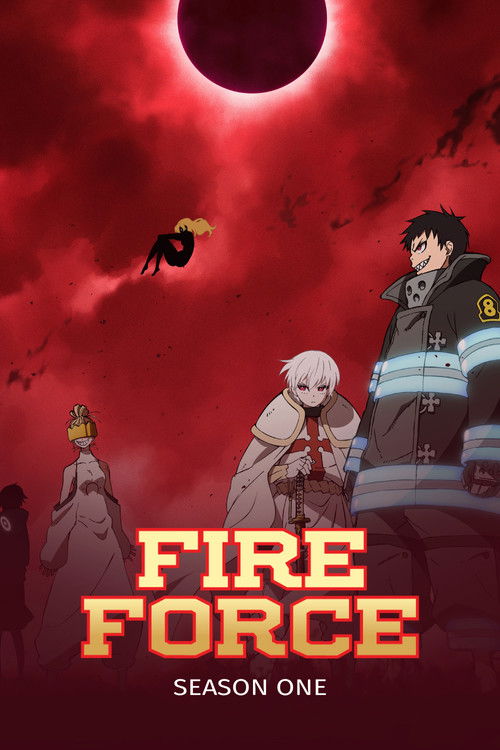
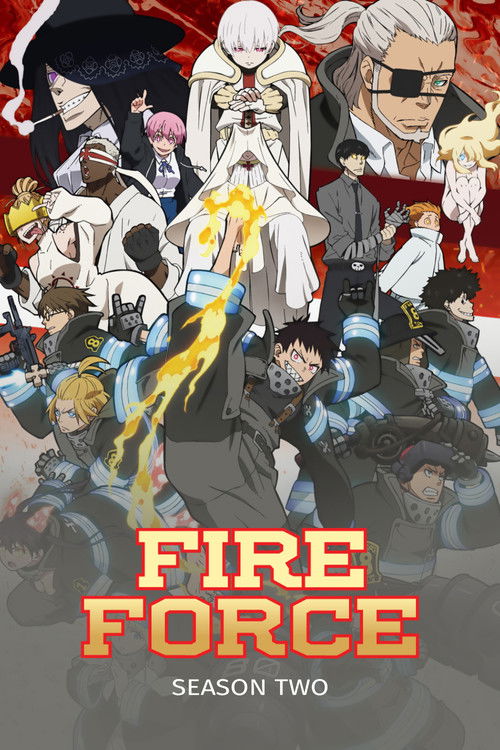
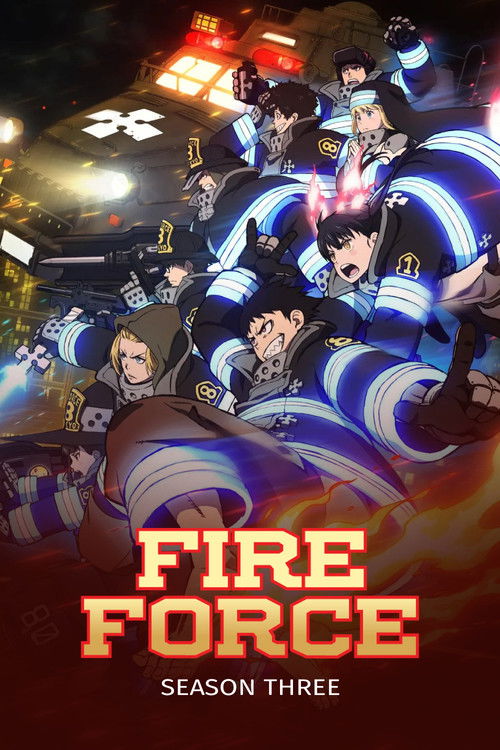
When Fire Force debuted on July 5th, 2019, it arrived with a clear mission: deliver explosive action wrapped in surprisingly thoughtful commentary about society, corruption, and redemption. What started as a seemingly straightforward premise—firefighters battling spontaneous human combustion—evolved into something far more ambitious across its three-season run of 73 episodes. The show’s 8.4/10 rating tells you audiences felt it too, recognizing that beneath the pyrotechnics lay genuine character development and thematic depth that elevated it above standard action fare.
The core appeal lies in how the series managed to blend multiple genres without ever feeling scattered. Action and Adventure form the backbone, sure, but the Sci-Fi & Fantasy elements create this rich world where the rules of our reality don’t quite apply—spontaneous combustion exists alongside secret organizations and latent superhuman abilities. Yet what really catches people off-guard is the Comedy. The show never takes itself so seriously that it forgets to have fun, and that tonal balance proved crucial to its success. Characters like Shinra Kusakabe could be delivering earnest speeches about saving humanity while simultaneously finding himself in absurdly funny situations that reminded viewers not to take everything too seriously.
The 24-minute episode runtime actually deserves credit here. Rather than padding stories with filler, the creators used that constraint as a tool for tight, efficient storytelling. Each episode had to earn its place, which meant minimal waste and maximum impact. When you’re only working with roughly twenty minutes of screen time per installment, every scene carries weight. This efficiency became the show’s signature rhythm—explosive action sequences flowed naturally into quieter character moments, creating a viewing experience that felt brisk without being rushed.
> The show recognized something fundamental: the best anime action sequences work best when we genuinely care about the characters throwing those punches and summoning those flames.
Looking at its cultural footprint, Fire Force sparked genuine conversations about institutional corruption and systemic oppression. The revelation of Company 8’s true purpose and the broader conspiracy woven through the narrative resonated particularly well with audiences fatigued by more straightforward hero tales. The show asked uncomfortable questions: what if the authority you’re supposed to trust is actively working against you? What does it mean to find your own truth in a world built on lies?
The character roster became iconic for good reason. Beyond Shinra, we got Tamaki Damo and her hilariously tragic luck, Arthur Boyle and his Excalibur fantasies, Maki Oze commanding respect through sheer competence, and the mysterious Sho Kusakabe providing that perfect antagonistic counterweight. Character relationships developed organically across the 73-episode span, with rivalries transforming into genuine bonds and former enemies becoming allies. This character work is what separated Fire Force from shows that relied solely on visual spectacle.
The animation itself deserves its own paragraph. The fight choreography elevated mundane firefighting scenarios into visually stunning sequences. When characters activated their Quirks (or in this case, their unique flames and abilities), the show exploded with creative energy. Backgrounds, particle effects, and dynamic camera work all contributed to sequences that felt genuinely high-stakes. The production team clearly understood that animation, when done right, could showcase action in ways live-action simply couldn’t match.
Key aspects that solidified the show’s legacy:
- The slow-burn mystery of spontaneous human combustion’s true origins
- Shinra’s unwavering determination balanced against his growing awareness of moral complexity
- The visual creativity of flame-based powers—no two characters fought the same way
- Comedy beats that humanized characters without undermining dramatic moments
- Willingness to challenge protagonists’ assumptions and force genuine character growth
Its status as a Returning Series speaks volumes about audience investment. Three seasons across multiple networks and streaming platforms (available on Hulu and Crunchyroll) created an unusual accessibility situation that helped it reach viewers who might’ve missed it otherwise. That broad distribution network reflected genuine enthusiasm from broadcasters who recognized the show’s appeal transcended typical anime demographics.
The creative achievement here centers on refusing to play it safe. Rather than resting on action sequences and cool powers, the creators built a narrative framework that examined belief systems, organizational corruption, and personal agency. Shinra’s journey from starry-eyed recruit to someone grappling with uncomfortable truths about the institutions he trusted mirrored audience experiences across multiple genres and age groups. That’s resonance that sustains shows beyond their initial premiere excitement.
What makes Fire Force endure is ultimately simple: it respected its audience’s intelligence while never forgetting to entertain them. The series walked that tightrope between serious themes and genuine fun with remarkable consistency across all 73 episodes. It proved that anime action shows could tackle complex social commentary while delivering the spectacular visuals and character development fans craved. As it continues in its returning capacity, the foundation laid across those first three seasons remains remarkably strong—proof that when you combine strong character work, thematic depth, and uncompromising action sequences, something genuinely special emerges.