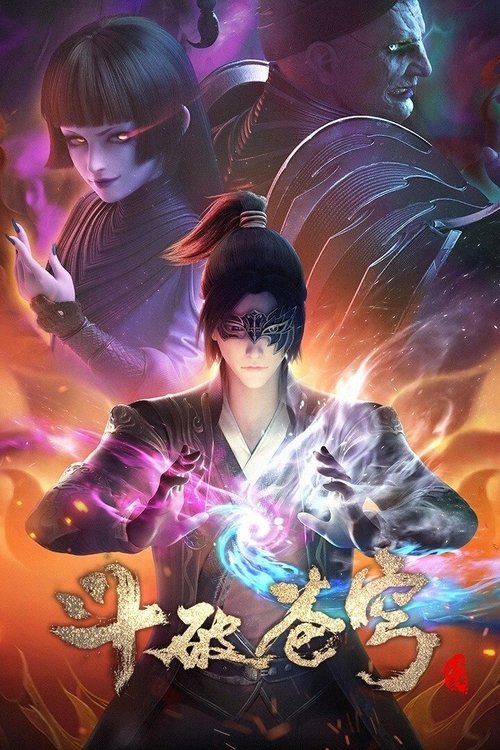
When Fights Break Sphere debuted on January 7, 2017, it arrived with a premise that seemed almost deceptively simple: a young man stripped of his martial arts abilities seeks redemption through determination and an ancient mysterious stone. What unfolded over the following years, however, was something far more ambitious—a sprawling epic that would span five seasons, 269 episodes, and earn a commanding 8.3/10 rating that reflects genuine audience devotion rather than casual viewership.
The show’s most striking achievement lies in how it managed to sustain momentum across such an expansive narrative. The 25-minute runtime proved to be a brilliant strategic choice, allowing the creators to pack substantial character development and world-building into bite-sized episodes that feel substantial without demanding excessive commitment. This pacing kept viewers coming back week after week, and the numbers tell the story—five complete seasons isn’t something that happens by accident in the animation industry.
What truly sets Fights Break Sphere apart is its understanding that spectacular action sequences need emotional weight to resonate.
The creative vision behind this adaptation of Dou Po Cang Qiong (the original manhua) demonstrates respect for source material while creating something distinctly televisual. The animation team crafted a world that balances gorgeous visual spectacle with intimate character moments—a balance that many action-heavy shows struggle to maintain.
The storytelling achievements that kept audiences engaged across 269 episodes deserve genuine recognition. Rather than relying solely on power-scaling and tournament arcs, the narrative consistently returned to the emotional core of its protagonist’s journey. This approach created several standout elements that defined the show’s cultural presence:
- Character arcs that felt earned, with rivals becoming allies and perceived villains revealing unexpected depth
- A magic system with genuine rules and limitations, preventing the story from devolving into arbitrary power escalations
- Pacing that respected character relationships alongside spectacular battle sequences
- Recurring themes about perseverance that extended beyond simple underdog narratives
The show’s five-season trajectory reveals a lot about how television audiences connect with animated narratives in the streaming era. Rather than burning out on the premise, Fights Break Sphere deepened its world with each season, introducing expanded casts of characters, higher-stakes conflicts, and philosophical questions that elevated it beyond typical action fare. The fact that it maintained critical acclaim throughout this entire journey—returning for additional seasons—speaks to a show that understood pacing and narrative discipline.
What’s particularly fascinating is how Fights Break Sphere carved out significant cultural space within the broader landscape of anime and animated action series. It sparked conversations about adaptation quality, proving that Asian source material could translate powerfully to television without compromising its essence. Fan communities organized around detailed analysis of martial techniques, character symbolism, and upcoming plot developments with the kind of energy typically reserved for prestige dramas.
The show’s iconic moments became conversation starters across forums and social media platforms. These weren’t just explosive action sequences—they were narrative turning points that felt earned through hundreds of episodes of character building. When major character revelations occurred, they resonated because the groundwork had been carefully laid across multiple seasons.
Key aspects that shaped the show’s lasting impact include:
- Consistent visual storytelling that made each season feel like a natural progression rather than repetition
- Voice acting performances that brought distinctive personalities to an ever-expanding cast
- Soundtrack work that elevated emotional beats and action sequences alike
- Willingness to slow down between major story arcs for character introspection
The creative team’s approach to the 25-minute format demonstrates sophisticated understanding of television narrative structure. Each episode managed to feel complete while advancing larger story arcs—a skill that separates competent shows from truly great ones. The 269-episode count never feels like padding; instead, it reflects the complexity of the world being constructed on screen.
Another dimension worth examining is how Fights Break Sphere influenced expectations for animated action series going forward. It demonstrated that international audiences had appetite for lengthy serialized narratives in animation, challenging the prevailing belief that animated series needed to compress storytelling for Western viewers. The show’s 8.3 rating reflects sustained quality—that’s not a number you achieve with a couple of standout seasons surrounded by mediocrity.
The mark of a truly significant show is whether it changes how audiences approach similar works—and Fights Break Sphere absolutely accomplished this.
By maintaining its Returning Series status and continuing to develop new storylines, the show proved it had more to explore. Rather than overstaying its welcome through unnecessary extensions, the creative team demonstrated genuine artistic ambition about where the narrative could still venture. This restraint, paradoxically, generates more anticipation than a show that seems desperate to continue indefinitely.
What endures about Fights Break Sphere is precisely what made it special from that January 2017 premiere: a genuine commitment to character, world-building, and earned emotional payoffs. In a landscape crowded with disposable action content, this show insisted that animation could tell stories of real substance and complexity. It backed that conviction with 269 episodes of consistent quality and audience engagement that translated into one of the most respected anime series of its generation.