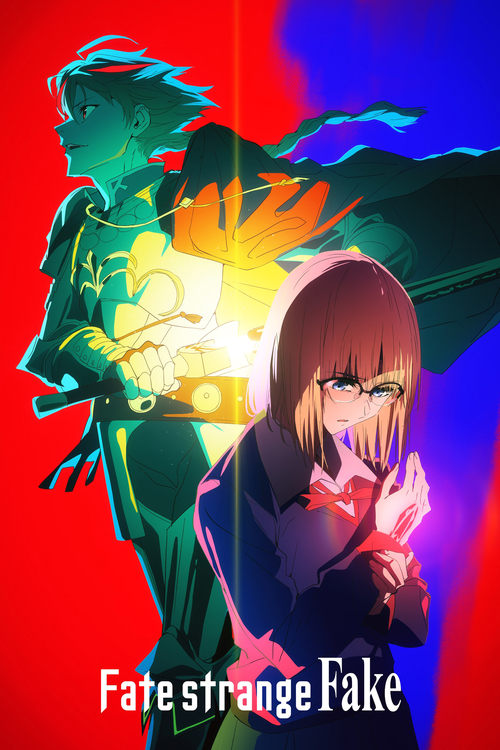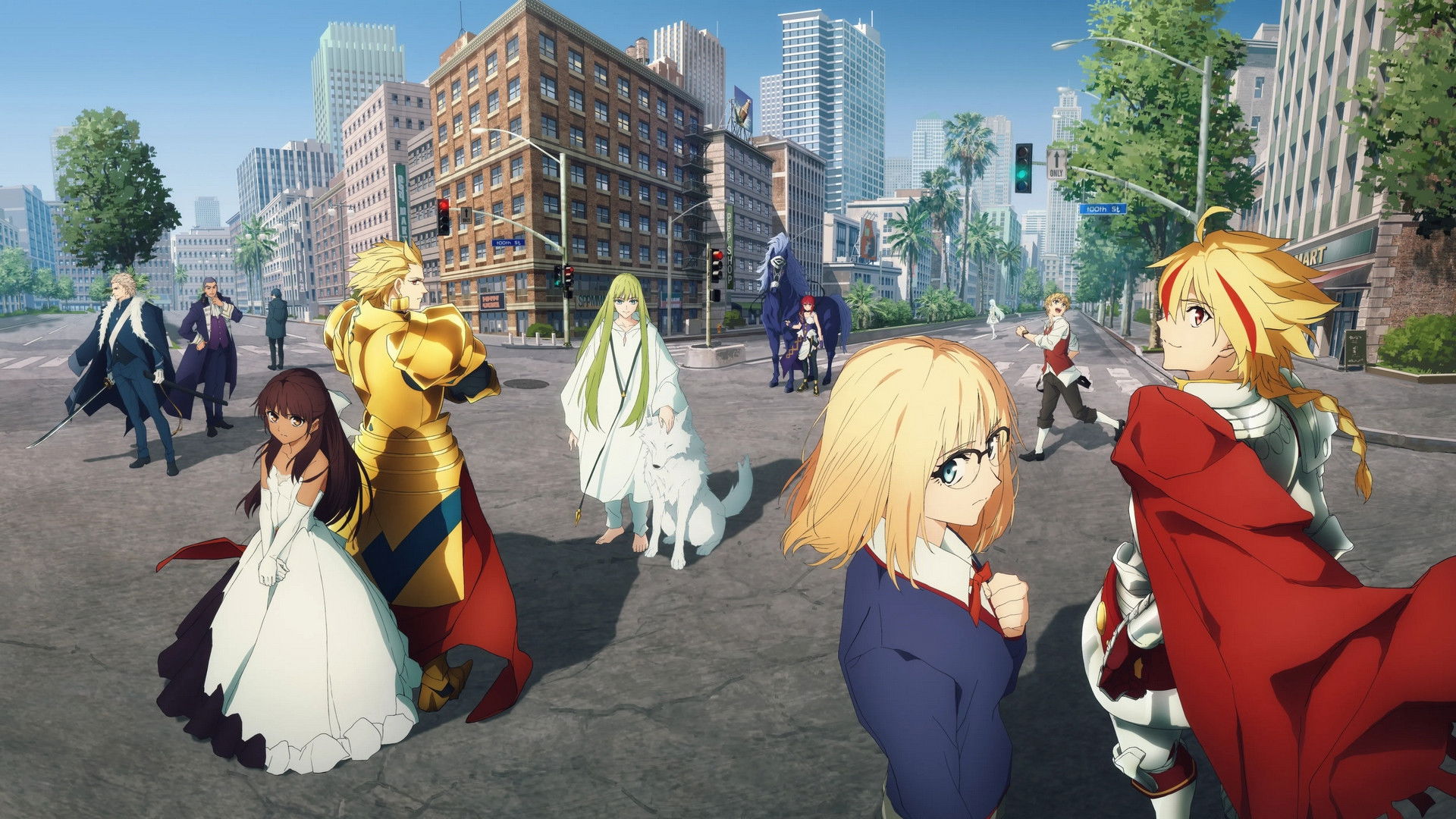
When Fate/strange Fake debuted on New Year’s Eve 2024, it arrived with the kind of quiet confidence that separates good anime from genuinely memorable television. What makes this worth talking about isn’t just that it’s good—it’s that it represents something increasingly rare in the medium: a production that trusted its audience enough to let narrative complexity and character depth drive the entire experience, rather than relying on spectacle alone.
The creative team assembled for this project—Atsuhiro Iwakami, Takashi Takeuchi, Maki Sato, Hiroshi Hagawa, and Norikazu Otsuka—understood something fundamental about what the Fate franchise could become in the hands of thoughtful storytellers. Rather than retreading familiar ground, they crafted something that felt both reverent to the source material and boldly experimental in its approach. The show’s willingness to inhabit a “fake” Holy Grail War, a parallel version of events that could unfold entirely differently from canonical expectations, gave it permission to explore themes of identity, purpose, and consequence without the safety net of predetermined outcomes.
That 8.3/10 rating doesn’t capture the full picture of what audiences connected with here. What it does represent is consistent quality across all thirteen episodes—a runtime constraint that, interestingly, forced creative discipline rather than limiting ambition. Every scene mattered. There’s something refreshing about a show that knows exactly how much story it needs to tell and executes that vision without padding.
The Visual and Narrative Balance
Here’s what stands out about the production design: the animators never confused spectacle with substance. Yes, the action sequences when they arrived hit with real impact, but the show’s greatest moments often came in quieter scenes—conversations between Master and Servant, philosophical debates about the nature of victory, moments where characters confronted their own contradictions. The animation quality reflected this philosophy, with team members prioritizing clarity and emotional resonance over constant movement.
The show’s approach to the Action & Adventure, Sci-Fi & Fantasy, Drama blend proved genuinely innovative:
- Character-driven storytelling that made even antagonists feel like three-dimensional people with legitimate motivations
- Philosophical exploration of what it means to fight for something, and whether victory without understanding is worth pursuing
- Ensemble dynamics that gave nearly every major player meaningful arcs across the season
- Mystery elements that unfolded naturally rather than feeling artificially withheld
Cultural Resonance and Fan Reception
What became clear as the season progressed was that audiences had been hungry for this exact version of a Fate story. The internet discussions that followed each episode went beyond typical fan enthusiasm—they became genuine critical analyses of themes and character motivations. This isn’t common. Most anime generates conversation, but Fate/strange Fake generated arguments, the kind where both sides had legitimate points.
The iconic moments that emerged weren’t just cool fight choreography (though there was plenty of that). People remembered specific conversations, turning points where characters made impossible choices, quiet scenes where the weight of the narrative settled on everyone involved. That’s the mark of storytelling that transcends its medium and becomes culturally significant.
> The show’s greatest achievement wasn’t proving that the Fate franchise could be adapted differently—it was proving that narrative complexity and emotional stakes could coexist with fan service and world-building ambition.
Why This Matters for Television
What makes Fate/strange Fake deserving of attention extends beyond its immediate fanbase. In a landscape increasingly dominated by either high-budget spectacle that sacrifices character or intimate character studies that minimize world-building, this show found something in the middle—a place where both could thrive simultaneously. The creative team understood that animation allows for visual storytelling possibilities that live-action simply can’t match, but they never let that become an excuse to neglect dialogue, character development, or thematic coherence.
The Returning Series status suggests audiences and creators alike recognized something worth continuing here. That’s significant because it indicates confidence—not just in the property, but in the approach. Someone looked at this thirteen-episode arc and thought, “There’s more story worth telling this way,” rather than attempting to extend the narrative beyond its natural conclusion just because it found an audience.
The Road Ahead
As we move forward, Fate/strange Fake stands as evidence that anime can be simultaneously respectful to established properties and boldly experimental. The series premiered at a moment when the medium needed reminders that ambition in storytelling doesn’t require abandoning accessibility, that complexity doesn’t equal inaccessibility, and that fan-driven properties can still surprise and challenge their audiences.
The creative vision Iwakami, Takeuchi, Sato, Hagawa, and Otsuka brought to this project deserves recognition not just as good television, but as a statement about what anime could be when creators trust their instincts and their audience. Fate/strange Fake earned its rating through consistent execution, meaningful storytelling, and the kind of character work that reminds us why we invest in these narratives in the first place.