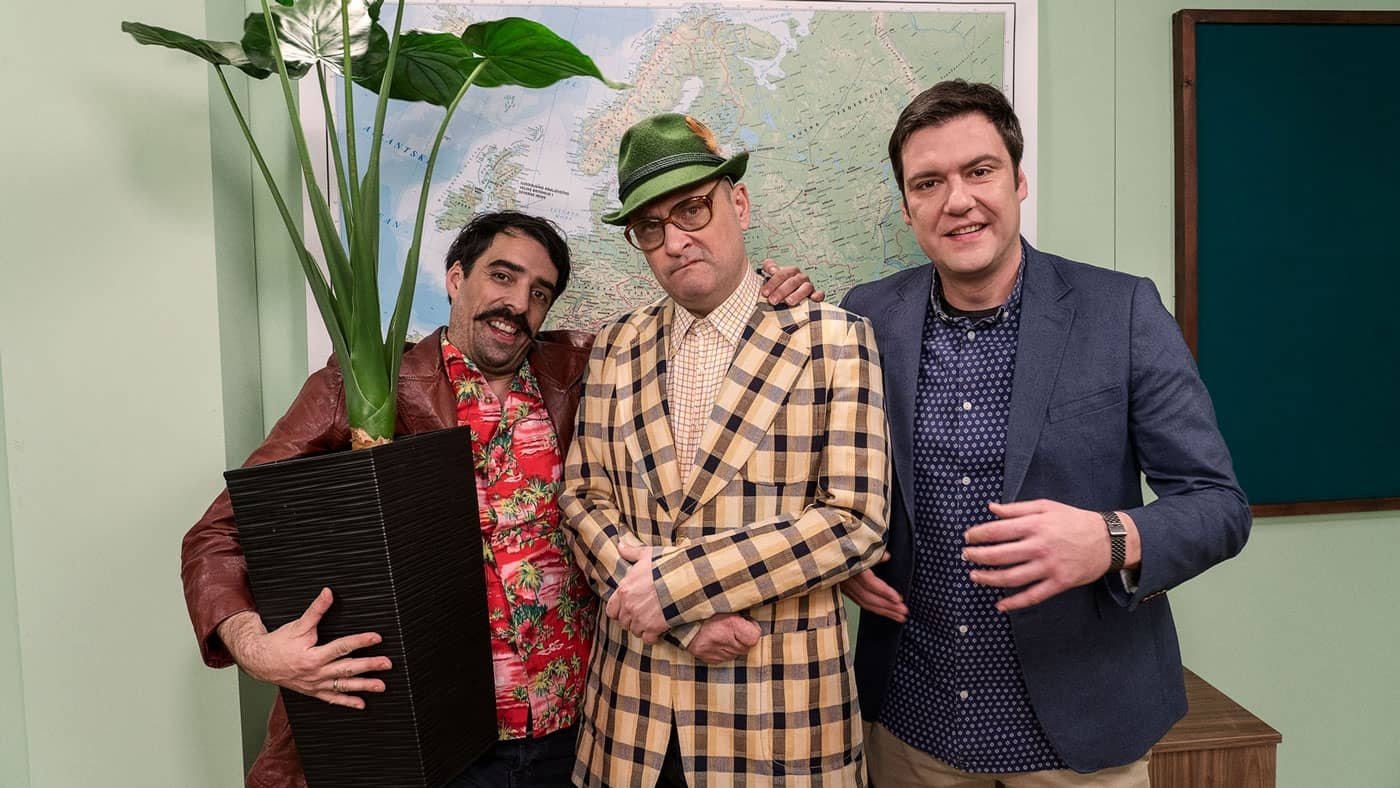
When Državni posao debuted on September 24, 2012, it arrived at exactly the right cultural moment. Here was a show that understood something fundamental about modern television comedy: audiences were hungry for sharp, unfiltered social commentary wrapped in an accessible format. What the creators—Dimitrije Banjac, Nikola Škorić, Dejan Ćirjaković, and Stojče Stoleski—crafted was something deceptively simple yet remarkably potent: a platform for three actors to dissect the absurdities of everyday life through satirical dialogue that channels the energy and rhythm of stand-up comedy.
The brilliance of Državni posao lies in its structural approach. Rather than relying on traditional sketch comedy or narrative-driven storytelling, the show built its foundation on something far more immediate and visceral—conversational satire. The three-person dynamic creates a natural rhythm where ideas bounce between performers, building momentum as they explore topics ranging from bureaucratic nightmares to mundane frustrations that every viewer recognizes. This format proved so effective that audiences kept coming back, season after season.
What makes this show’s longevity particularly impressive is how it sustained itself over fourteen seasons and 1,305 episodes. That’s not just a successful run—that’s institutional staying power. The show maintained a solid 7.9/10 rating across its extensive catalog, which speaks volumes about consistency. Most shows either burn out spectacularly or gradually lose their edge, but Državni posao managed to remain engaging across more than a decade of production. That kind of sustained quality suggests the creators had discovered something genuine about what resonates with their audience.
> The backbone of “Državni posao” is satirical dialogue that echoes stand-up comedy’s most effective moments—raw, unpolished, and brutally honest observations about the world around us.
The show’s cultural footprint extended well beyond mere entertainment. In the Serbian television landscape, Državni posao became a touchstone for smart comedy that didn’t condescend to its audience. The conversations sparked by the show often centered on its willingness to tackle institutional absurdity and social dysfunction with humor rather than anger. This approach allowed audiences to laugh at genuinely frustrating situations while simultaneously acknowledging their validity. The show became a cultural mirror, reflecting anxieties and irritations that permeated everyday life.
Consider what the show achieved episodically. Episodes like “Povratak” (The Return), “Penzija” (Pension), and those exploring familiar territories like school supplies and swimming pools might sound mundane on the surface. Yet within these frameworks, the writers and performers found comedic gold by examining the bureaucratic, social, and personal complications lurking beneath ordinary experiences. The decision to dedicate multiple episodes to topics like “Penzija”—exploring pensions across two parts—demonstrated confidence in their ability to extract rich comedic material from single themes.
The creative vision behind the show deserves deeper appreciation. Banjac, Škorić, Ćirjaković, and Stoleski understood that in the age of streaming and fragmented media, specificity was currency. By focusing intensely on the particular details of Serbian life and institutional experience, they created content that felt authentic rather than manufactured. The unknown runtime of individual episodes actually worked in their favor, allowing performances and conversations to breathe naturally rather than being squeezed into commercial time slots.
What’s particularly noteworthy is how Državni posao maintained its returning series status through multiple network homes. The show aired on both RTV 1 and Superstar TV, demonstrating that the format was portable and resilient. Whether that indicates network migrations or parallel runs, it speaks to the show’s adaptability and continued demand. Not every comedy can make that leap and remain relevant across different broadcast ecosystems.
The stand-up comedy DNA infused throughout the series created an interesting television hybrid. Traditional sketch shows rely on narrative setup and payoff; stand-up relies on observation and escalation. Državni posao married these approaches, creating a format that felt fresh within television’s comedy landscape. The three-person structure also meant that viewers developed relationships with specific performers, turning casual watching into something more invested and personal.
Looking at the episode titles across seasons reveals a show that understood comedic geography. They moved from relatable institutional experiences (school supplies, pensions) to physical spaces that sparked group dynamics (swimming pools, geographic locations). This variety within a consistent format kept the show from feeling repetitive, a genuine achievement across 1,305 episodes.
The lasting significance of Державни posao lies in proving that comedy television doesn’t need high production values, complex narratives, or elaborate sets to maintain engagement over years. What it needs is honesty, sharp writing, and performers who understand their audience deeply. The show’s 7.9 rating isn’t just a number—it’s evidence of an audience that remained loyal and satisfied throughout a remarkably extended run. For anyone who appreciates comedy that thinks critically about the world while remaining genuinely funny, Državni posao represents a masterclass in sustainable entertainment that aged remarkably well.