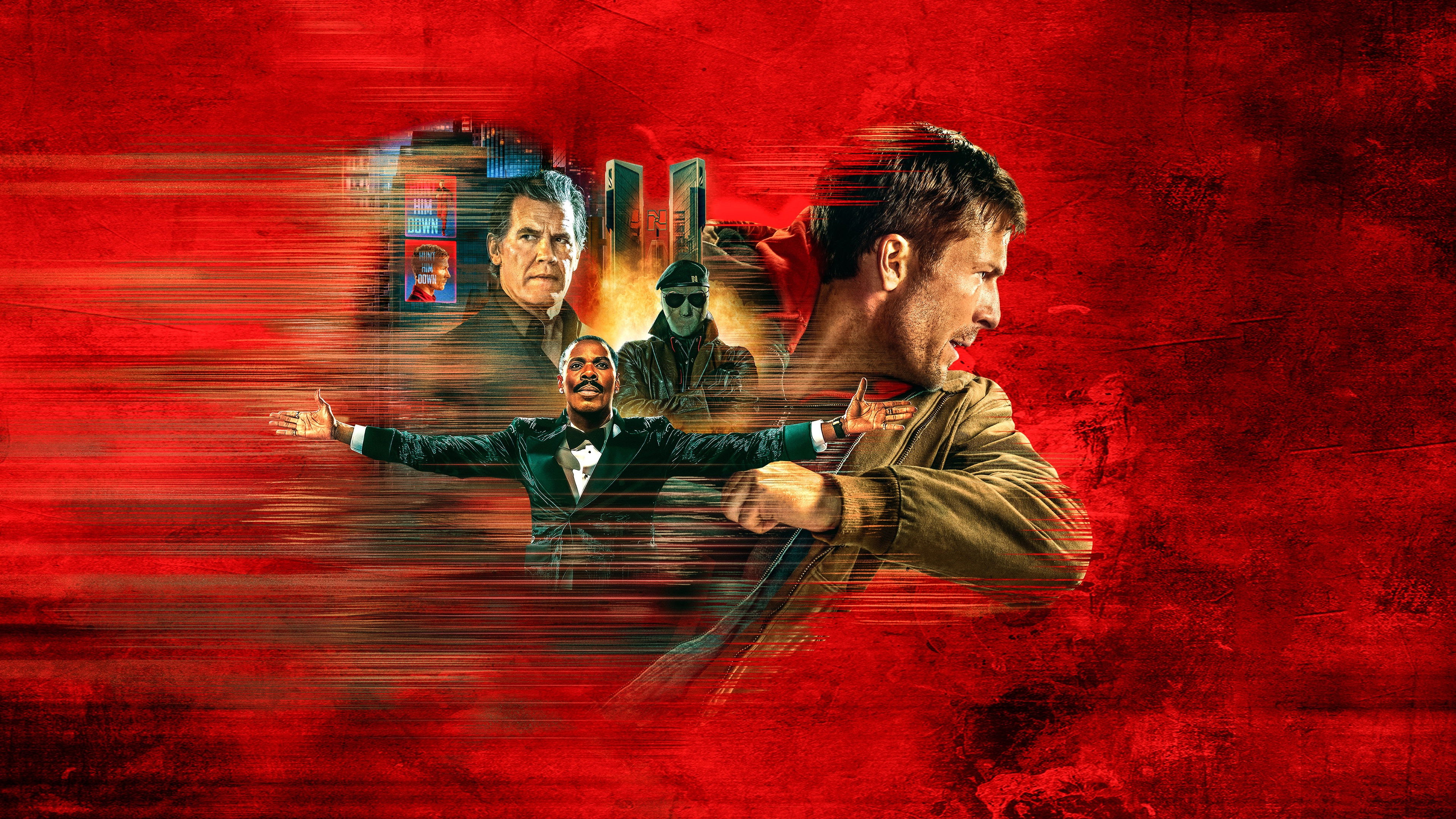
When Edgar Wright set out to adapt Stephen King’s The Running Man for 2025, he inherited one of sci-fi’s most provocative premises: a dystopian game show where the poor are hunted for sport and entertainment. The question wasn’t whether he could make an action thriller—his track record with Baby Driver and Last Night in Soho already proved that.
The real question was whether he could update King’s 1982 novel for an era that already feels dystopian, where surveillance capitalism and entertainment spectacle have blurred into something genuinely unsettling. The answer, as it turned out, was complicated in the most interesting way possible.
Released on November 11, 2025, The Running Man arrived with $110 million behind it—a significant studio bet that reflected Paramount’s confidence in both Wright’s vision and the casting of Glen Powell, Hollywood’s current action-thriller golden boy. What happened next became one of cinema’s most instructive lessons about the gap between artistic merit and commercial viability.
The film opened to a modest $17 million domestically, eventually limping to $68.6 million globally—a clear financial disappointment that nonetheless tells us something vital about contemporary moviegoing and how we actually consume the films that matter.
But here’s the thing nobody expected: The Running Man didn’t need the box office to find its audience.
The casting of Glen Powell as Deke Thornton proved to be the film’s secret weapon. Powell brought an unexpected vulnerability to what could have been a one-note action hero, playing a man genuinely terrified of the machinery hunting him rather than just angry about it.
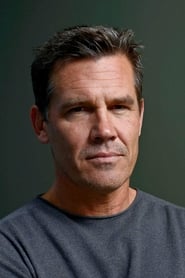
Opposite him, Josh Brolin channeled pure authoritarian menace as the game’s architect—the kind of charismatic villainy that makes you understand why millions would tune in. And Colman Domingo, in a role that could have been marginalized, instead became the film’s moral compass, delivering performances that made you genuinely believe in the stakes.
What made this collaboration truly memorable were these specific elements:
- Powell’s physical performance, which emphasized desperation over invincibility—he moves like someone running for his life, not performing action sequences
- Brolin’s monologues about entertainment and control, delivered with an unsettling warmth that made fascism feel seductive
- Domingo’s scenes, which grounded the spectacle in genuine human consequence and emotional stakes
- The chemistry between Powell and Domingo, creating a partnership that felt earned rather than manufactured
At 2 hours and 13 minutes, Wright’s edit maintains a propulsive momentum that rarely lets you catch your breath. This isn’t a coincidence. The runtime itself becomes part of the thematic argument—this is a film that understands pacing as ideology, where the constant forward motion mirrors the relentless consumption the narrative critiques. You don’t have time to look away, which is precisely the point King was making in 1982 and which remains urgent now.
Edgar Wright understood something crucial about updating King’s material: the horror isn’t in the hunting itself, but in our willing participation as viewers. He turned that insight into a visceral experience that implicates the audience.
The critical reception—a 6.8/10 rating from approximately 1,030 votes—reflected a film that didn’t quite achieve mainstream consensus but earned passionate support from those who connected with its vision. This middle-ground reception actually matters more than blockbuster acclaim or dismissal. It suggests The Running Man is the kind of film that divides viewers based on what they want from their entertainment: pure escapism versus thematic provocation, spectacle versus substance.
Where the film’s true legacy emerged was in the streaming space. After its theatrical stumble, The Running Man found what industry observers called “instant streaming success”—a phenomenon that says something important about how genre films circulate in 2025.
Audiences who might skip it in crowded multiplexes sought it out at home, where they could sit with its uncomfortable premises without the distraction of competing blockbusters. On streaming platforms, the film’s willingness to make the audience complicit in its violence became even more potent—you’re literally choosing to watch this, in your private space, on your personal screen.
The influence The Running Man has exerted on subsequent dystopian thrillers confirms what’s most valuable about Wright’s approach. Rather than updating King’s world with superficial technology tweaks, he deepened the thematic connections between 1982’s media landscape and 2025’s algorithmic feeds, between gladiatorial spectacle and social media performance. The film suggested that dystopia doesn’t arrive with fanfare; it arrives through the choices we make about what we watch and what we reward with our attention.
In retrospect, that $42 million gap between budget and box office revenue feels almost irrelevant to what The Running Man actually accomplished. The film matters not because it succeeded commercially, but because it asked exactly the right questions at the moment when those questions had become impossible to ignore. In a landscape where streaming success increasingly defines a film’s true reach, Wright’s ambitious, unsettling thriller found its audience exactly where they were waiting—not in theaters, but everywhere else.