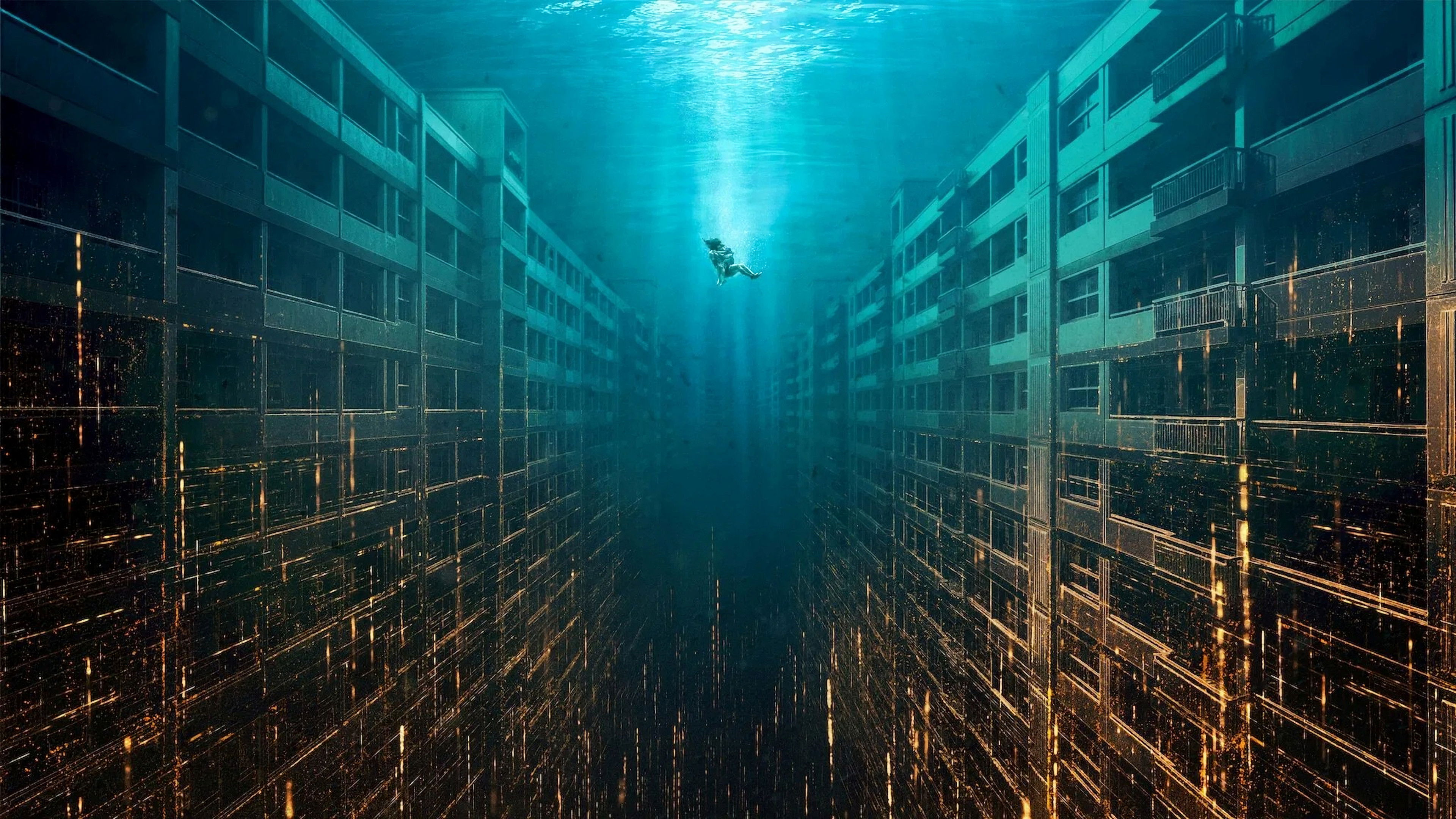
When Kim Byung-woo‘s The Great Flood premiered on September 18, 2025, it arrived with the kind of modest expectations that often precede surprising cultural moments. A 109-minute science fiction drama from Hwansang Studio Seoul, the film carried a deceptively simple premise wrapped in that evocative tagline: “The last day on earth. The one choice for survival.”
What followed was a fascinating case study in how audiences and critics don’t always see eye to eye—and why that disconnect matters for understanding contemporary cinema.
On paper, the reception looked cautious. A 6.0/10 rating from nearly 500 votes suggested a film that divided viewers, and early critical responses leaned toward the lukewarm. Yet something remarkable happened when The Great Flood hit streaming platforms later that year.
The film didn’t just find an audience—it overtook major Hollywood releases, eventually claiming the top spot on Netflix globally and ranking first in 53 countries. This wasn’t the slow burn of word-of-mouth vindication; this was explosive, immediate traction that caught industry watchers scrambling to understand what was happening.
The real story here isn’t about critical consensus. It’s about a director who understood something fundamental about what audiences crave in uncertain times.
What Kim Byung-woo accomplished with The Great Flood was something increasingly rare: a genre film that refuses easy categorization. Yes, it’s science fiction. Yes, it’s an adventure. But it’s equally a character study, a meditation on human choice under impossible circumstances. That hybrid DNA—refusing to be merely entertaining or merely artistic—gave the film unexpected staying power.
The cast brought genuine weight to this balancing act. Kim Da-mi carried much of the emotional core, anchoring what could have been a straightforward survival narrative with nuance and vulnerability. Park Hae-soo provided the kind of grounded presence that disaster films desperately need—someone whose reactions feel authentically human rather than performatively heroic.
Kwon Eun-seong completed an ensemble that felt less like action movie archetypes and more like actual people forced into extraordinary circumstances.
Consider what made this film resonate despite middling critical scores:
- Efficient storytelling that uses its modest 109-minute runtime as an asset rather than a limitation
- Genuine moral ambiguity about survival choices that avoids easy answers
- Visual storytelling that doesn’t rely on oversized spectacle to convey catastrophe
- International accessibility without feeling culturally diluted or pandering
The broader significance of The Great Flood lies in its validation of something film critics had been theorizing for years: global audiences had fundamentally shifted how they discovered and valued films.
A movie with a 6.0 critical reception could become a phenomenon because streaming platforms had democratized film distribution in ways theatrical releases never could. South Korean audiences could simultaneously embrace it at home while international viewers discovered it fresh, each group bringing their own cultural lens to its themes of collective catastrophe and individual choice.
What’s particularly intriguing is how the film’s modest budget worked for rather than against it. Without massive studio pressure to justify enormous spending, Kim Byung-woo had the freedom to focus on what actually matters in disaster narratives: the human decisions that define survival.
The film’s restraint—its refusal to overwhelm with expensive set pieces where intimate character moments would serve better—became its greatest strength once audiences found it.
The legacy of The Great Flood will likely influence how filmmakers approach the disaster genre over the coming years. Here’s what changed:
- Proof that streaming platforms can break films beyond their original critical reception through sheer audience demand
- Validation of character-driven sci-fi in an era increasingly dominated by franchise spectacle
- Demonstration that non-English-language films can achieve mainstream global dominance without English-language remakes or dilution
- Evidence that efficiency in storytelling matters more than budget size when crafting compelling narratives
The film’s journey—from “lukewarm Korean reception” to “most-streamed movie globally”—tells us something vital about modern cinema. Critics and general audiences were asking different questions. Critics wanted innovation and originality within established frameworks.
General audiences, particularly those grappling with real-world uncertainty, wanted something that acknowledged existential stakes while centering human connection and agency. The Great Flood delivered on the latter in ways that resonated far beyond what initial reviews suggested.
The lasting impact of this film isn’t measured in awards or critical accolades. It’s measured in 27.9 million viewers finding something in 109 minutes that spoke directly to their moment.
Kim Byung-woo created a work that understood its audience better than the critical establishment did. That’s not a slight against critics—it’s recognition that cinema itself had evolved.
A 6.0/10 rating in 2025 doesn’t mean what it meant in previous eras. It might simply mean a film chose depth over consensus, specificity over broad appeal, and emotional truth over conventional heroics. Sometimes audiences recognize that choice immediately.
Looking back at The Great Flood, what endures isn’t whether it was “good” or “bad” by traditional measures. What matters is that it proved films don’t need universal critical blessing to achieve cultural significance or find their true audience. In a fragmented media landscape, that might be the most important lesson cinema learned in 2025.


![Official Trailer [Subtitled]](https://img.youtube.com/vi/SYF0MxHVAR0/maxresdefault.jpg)
![Official Teaser [Subtitled]](https://img.youtube.com/vi/ErWfGyLp5h8/maxresdefault.jpg)