When The Ghost Game premiered in South Korea on August 6, 2025, it arrived quietly—almost like a whisper in a crowded theater. With a modest opening that barely registered against more commercial competition, this 95-minute mystery-horror film seemed destined to fade into obscurity. And yet, there’s something worth discussing here, something that reveals more about how we consume horror cinema than the film’s modest box office numbers might suggest.
Director Son Dong-wan brought a distinctly intimate vision to what could have been a conventional haunted-house narrative. Instead of relying on jump scares and elaborate set pieces, he crafted a film centered on the terrible consequences of curiosity—specifically, what happens when a group of school friends decide to perform a necromancy ritual to summon a ghost. That tagline, “That day, we should never have started,” isn’t just marketing speak; it’s the thematic backbone of everything that unfolds. There’s a deliberate restraint in Son’s approach, a trust in atmospheric tension over spectacle.
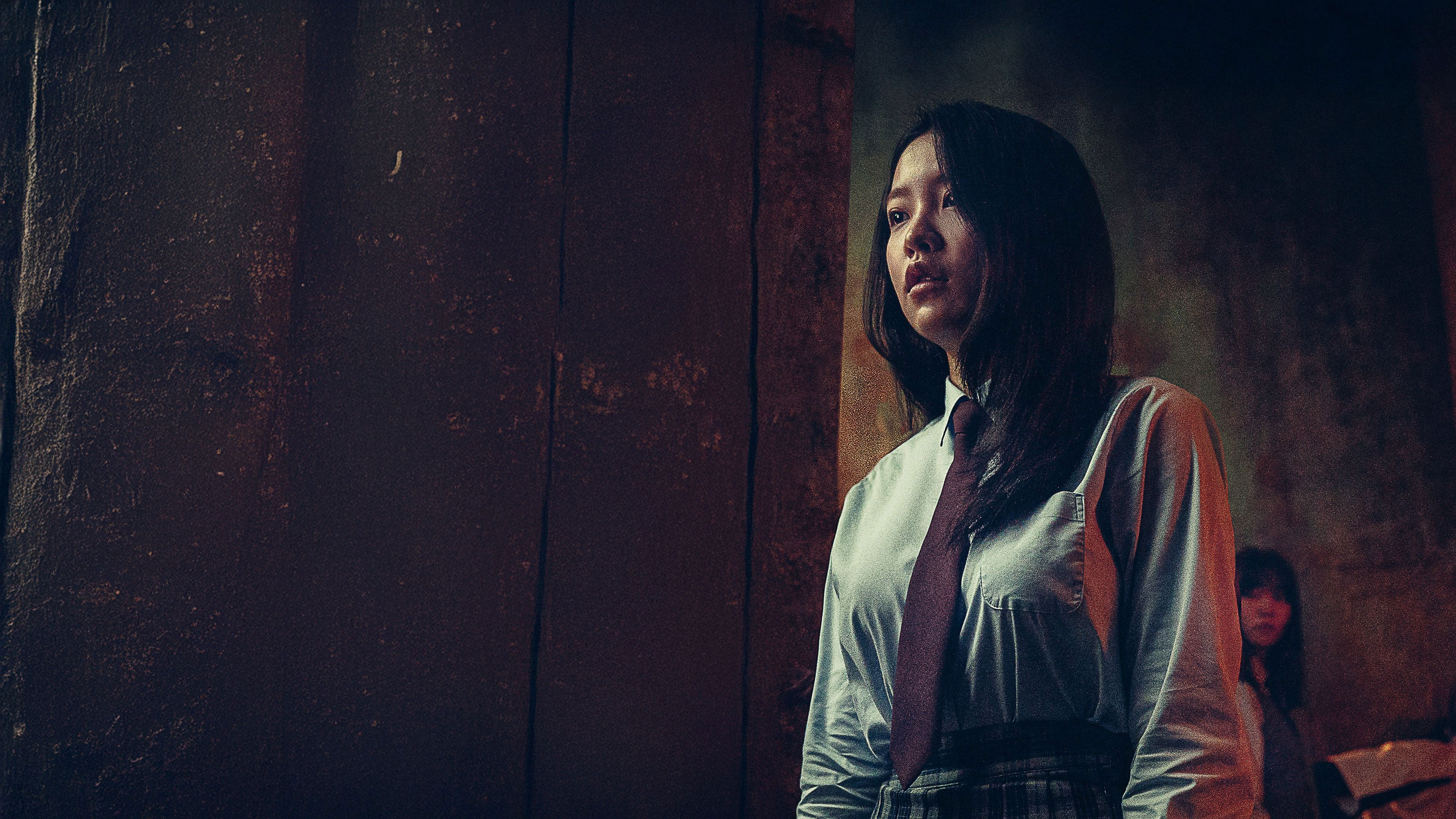
The ensemble cast—headlined by YERI, alongside Lee Chan-hyeong and Suh Dong-hyun—carried the weight of this intimate storytelling. YERI, in particular, portrayed Ja-yeong with a complexity that anchored the narrative. Her character isn’t a typical final girl or a naive victim; she’s someone carrying a secret from her past, which becomes the film’s emotional center. The supporting cast members grounded the horror in genuine interpersonal dynamics, making the supernatural threat feel like an intrusion on something already fragile rather than the main event.
What makes The Ghost Game significant in 2025’s horror landscape isn’t necessarily about critical acclaim—the 6.9/10 rating reflects a film that divided viewers. Some found its pacing contemplative; others found it slow. But that division itself is instructive:
- It represents a resistance to formula in an era dominated by algorithm-approved thrills
- The film prioritizes character psychology over creature design
- It embraces ambiguity in ways mainstream horror rarely dares
- The 95-minute runtime becomes a statement: we trust you to stay engaged without padding
The film’s financial performance tells its own story. Released through EO Contents Group with an unknown production budget against an opening weekend that struggled to gain traction, The Ghost Game never became a cultural phenomenon. It didn’t dominate social media or spark viral discourse. But that absence of noise reveals something about how horror cinema has fragmented into distinct audiences—those seeking polished commercial products versus those interested in stranger, more personal visions.
> There’s value in films that don’t immediately announce their worth. Sometimes the most interesting cinema operates in the margins, speaking to smaller but more devoted audiences.
What Son Dong-wan accomplished here was a reclamation of space within the horror genre. In an industry obsessed with scale and spectacle, he created something claustrophobic and psychological. The necromancy ritual at the film’s center becomes a metaphor for the uncontrollable consequences of trauma—once you’ve summoned something from your past, you can’t simply banish it through ritual or reason. That’s a distinctly adult preoccupation, even if marketed to younger audiences.
The collaboration between director and cast created moments of genuine unease precisely because the actors played the emotional stakes seriously. This wasn’t camp; this wasn’t self-aware horror. When Ja-yeong’s secret is revealed—and the ritual’s true significance comes into focus—the horror becomes internal as much as supernatural. The ghost isn’t just a vengeful spirit; it’s the manifestation of guilt, of things we’ve buried.
In terms of broader cultural impact, The Ghost Game occupies a peculiar position. It won’t be studied in film schools as a revolutionary text. It likely won’t influence a generation of filmmakers to abandon commercial imperatives for artistic integrity. But it does exist as proof of concept—evidence that directors like Son Dong-wan can still find financing for strange, small-scale horror that refuses easy categorization. That matters more than box office numbers.
The film’s legacy, if it has one, will be found in the conversations it generates among cinephiles rather than in mainstream recognition. It’s the kind of movie that gets discovered years later—recommended by a friend who caught it in a late-night streaming rotation, discussed in forums dedicated to underrated genre cinema, championed by critics who appreciate what it attempted even if the execution didn’t universally land.
Looking back from even a few months after its release, The Ghost Game reminds us that cinema thrives on risk-taking, on filmmakers willing to make work that challenges rather than comforts. Its 6.9/10 rating doesn’t diminish that; if anything, it clarifies it. This is a film that provokes disagreement, that refuses consensus, that prioritizes artistic vision over universal appeal. In an era of algorithmic filmmaking, that’s its real horror—and its genuine achievement.