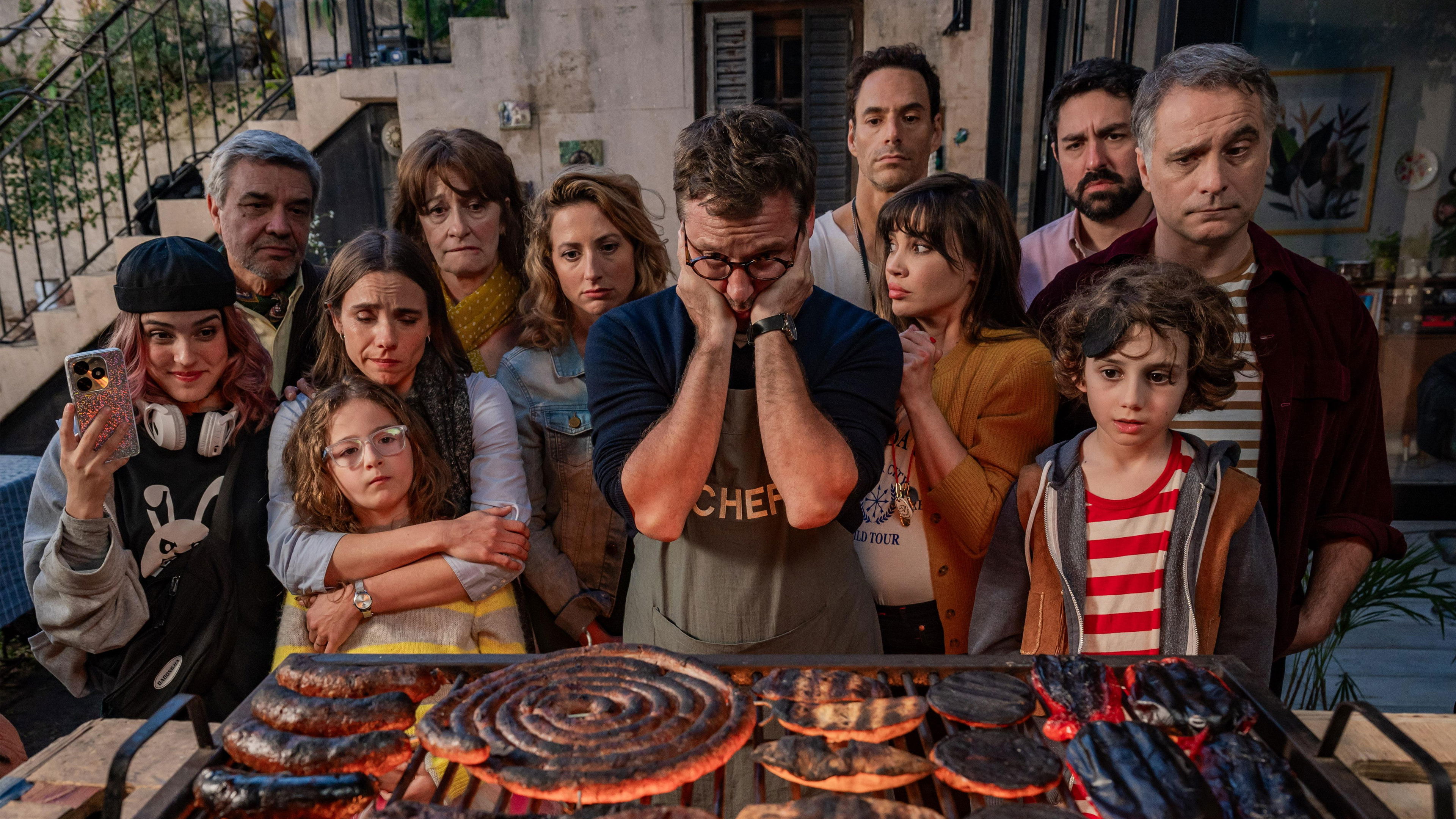
Look, when Papá x dos premiered in September 2025, it arrived at a moment when the Latin American comedy landscape was hungry for something fresh—and this film, directed by Hernán Guerschuny, walked right into that space with an interesting premise and a cast that clearly understood the assignment.
The film’s core concept is deceptively simple: a man’s vision of his future gets completely upended when his girlfriend reveals she’s pregnant, but there’s a complication involving her past that transforms what could’ve been a standard rom-com into something messier, more human, and ultimately more compelling.
What makes Papá x dos worth discussing isn’t necessarily its commercial performance—the box office figures remain unknown, and honestly, that tells us something about where mid-budget comedies live in the contemporary distribution landscape. Instead, what matters is what the film attempted to do within its lean 1 hour 44 minutes of runtime.
Guerschuny designed a story that takes the familiar formula of romantic comedy—meet, fall in love, encounter obstacle—and introduces a legitimately complicated family dynamic that forces real conversations about modern relationships.
The creative team brought solid credentials to the table:
- Benjamín Vicuña carries the film as the protagonist caught between desire and responsibility, leaning into the comedic vulnerability that’s become his trademark
- Celeste Cid brings complexity to a character who could’ve been written as merely “the problem,” giving her dimension and agency
- Lucas Akoskin enters as the wildcard element, the human embodiment of the romantic complication that threatens to derail everything
- This ensemble dynamic is where the film lives—not in big laugh sequences, but in the uncomfortable spaces where humor emerges from real relationship tension.
The critical reception tells an interesting story in itself. With a 4.2/10 rating from 9 votes on IMDb, Papá x dos didn’t land as a critical darling. But here’s what matters: that small sample size reveals something about how niche comedies get evaluated.
The film wasn’t trying to be a blockbuster crowd-pleaser or a prestige project designed to sweep festivals. It was a specific story for a specific audience—the people who’ve lived through complicated family formations, modern relationship negotiations, and the messy reality of blended families.
Sometimes a film’s “failure” to achieve universal acclaim tells us more about the current taste landscape than it does about the film itself. Papá x dos exists in that space.
When we talk about the film’s place in contemporary Latin American cinema, we need to acknowledge what it represents structurally. The production brought together four studios—FAM Contenidos, MaLuLe Entertainment, Heaven Entertainment, and BF Films—suggesting a regional collaboration attempting to build something that could work across multiple markets.
This kind of multinational production apparatus, even when the final product doesn’t achieve massive commercial success, signals investment in telling distinctly Latin American stories with contemporary sensibilities.
The film’s cultural significance, though modest, sits in a specific moment:
- Post-pandemic relationship reconceptualization – The film engages with how people build families in 2025, where blended situations aren’t aberrations but normalized variations
- Male vulnerability in comedy – Vicuña’s character doesn’t default to the macho archetype that traditionally dominated Latin American romantic comedies
- Earnest genre engagement – Rather than winking at the rom-com formula, the film commits to it while acknowledging its own complications
What Guerschuny seemed to understand was that comedy works best when it emerges from genuine stakes. The 1 hour 44 minutes of runtime suggests a filmmaker committed to efficiency—no bloat, no subplots that don’t earn their space. Every scene exists to either develop character or advance the core conflict. That’s not always enough to achieve brilliance, but it’s the mark of a director who respects both the format and the audience’s time.
The performances deserve closer attention. Vicuña has spent years building a reputation as an actor willing to play vulnerable men—characters who crack under pressure rather than characters who heroically overcome it. In Papá x dos, that quality becomes essential.
His character doesn’t want to be a “two-dad” situation initially; the comedy (and the genuine pathos) comes from watching him discover what he actually wants versus what he thought he wanted. It’s subtle work, the kind that doesn’t always register in broad comedic moments but accumulates into something resonant.
Celeste Cid’s contribution operates on a different register entirely. She’s playing the character who could easily become the villain or the walking moral compromise, and instead she generates empathy. That’s harder than it sounds—it requires an actor who understands that complexity isn’t contradiction, that a person can simultaneously love someone and carry baggage that complicates that love.
Looking at where Papá x dos sits in the broader context of 2025 cinema, it exists as a regional comedy that didn’t break through to mainstream recognition but contributed something genuine to conversations about how we construct families. It didn’t win major awards—there’s no indication of festival circuit success—but it found an audience of people who recognized themselves in its story.
The film’s legacy, if it has one, won’t be about box office dominance or critical unanimity. Instead, it’ll be remembered by the specific viewers who discovered it on streaming platforms, who watched a story about their own complicated relationships unfold on screen, and who appreciated that Hernán Guerschuny and his cast treated the messy reality of modern love with humor rather than judgment.
In a cinema landscape increasingly dominated by franchises and prestige dramas, that kind of earnest, character-driven comedy deserves recognition—not as a failure because it didn’t achieve universal acclaim, but as a success in serving its intended audience with integrity and warmth.