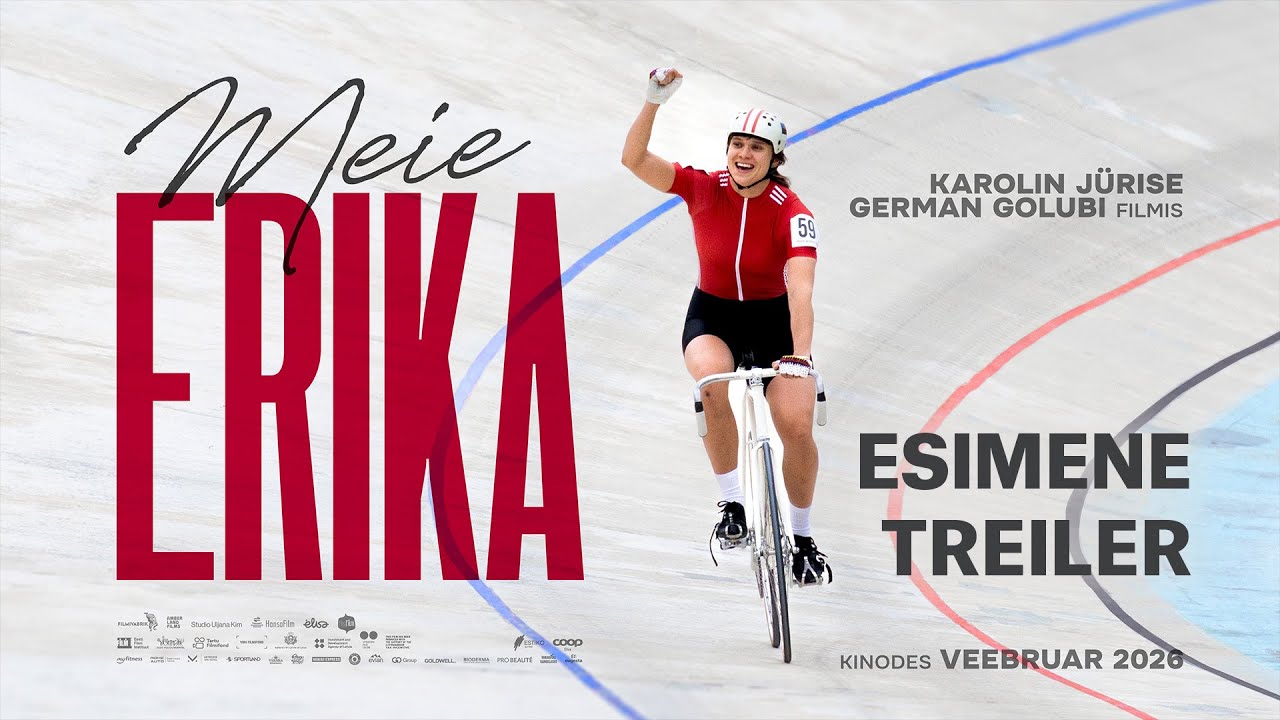
There’s something distinctly intriguing about Our Erika, a drama that’s quietly building anticipation as it approaches its February 13, 2026 release date. While the film hasn’t yet entered the public consciousness in the way that some of the more high-profile festival entries have, there’s a palpable sense that this project—helmed by director German Golub—carries real artistic weight. It’s the kind of film that exists in that fascinating space between discovery and recognition, where cinephiles are beginning to take notice even as the broader audience waits for their introduction.
What makes Our Erika particularly compelling is the collaborative vision being brought to life. Golub has assembled a cast of talented performers—Karolin Jürise, Milena Mishkevich, and Rodion Kuzmin among them—who bring an authenticity that feels essential to this story. The very intimacy of the title suggests we’re being invited into something personal, something that demands the kind of careful, nuanced performances that these actors are known for. There’s a commitment here to character-driven storytelling that stands in refreshing contrast to much of what dominates contemporary cinema.
The production itself reflects an interesting multinational approach to filmmaking:
- Filmivabrik bringing technical expertise and production infrastructure
- Studio Uljana Kim contributing creative vision and artistic direction
- KULTFILMA helping shape cultural resonance
- HansaFilm adding Northern European sensibilities
- Elisa rounding out a truly collaborative effort
This constellation of studios suggests a project that transcends any single national cinema, instead operating as a genuinely European co-production. In an era where we’re increasingly seeing fragmentation in how films get made and distributed, this kind of partnership feels significant.
The absence of a predetermined rating or significant advance buzz isn’t a weakness—it’s actually an opportunity. Our Erika has the chance to arrive without the baggage of hype.
What’s particularly refreshing about this film’s trajectory is that it’s not caught up in the festival circuit frenzy that’s currently dominating early 2026. While Sundance brings its usual roster of acquisitions and award contenders, Our Erika is charting its own course toward a theatrical release in mid-February. There’s something to be said for that kind of independence, that willingness to exist outside the traditional gatekeeping mechanisms of major film festivals.
German Golub’s directorial approach seems rooted in character psychology and emotional truth. Drama, when it’s done well, functions as a kind of mirror—it allows us to see ourselves and our own experiences reflected back at us, often in unexpected ways. There’s evidence here that Golub understands this fundamental power of the form. He’s not chasing spectacle; he’s after something deeper.
The creative synergy between Golub and his cast suggests a filmmaker who knows how to draw out subtle, layered performances. Consider what we might expect from this collaboration:
- Psychological depth in character development that refuses easy answers
- Visual storytelling that trusts the audience to read subtext and emotion
- Thematic exploration that likely examines identity, belonging, and what it means to be “ours” or “theirs”
- Naturalistic dialogue and performance that prioritizes authenticity over artifice
The title itself—Our Erika—opens up fascinating interpretive possibilities. Is this a film about possession, about family, about community claims on an individual? The very ambiguity is intriguing. We’re being asked to consider perspectives and relationships before we even sit down to watch, which suggests a filmmaker confident in his material’s ability to sustain and complicate initial assumptions.
In the broader cinematic landscape of 2026, Our Erika represents something increasingly rare: a drama that seems genuinely interested in exploring human experience without agenda or pretense. While the film industry collectively chases sequels, franchises, and presold IP, Golub and his team are making something original, something that emerges from genuine artistic vision rather than market calculation.
The current lack of ratings or advance critical consensus isn’t something to dismiss—if anything, it’s liberating. Our Erika will arrive in February as a relatively blank slate, free to make its own impression on audiences. That’s actually a gift in contemporary cinema, where information spreads instantaneously and critical consensus hardens quickly. This film will have space to breathe, to find its audience organically, to build word-of-mouth through genuine connection rather than manufactured anticipation.
As we approach the 2026-02-13 release date, what becomes clear is that Our Erika matters not because of pre-release buzz or festival accolades, but because it represents a certain kind of filmmaking that deserves to exist and thrive. It’s a reminder that cinema’s greatest power lies not in spectacle or franchise building, but in its ability to illuminate the human condition in all its complexity. That’s what we should be anticipating—not awards or box office records, but the simple, profound possibility of connection.