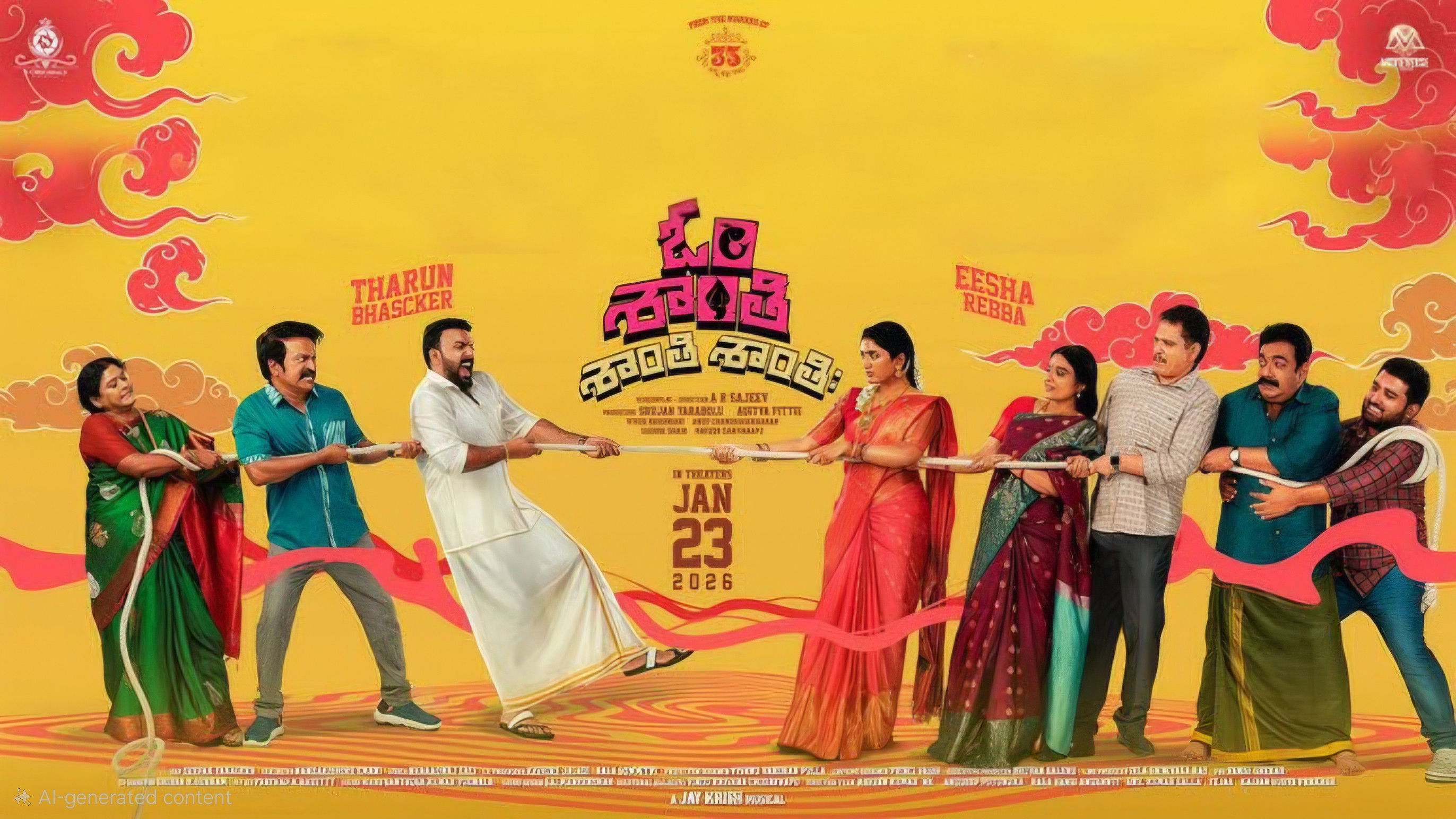
There’s something particularly exciting brewing in the Malayalam film industry right now, and Om Shanti Shanti Shantihi sits right at the center of it. Scheduled for release on January 30, 2026, this comedy from director Sajeev AR is generating considerable anticipation, even in these early stages before audiences get to experience it firsthand. What makes this project stand out isn’t just the cast or the premise—it’s the creative synergy that appears to be forming around a story that promises to blend humor with social consciousness in a way that feels increasingly rare in contemporary cinema.
Why This Film Is Turning Heads
The casting alone tells you something about the ambitions here. Eesha Rebba brings a particular kind of intelligent charisma to her roles, often choosing projects that challenge conventional storytelling. Tharun Bhascker has built a reputation for his distinctive comedic timing and ability to ground quirky characters with genuine vulnerability. And then there’s Brahmaji, an actor whose presence tends to elevate any ensemble. This isn’t just a random assembly of talent—it feels deliberate, like Sajeev AR has carefully selected performers who can navigate both comedy and the deeper thematic currents that the film appears to be exploring.
The fact that this is described as a comedy-drama hybrid arriving in early 2026 is significant. It suggests filmmakers aren’t interested in easy laughs alone, but rather in using humor as a vehicle for something more substantive.
What’s particularly intriguing is how the film is positioned within the contemporary landscape. We’re living through a moment where audiences are increasingly hungry for films that entertain without sacrificing intelligence. Malayalam cinema, in particular, has built a strong reputation for this kind of nuanced storytelling. Om Shanti Shanti Shantihi appears to be stepping into that tradition with intention.
The Vision Behind the Camera
Director Sajeev AR is working with material that carries thematic weight suggested by its very title—a mantra associated with peace and spiritual tranquility. The fact that he’s chosen to filter this through comedy suggests an interesting creative challenge: how do you explore weightier themes without becoming preachy or self-serious? That’s where the real craft lies, and it’s precisely what makes this project worth paying attention to before its January 2026 arrival.
The production is currently in active development, which means the team is still fine-tuning the final elements. This is the phase where creative decisions ripple through every department—cinematography, sound design, editing—all coming together to serve the director’s vision. While budget and runtime details remain under wraps (as is often the case during production), the deliberate choices being made behind the scenes suggest a project being treated with considerable care.
The Creative Collaboration at Work
Consider what each performer brings to this collaboration:
- Eesha Rebba: Known for bringing depth and authenticity to her characters, she’s likely serving as an anchor for the emotional core of the narrative
- Tharun Bhascker: His comedic sensibility could provide the lighter moments while his dramatic range ensures the film doesn’t lose sight of its human elements
- Brahmaji: As an experienced supporting force, his presence likely adds gravitas and generational wisdom to the ensemble
This isn’t just about individual performances—it’s about how these actors will play off one another, create chemistry, and collectively tell a story that presumably has something to say about contemporary life.
Looking Ahead to Release and Reception
As we move toward the January 30, 2026 release date, it’s worth noting that the film currently holds a 0.0/10 rating—which simply reflects that no audience has experienced it yet. This is actually the most honest position a film can be in during production: entirely open to possibility. Every film carries potential before it meets viewers, and this particular project seems to be carrying genuine creative ambition.
The anticipation building around early industry reports suggests this isn’t being dismissed as a minor release. When films with this kind of cast and creative team are scheduled for early-year release, it often signals that distributors and filmmakers have confidence in the material. They’re not hiding it; they’re positioning it as something audiences should pay attention to.
Why This Matters for Cinema
Ultimately, Om Shanti Shanti Shantihi represents something important: filmmakers continuing to believe that audiences want entertainment that respects their intelligence. In an era where it’s easy to play it safe with franchise retreads or formulaic stories, projects that attempt to blend comedy with purpose deserve attention. The fact that this film will be released January 30, 2026, isn’t just a date on a calendar—it’s a moment when we’ll collectively get to see whether this team’s creative vision translates to screen.
Until then, what we can do is appreciate the craft evident in the casting choices, the deliberate approach to storytelling, and the commitment to making something that tries to say something while also entertaining. That’s increasingly becoming the work of cinema that endures—work that doesn’t ask audiences to choose between laughter and meaning, but rather offers both in equal measure.