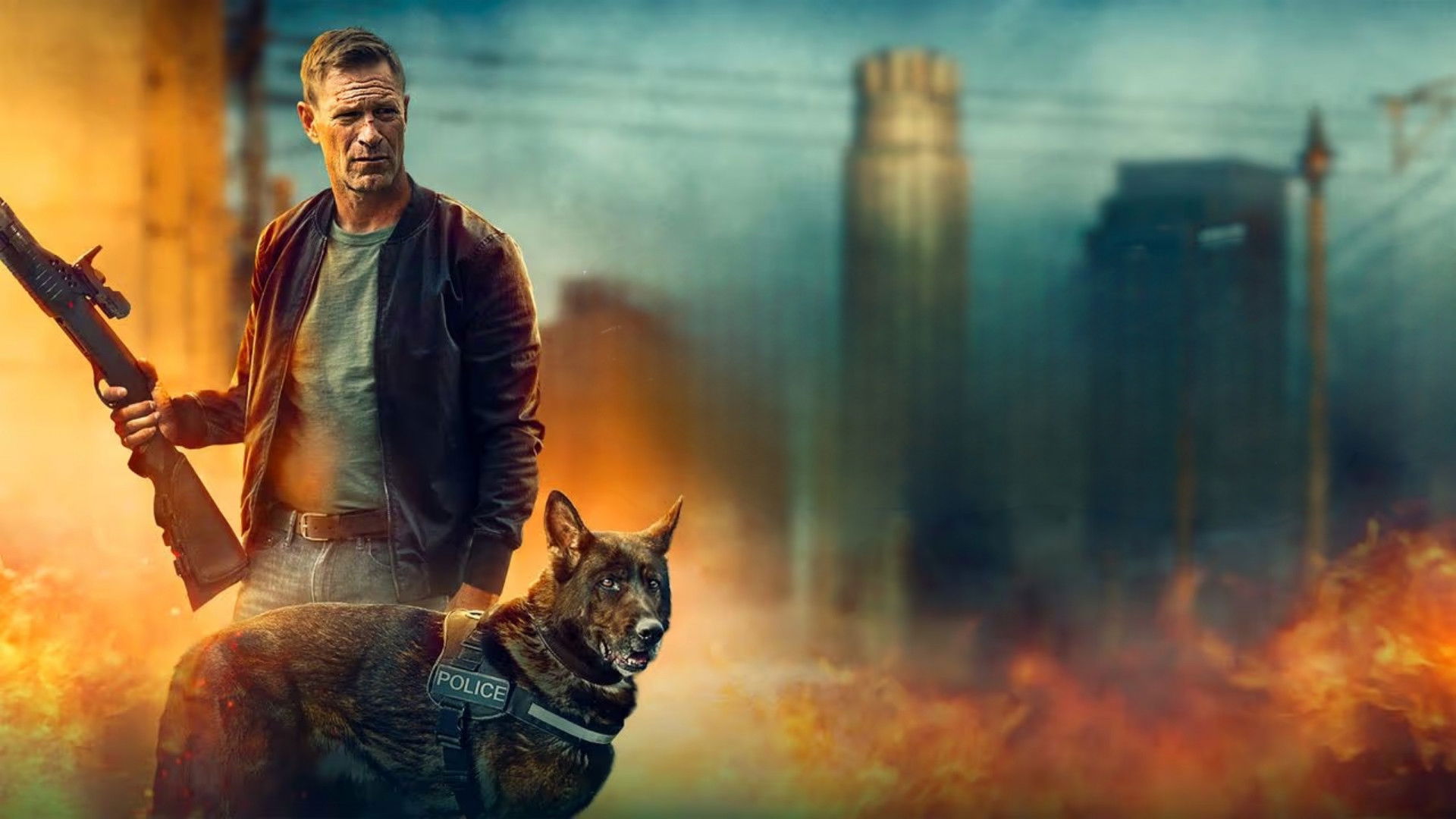
When Muzzle: City of Wolves premiered in November 2025, it arrived as a quiet counterpoint to the season’s typical blockbuster fanfare. Directed by John Stalberg Jr. and written by Jacob Michael King, this lean action-thriller came in at just 93 minutes—a refreshing brevity in an era of bloated genre films.
What makes this film worth examining isn’t necessarily its box office performance (a modest $137,764 worldwide on a limited release) or its middling critical consensus of 6.8/10, but rather what it attempted to do within those constraints, and what it reveals about the current state of independent action cinema.
There’s something genuinely interesting happening beneath the surface here. The film’s tagline—“Revenge has a new breed”—hints at a genre reinvention that Stalberg Jr. seemed intent on exploring. Rather than relying on the typical revenge-thriller beats we’ve seen exhausted across a thousand streaming platforms, Muzzle: City of Wolves appeared to be wrestling with something more primal and metaphorical.
The “wolves” in the title weren’t just a clever marketing device; they suggested predatory systems, pack dynamics, and the notion that revenge itself operates on animal instinct rather than human logic.
Aaron Eckhart carried the film as its emotional and moral center. Known for his ability to layer complexity into seemingly straightforward characters—think his work in The Dark Knight or Sully—Eckhart brought a weathered gravity to the lead role. The supporting cast of Tanya van Graan and Karl Thaning rounded out the ensemble, each contributing to what seemed like an attempt at ensemble storytelling within the action framework.
The production itself tells an interesting story about modern filmmaking infrastructure. With backing from Highland Film Group, Slow Burn, Broken Open Pictures, Bonfire Legend, Gramercy Park Media, Mannequin Films, Peachtree Media Partners, and Vacancy Films, the project represented a fascinating coalition of indie production companies. This wasn’t a studio tentpole or a bare-bones indie gamble—it was something in between, a mid-tier attempt at genre filmmaking that prioritized artistic vision over guaranteed returns.
What stands out about Stalberg Jr.’s approach to the material involves several key creative choices:
- Compressed runtime forcing narrative economy rather than bloat
- Ensemble structure suggesting themes of collective action rather than lone-wolf protagonists
- Metaphorical title indicating thematic depth beyond surface-level revenge plotting
- Limited release strategy positioning the film as a discovery rather than a mandate
“Revenge has a new breed” isn’t just tagline copy—it’s a philosophical statement about how stories of retaliation might evolve in contemporary cinema.
The critical reception of 6.8/10 (from 96 votes) tells us something revealing about audience expectations. It suggests viewers found the film competent but perhaps not entirely satisfying—either it swung too far into ambition and lost accessibility, or it played things too safe given its provocative premise. This middle ground, honestly, is where the most interesting films often live. The project wasn’t dismissed outright, nor was it celebrated universally, which means it probably did something worth debating.
Its theatrical window proved limited, with a November 14, 2025 release followed by a December 5 streaming transition. This abbreviated theatrical run reflected broader industry trends: mid-budget action films increasingly struggle to find theatrical audiences, forcing rapid pivots to streaming platforms where long-tail audiences eventually discover them. The $88,584 opening weekend and $118,977 domestic total paint a picture of a film that found modest patronage, then disappeared from cinemas before many knew it existed.
Here’s what makes Muzzle: City of Wolves worth discussing beyond its commercial fate:
- It represents a particular moment in genre filmmaking where indie producers believed in mid-budget action cinema
- It showcased Aaron Eckhart’s continued commitment to character-driven work rather than pure spectacle
- It proved that the “limited release into streaming” model was becoming the default pathway for independent films
- It demonstrated John Stalberg Jr.’s interest in thematic specificity within action frameworks
The film’s legacy won’t hinge on awards recognition or cultural phenomenon status. Instead, it matters as evidence of a certain type of filmmaking still attempting to exist in the margins. For critics and enthusiasts tracking where genre cinema goes when it steps away from franchise obligations and superhero bloat, Muzzle: City of Wolves becomes a data point in understanding how stories get told and distributed in 2025.
What resonates most, ultimately, is Stalberg Jr.’s refusal to inflate his material. A 93-minute action-thriller is almost radical in its restraint. No extended third act, no bloated runtime justifying premium ticket prices—just a compressed narrative that trusts its premise and executes it. Whether that execution entirely succeeded is debatable, but the intention behind that structural choice speaks volumes about where thoughtful genre filmmaking might head.
The ensemble of production companies behind this project, the decision to cast Eckhart in a potentially thankless role, the metaphorical weight placed on the “wolves” concept—these choices suggest filmmakers who cared about what they were saying, even if audiences didn’t universally connect with the result.
In an entertainment landscape increasingly dominated by algorithm-driven content and franchise obligations, that kind of intentionality matters. Muzzle: City of Wolves may not have set the world on fire, but it proved that independent action cinema still has something to say—even if only a limited audience was listening.