When director Cho Young-jun decided to structure Murderer Report around a single interview between a serial killer and a veteran journalist, he was betting on something that modern cinema often overlooks: the raw, unsettling power of conversation. Released in September 2025, this 1 hour 48 minute thriller arrived as a quiet challenge to audiences expecting explosive spectacle. Instead, what Cho delivered was something far more insidious—a psychological chess match compressed into a claustrophobic space, where every word carries the weight of eleven lives.
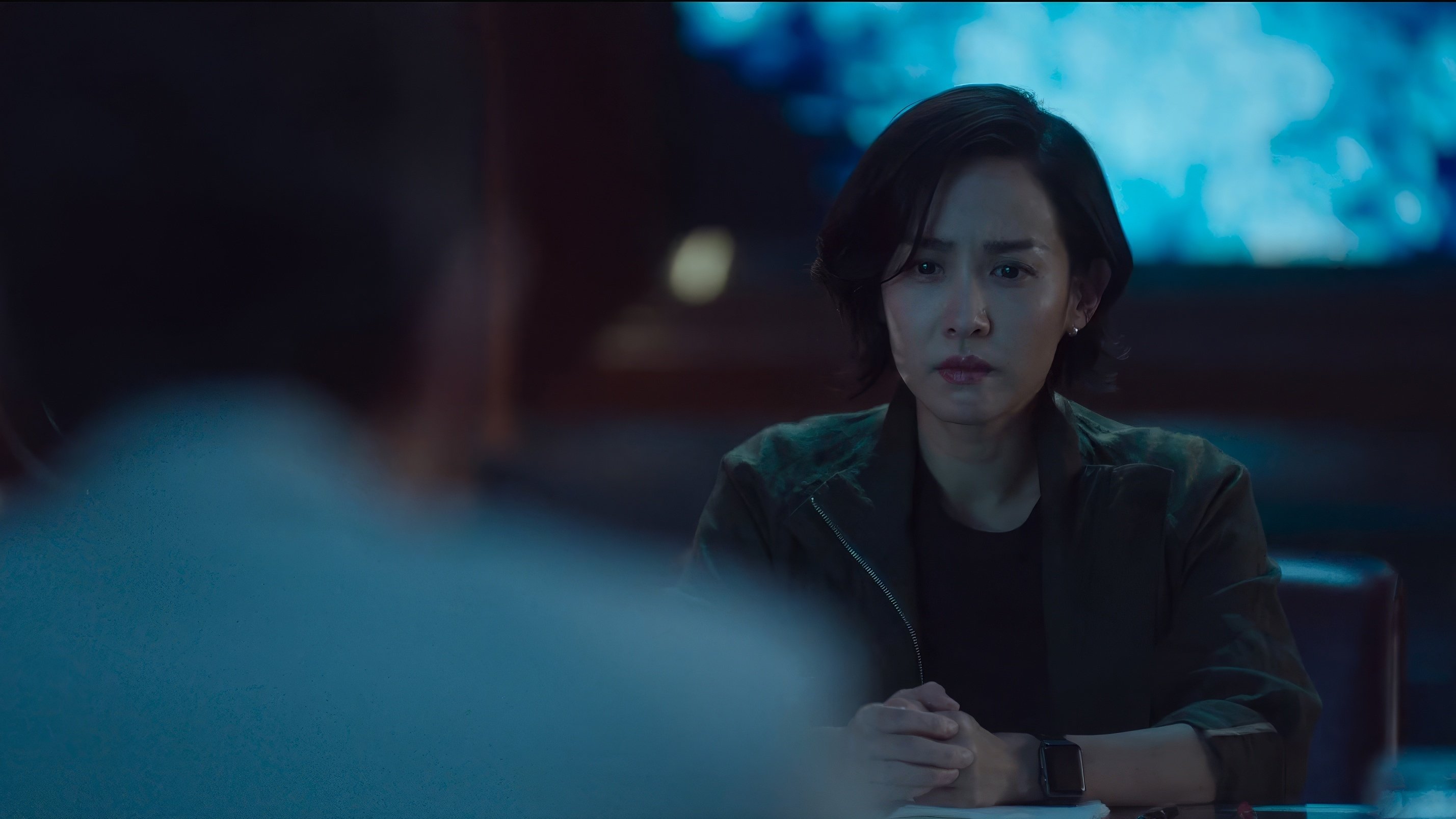
The film’s premise is deceptively simple, yet brilliantly executed. Yeong Hoon, a serial killer responsible for eleven murders, has requested an exclusive interview with Seon Joo, a seasoned crime reporter. That’s it. No car chases, no flashy crime scene investigations, no traditional thriller mechanics. Just two people in a room, one with blood on their hands and a story to tell, the other with a career to make and secrets of her own. It’s the kind of high-concept restraint that could easily collapse under its own weight, but Cho’s direction and the performances from Cho Yeo-jeong (as Seon Joo) and Jung Sung-il (presumably as Yeong Hoon) transform this minimal setup into something genuinely magnetic.
What makes Murderer Report significant in the current landscape is its refusal to sensationalize. This isn’t a film interested in glorifying violence or exploiting the lurid details of serial murder. Instead, Cho Young-jun crafts something more philosophically complex—a meditation on narrative itself, on who controls the story and what it costs to listen. The interview format becomes a Trojan horse for deeper questions about media complicity, journalistic ambition, and the thin line between documenting evil and becoming complicit in its mythology.
> The film’s greatest achievement lies not in what it shows, but in what it leaves unsaid—in the spaces between revelations where viewers must confront their own assumptions about truth and sensationalism.
Critically, Murderer Report occupied an interesting middle ground upon its release. The 6.9/10 rating reflects a film that’s undeniably challenging but not universally accessible. Some critics likely found it too austere, too dependent on dialogue and tension rather than conventional thriller beats. This kind of measured reception is actually telling—it suggests a film with real artistic vision rather than one designed purely for crowd-pleasing. The rating doesn’t diminish the film’s achievement; if anything, it validates that Cho Young-jun made exactly the film he intended, for audiences willing to sit with discomfort and ambiguity.
The international box office performance of $2,593,717 tells a fascinating story about cinema’s evolving economics. Here’s a low-budget drama-thriller from Korean cinema, built entirely on performance and dialogue, that managed to find an audience across borders. In an era dominated by franchise tentpoles and high-concept spectacle, Murderer Report‘s modest but legitimate theatrical run represents something worth celebrating. It proved there’s still hunger for intelligent, psychologically dense cinema—even if that appetite doesn’t translate to blockbuster numbers.
What makes the creative collaboration truly memorable:
Cho Yeo-jeong’s portrayal of Seon Joo becomes the film’s moral center—she’s not simply a passive recorder of confessions but an active participant in a dangerous game of psychological manipulation. Her performance carries the weight of being simultaneously predator and prey.
The minimalist production design works brilliantly in service of the script. Rather than feeling stagey or confined, the interview setting becomes almost claustrophobic in its intimacy, amplifying every glance and pause.
Cho Young-jun’s direction demonstrates remarkable trust in his material. By refusing to cut away, by maintaining focus on faces and reactions rather than visual spectacle, he forces audiences into uncomfortable proximity with both characters.
The runtime of 1 hour 48 minutes proves precisely calibrated—long enough to develop genuine tension and psychological depth, short enough to maintain relentless pacing without feeling padded or self-indulgent.
The film’s cultural impact may prove more significant than its initial reception suggests. Murderer Report joins a growing category of Asian cinema exploring the intersection of media, psychology, and criminal pathology—films that reject Western thriller conventions in favor of something more introspective and philosophically rigorous. It’s the kind of work that influences future filmmakers more than it influences box office charts.
In conversation, Cho Yeo-jeong has spoken about the challenge of maintaining audience empathy for a character negotiating with a serial killer. This speaks to the genuine complexity of what Cho Young-jun attempted. He wasn’t making a film about a villain; he was making a film about the act of listening, about journalism’s relationship to evil, about the seductive danger of narrative itself. That’s ambitious material, executed with craft and conviction.
What remains most striking about Murderer Report is its ultimate refusal to provide easy answers. In an era when cinema often works overtime to guide viewers toward predetermined conclusions, Cho’s film trusts the intelligence of its audience. It presents a scenario and lets the implications unspool in real time, trusting that the most disturbing moments aren’t the ones explicitly shown but the ones implied in the spaces between words.


![Official Trailer [ENG SUB]](https://img.youtube.com/vi/K7ScXpLhh6Y/maxresdefault.jpg)