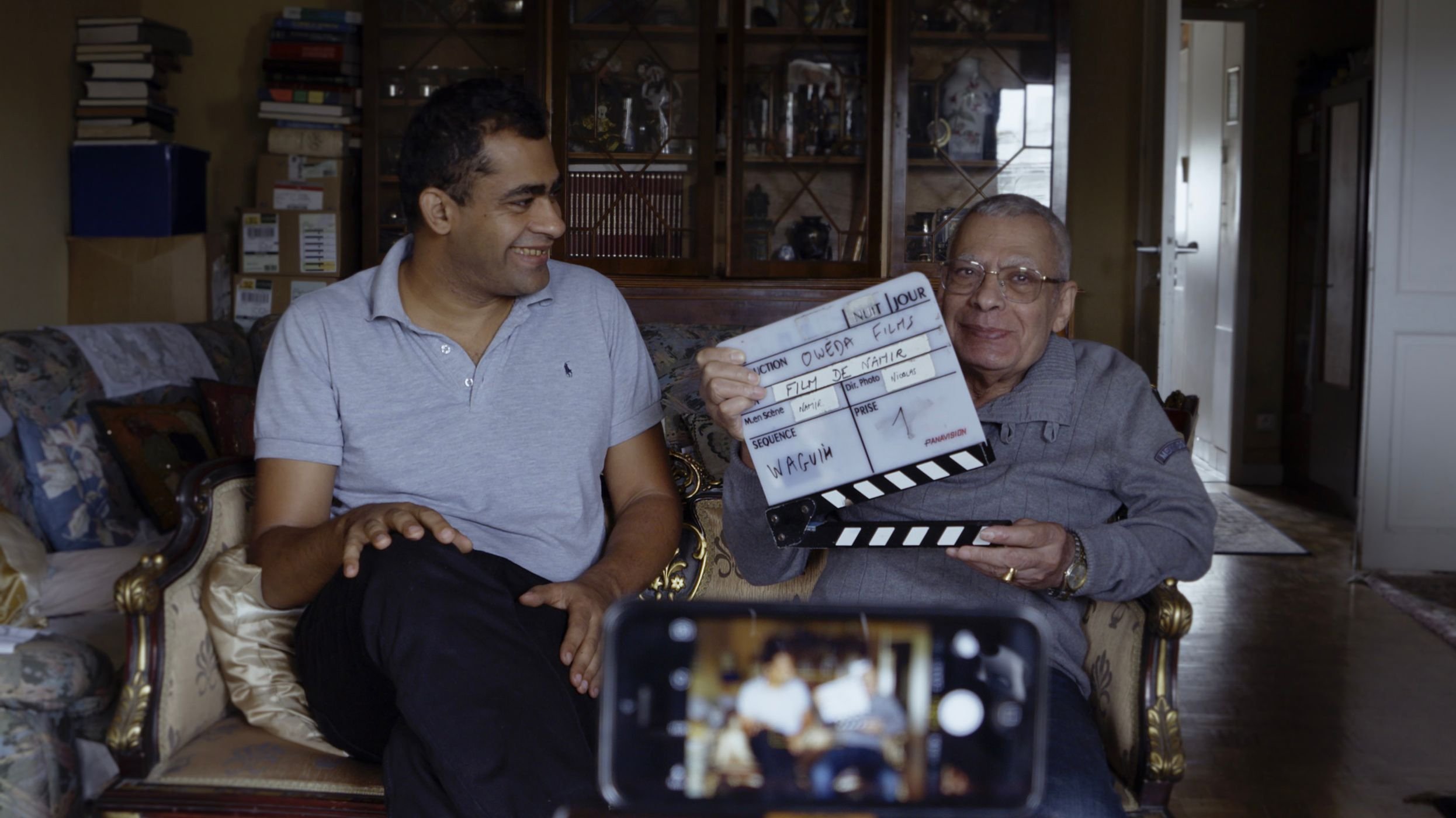
There’s something uniquely compelling about a film that centers on a single life and asks us to sit with that complexity for just over an hour. Life After Siham, which is set to release on January 28, 2026, is shaping up to be exactly that kind of intimate, probing documentary—the type that doesn’t announce itself with fanfare but quietly demands your attention and refuses to let go. Director Namir Abdel Messeeh has crafted what appears to be a deeply personal project, one that brings together family members Siham Abdel Messeeh, Waguih Abdel Messeeh, and Nermine Abdel Messeeh in front of the camera to explore something fundamental about memory, legacy, and what it means to move forward after loss.
What’s generating real anticipation around this film, even before its January 2026 bow, is the unmistakable sense of vulnerability embedded in its premise. When a director chooses to work with family—to essentially make art about intimacy, mortality, or transition with the people closest to him—audiences sense something authentic beneath the surface. This isn’t a film being made for commercial appeal or festival trophy-hunting. It’s being made because something needs to be said, examined, and preserved. That intention tends to resonate.
Why This Collaboration Matters
The creative team assembled here is worth paying attention to. Namir Abdel Messeeh directing alongside the participation of Siham, Waguih, and Nermine Abdel Messeeh suggests a project rooted in genuine relationship rather than professional detachment. There’s a particular kind of honesty that emerges when filmmakers turn the camera inward, when they’re willing to be vulnerable on camera with the people they know best. You can feel the difference immediately—the conversations flow differently, the silences carry more weight, and the emotional terrain feels less constructed and more lived-in.
The fact that the film is being backed by an international coalition of studios—Oweda Films, Les Films d’Ici, and Ambient Light—indicates that someone with real vision and resources believes in what Namir Abdel Messeeh is doing here. These aren’t fly-by-night production companies. They’re putting weight behind a project that, by its very nature, resists easy categorization.
The Cinematic Landscape It Enters
Right now, we’re living in an era where documentary filmmaking is having something of a renaissance. Audiences are hungry for truth, for stories that feel lived rather than performed. Yet at the same time, there’s a certain fatigue with documentaries that feel obligatory or designed primarily to make us feel better about ourselves. Life After Siham enters this space at exactly the right moment—when we’re ready for films that are less interested in solving problems than in sitting with questions.
The film will arrive without the noise of major distribution campaigns or Oscar-bait positioning. That actually works in its favor.
What makes this particularly intriguing is how it positions itself within conversations about family, legacy, and inheritance. The title itself—”Life After Siham”—contains a kind of narrative prophecy. It asks us to consider not just who Siham is, but what comes next. What remains? What transforms? What do we carry forward?
What We’re Anticipating
As we count down to the January 28, 2026 release, here’s what seems worth paying attention to:
The emotional architecture: With a runtime of just 1 hour and 16 minutes, every moment will need to earn its place. This isn’t a film that can afford wasted time, which means Namir Abdel Messeeh has likely made every scene count.
The performance of family: When your cast is your actual family—when Siham Abdel Messeeh, Waguih Abdel Messeeh, and Nermine Abdel Messeeh are both performers and subjects—the boundaries between documentary and memory piece blur productively.
Visual language: Ambient Light’s involvement suggests careful, deliberate cinematography. This won’t be a talking-heads documentary. It will be shaped.
The unseen subject: The structure of the title suggests Siham might not even be present in the traditional sense—making this a film about absence as much as presence.
The Deeper Resonance
What’s likely to give this film staying power isn’t just its immediate emotional impact (though that will probably be significant). It’s that Life After Siham seems to be wrestling with questions that extend far beyond its own particular story. Family documentaries, at their best, become mirrors for audiences to see their own relationships reflected back to them—sometimes uncomfortably.
The collaborative nature of the project—bringing together multiple family members’ perspectives under Namir Abdel Messeeh’s directorial eye—suggests an attempt at something genuinely difficult: capturing family truth without collapsing into either sentimentality or blame. That’s a high wire to walk, and whether the film succeeds entirely or not, the attempt itself is worth witnessing.
Why It Matters Now
There’s a particular urgency to documentary work like this in our current moment. We’re increasingly aware of how fragile family bonds can be, how quickly stories disappear, how much gets lost when we don’t pause to examine the people closest to us. Life After Siham feels like it’s made in full awareness of that fragility—treating its subject matter not as background material but as something sacred that demands careful attention.
When January 28, 2026 arrives and the film is finally released, it won’t be to fanfare or expectation. It’ll be there quietly, waiting for the people who need to see it. And that might be precisely where its power lies.