When Labinak: They Are Amongst Us premiered in August 2025, it arrived quietly—the kind of film that didn’t dominate box office conversations or rack up massive numbers, yet somehow managed to burrow into the minds of those who experienced it. Director Azhar Kinoi Lubis crafted something deliberately unsettling with this 100-minute thriller, one that understands the power of restraint and atmospheric dread over jump scares and spectacle. In a genre saturated with franchise sequels and big-budget horror retreads, here was something that felt genuinely present—a film that trusted its audience to sit uncomfortably in the dark.
The brilliance of Lubis’s approach lies in how he uses the film’s modest runtime. There’s no wasted space here. In just under two hours, he establishes a world where the familiar becomes threatening, where the title’s promise—that “they are amongst us”—isn’t a catchy tagline but an existential threat that slowly calcifies into dread. It’s the kind of pacing that recalls films like Invasion of the Body Snatchers or The Wrath of Khan, where tension builds not through constant escalation but through careful, methodical pressure.
The ensemble cast deserves particular credit for making this work:
- Raihaanun carries the film with a performance that’s lived-in and increasingly paranoid, the kind of acting that makes vulnerability look effortless
- Nayla D. Purnama brings a sharp intelligence to her role, playing against type with a character who asks uncomfortable questions
- Arifin Putra provides an unsettling presence as a character you’re never quite sure about—trust becomes currency, and he controls the exchange rate
These three create a chemistry that feels like real people in crisis, not actors hitting marks. There’s an authenticity to their interactions that elevates the material beyond standard thriller fare.
> The film’s 7.1/10 rating across a small sample of votes tells an interesting story—not a universally beloved masterpiece, but something that clearly provokes strong reactions and conversations among those who’ve seen it.
What’s particularly fascinating about Labinak is how it functions as a commentary on paranoia and identity in contemporary Southeast Asian cinema. There’s a specificity to the cultural anxieties Lubis explores that gives the film texture beyond its premise. This isn’t generic horror transplanted from Hollywood formulas; it carries the weight of particular histories and social tensions that resonate within its regional context.
The production itself—a collaboration between Paragon Pictures and Anami Films—represents an important moment for independent horror cinema in the region. While box office figures remain unknown, the film’s very existence matters. It exists as proof that there’s space for ambitious, character-driven horror that doesn’t require massive budgets to create genuine unease. The kind of film that gets made because filmmakers need to tell a story, not because it fits a predetermined market template.
Stylistically, Lubis employs several techniques that demonstrate his understanding of the horror genre:
- Negative space – what we don’t see often proves more frightening than what’s revealed
- Sound design – the soundscape of everyday life subtly warped into something sinister
- Character isolation – physical and emotional distance between protagonists who need each other most
- Ambiguity – the film refuses easy answers about who’s trustworthy and what’s really happening
This restraint is what separates Labinak from more forgettable entries in the thriller category. It’s a film that understands that real horror lives in uncertainty, in the slow erosion of trust, in the realization that safety is an illusion we maintain for our own sanity.
For audiences seeking what the film offers—a compact, intelligent thriller with strong performances and a willingness to trust viewers’ intelligence—Labinak arrived as something of a relief. It proved that horror could be about ideas and relationships, not just spectacle and gore. In an era where genre cinema increasingly chases viral moments and TikTok clips, Lubis created something deliberately, unapologetically cinematic.
The film’s legacy will likely be modest but meaningful. It won’t spawn sequels or become a franchise foundation (though the premise certainly allows for expansion). Instead, it will exist as a reference point for filmmakers interested in exploring paranoia narratives within Southeast Asian contexts. It will be rediscovered by horror enthusiasts who dig deeper than mainstream coverage, who recognize craft and intention when they see it. Those seven votes that produced a 7.1 rating? They likely represent people who genuinely felt something watching this film—whether satisfaction or unease or the complicated mix of both.
What endures about Labinak: They Are Amongst Us is the simple fact of its conviction. Azhar Kinoi Lubis made the film he needed to make, surrounded by actors willing to inhabit ambiguity, and released it into a world that didn’t necessarily know it was waiting. In cinema, that’s sometimes exactly what matters most.


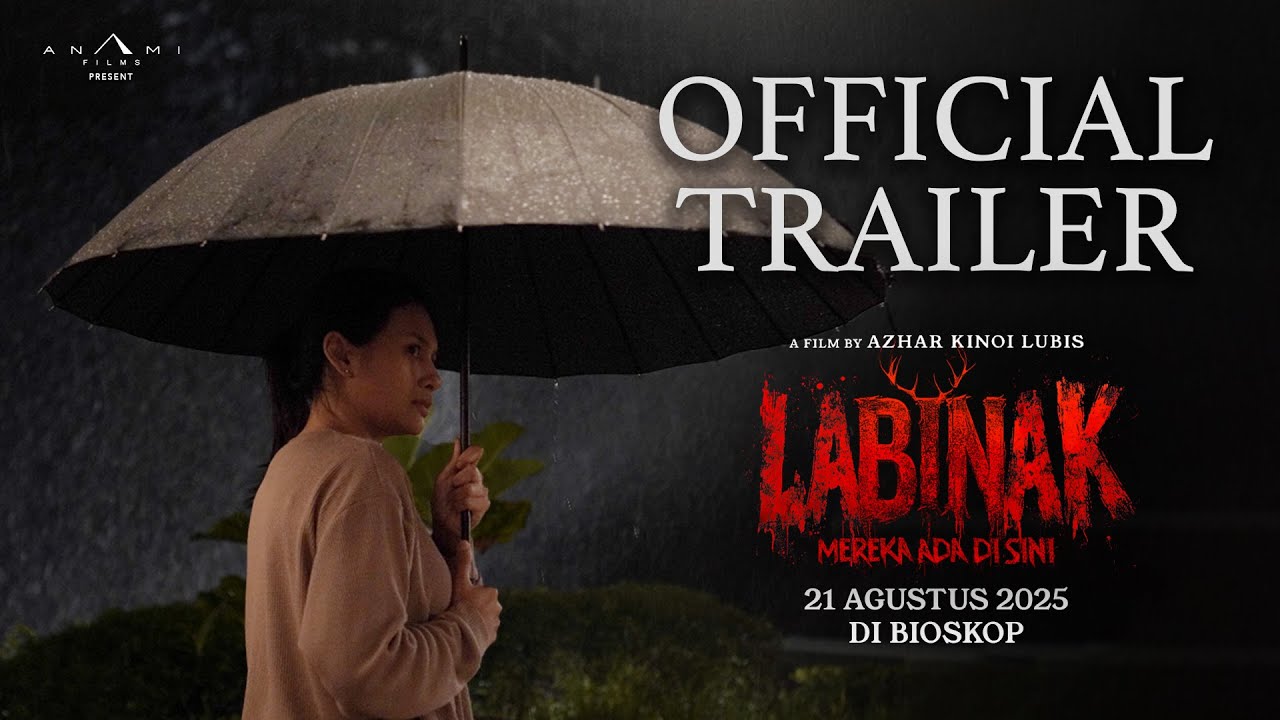

![Official Trailer [Subtitled]](https://img.youtube.com/vi/c3y9WSV3l9w/maxresdefault.jpg)