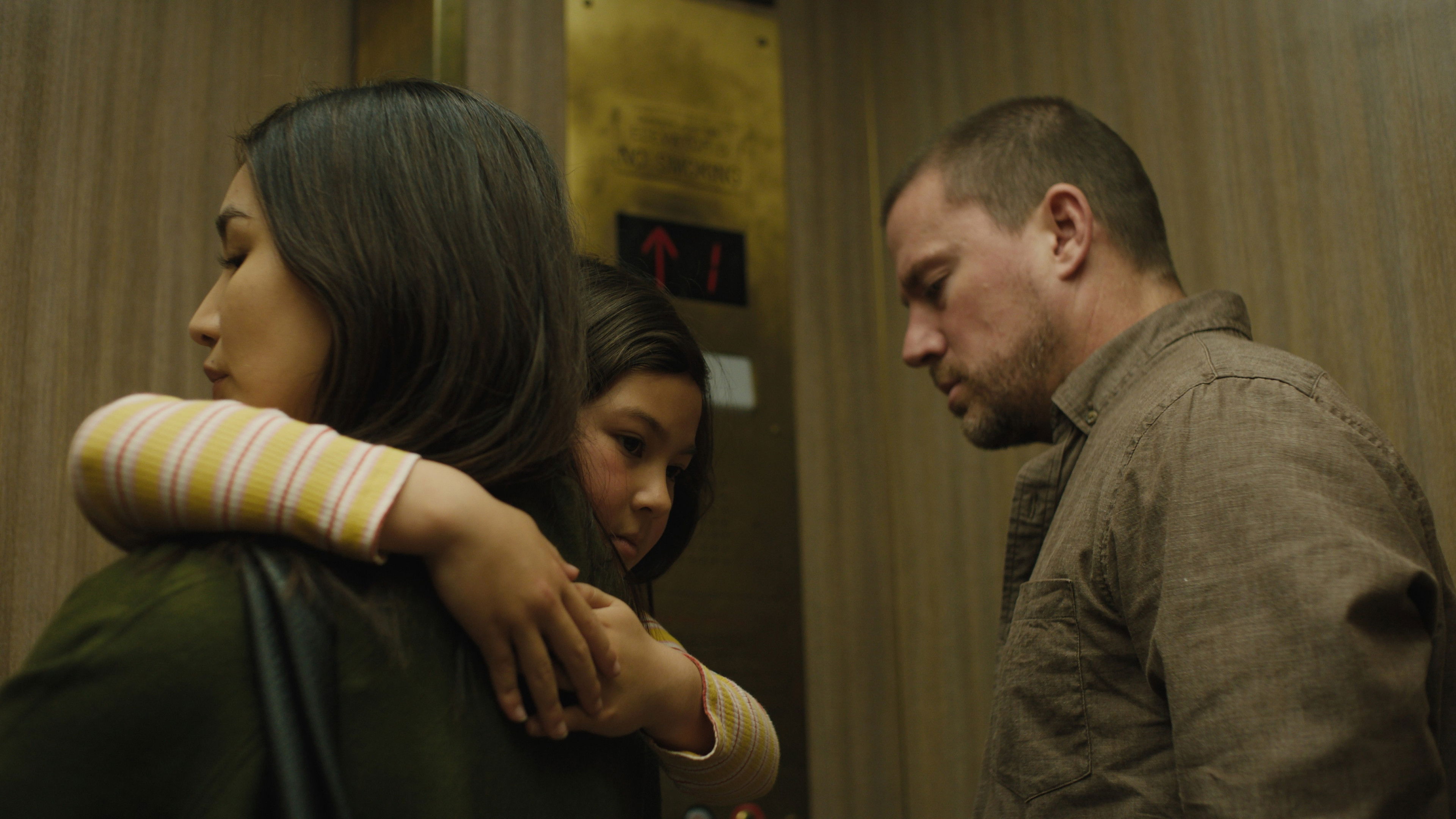
When Beth de Araújo’s Josephine premiered at Sundance in January 2026, it arrived as one of those rare films that immediately signals something different is happening on screen. Here was a director who’d previously made Soft & Quiet—a film that understood how to turn intimate domestic spaces into sites of profound unease—now turning her attention to something even more delicate and unsettling: the internal world of a child navigating adult circumstances she shouldn’t have to understand. The two-hour runtime never feels indulgent; instead, it’s exactly the breathing room this story demands.
What makes Josephine so significant isn’t just its premise, though that alone would intrigue. It’s the collaborative chemistry between de Araújo’s unflinching directorial vision and the performances she extracted from her cast. Mason Reeves carries the film with a naturalism that feels almost documentary-like in its authenticity—there’s no precocious child-star performance here, just a young performer inhabiting a frighteningly real emotional landscape. That Channing Tatum and Gemma Chan orbit this central figure is telling; these are actors comfortable with restraint, with letting silence do the heavy lifting alongside dialogue.
The casting itself deserves examination:
- Mason Reeves as the titular Josephine, grounding the entire film through a child’s perspective that never descends into sentimentality
- Channing Tatum bringing his particular brand of wounded masculinity to what’s clearly a morally complicated role
- Gemma Chan providing counterweight and complexity, refusing easy characterization
- The collaborative trust de Araújo cultivated across this ensemble, visible in every scene
The film’s journey through the festival circuit—premiering at Sundance before moving through Berlin—positioned it as early awards season conversation despite the unusual hurdle of seeking U.S. distribution. That distribution challenge itself speaks to something important about contemporary cinema: challenging films about children in distress exist in a delicate space, where artistic merit and commercial viability don’t always align neatly. Yet critics and festival programmers immediately recognized Josephine belonged in the broader conversation about what serious filmmaking could accomplish.
De Araújo has created something that refuses the comfort of easy moral judgments, instead asking audiences to sit in genuine discomfort.
What distinguishes Josephine within the thriller and drama landscape is its refusal to exploit its subject matter for cheap emotional responses. De Araújo’s previous work suggested she understood how to build dread through quotidian details—the mundane made menacing—and Josephine extends that approach into territory that could have easily become exploitative or manipulative in less careful hands. Instead, the film respects both its protagonist and its audience, trusting viewers to navigate complex emotional terrain without narrative hand-holding.
The film’s critical reception, arriving without traditional advance buzz or major studio backing, speaks to how festival circuits have evolved. A 0.0 rating on initial platforms meant little when serious film critics and programmers at tier-one festivals were already positioning Josephine as a significant work—exactly the kind of film that builds its reputation through word-of-mouth, retrospectives, and critical reconsideration rather than opening weekend box office returns. This has become the pathway for many challenging independent dramas in the 2020s.
What makes de Araújo’s vision resonate:
- Formal precision — every frame serves the emotional narrative; there’s no wasted space or time
- Tonal control — the film balances horror and heartbreak without ever becoming melodramatic
- Thematic depth — childhood vulnerability in a world designed by and for adults
- Performance direction — she clearly creates space for actors to find truth in difficult material
The legacy of Josephine may ultimately lie in how it influenced subsequent filmmakers to trust audiences with uncomfortable subject matter. In an era where studios increasingly avoid narratives that challenge rather than comfort, de Araújo’s film stands as a reminder that cinema at its best makes us confront realities we’d rather avoid. It’s not entertainment in the conventional sense; it’s cinema as moral reckoning.
For audiences willing to meet the film on its terms, Josephine offers something increasingly rare: a work of genuine artistic ambition that refuses compromise, anchored by performances that feel lived rather than performed. Tatum, Chan, and especially Reeves understand they’re serving a story larger than themselves, and that restraint—that generosity toward the material—is what elevates the entire enterprise. This is filmmaking that matters, even when (or especially when) it doesn’t feel good to watch.