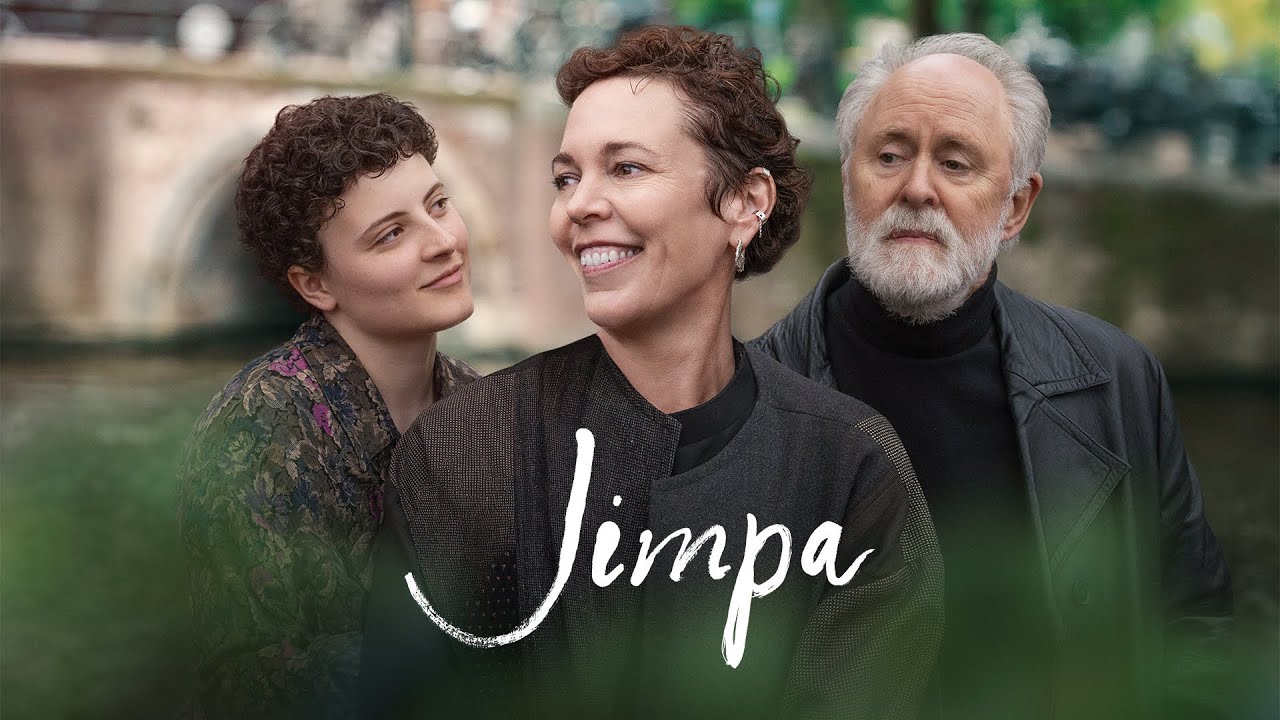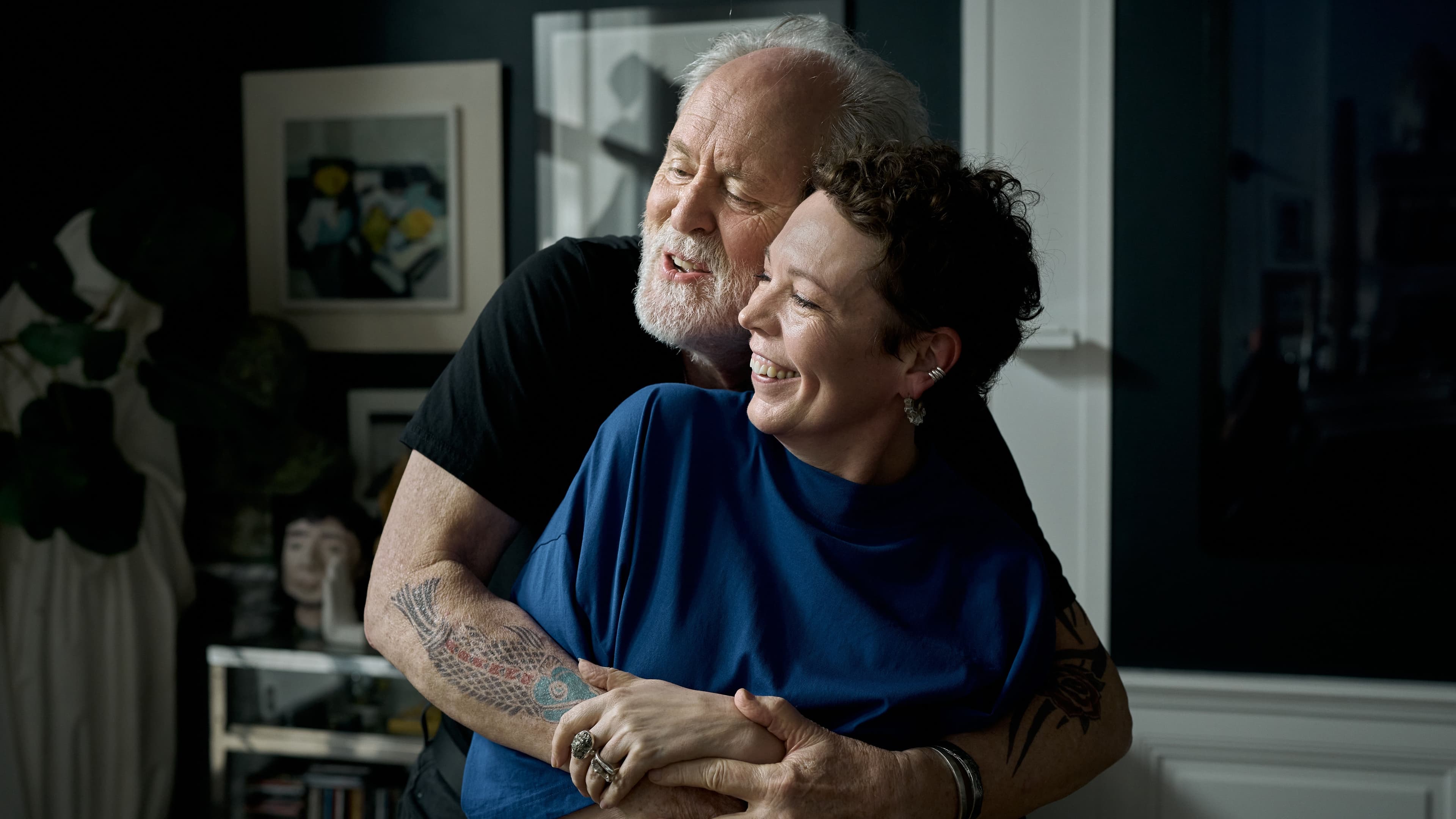
There’s something quietly electric happening in the Australian film landscape right now, and Jimpa is poised to be one of those releases that reminds us why intimate, character-driven storytelling still matters. Director Sophie Hyde is bringing us what’s being described as a semi-autobiographical multi-generational family drama, and it’s scheduled to arrive in cinemas on February 6, 2026—though honestly, the film has already generated considerable anticipation through festival circuits and industry buzz that speaks volumes about what Hyde has accomplished here.
What makes Jimpa genuinely exciting is the creative constellation surrounding it. You’ve got Olivia Colman in a lead role, paired with the incomparable John Lithgow—two actors who understand the nuance of family dynamics with an almost instinctive grace. Add to that Aud Mason-Hyde in the cast (notably, the director’s daughter), and you’re looking at a project that feels deeply personal, the kind of film where the casting choices themselves become part of the storytelling. When a director brings their own family into a semi-autobiographical work, there’s an authenticity that’s difficult to manufacture.
The film’s tagline—“Every family finds their own language”—suggests something at the heart of what makes this project compelling:
A meditation on communication, connection, and the ways families navigate their own unique emotional terrain. This isn’t a plot-heavy thriller or a conventional narrative arc. This is the stuff of real life: the unspoken understandings, the small moments, the language of gestures and silences that define how people actually live together.
Sophie Hyde has built her reputation on exactly this kind of intimate filmmaking. She understands that the most resonant dramas often come from stillness rather than spectacle, from observation rather than explanation. What she’s bringing to Jimpa is a directorial vision that trusts audiences to sit with complexity, to find meaning in the spaces between dialogue, to recognize their own family dynamics reflected on screen—whether that feels comfortable or not.
The production itself carries significant institutional weight:
- International collaboration: The film brings together Screen Australia, Align, Protagonist Pictures, Closer Productions, Mad Ones Films, the Netherlands Film Fund, the Netherlands Film Production Incentive, Viking Film, and Kino Lorber. This is a genuinely international venture, which speaks to the confidence these organizations have in the material.
- Festival momentum: Jimpa will open the 33rd Mardi Gras Film Festival (running February 12-26, 2026), positioning it as a cultural event beyond just a film release. That’s significant placement.
- Runtime consideration: At 2 hours and 3 minutes, this is a film that takes its time. No rushing, no artificial compression. The length itself signals intentionality.
What’s particularly striking is that Jimpa is set to arrive at a moment when cinema seems hungry for this exact kind of storytelling. We’ve been through cycles of spectacle and franchise dominance, and there’s a real appetite building for films that examine the texture of human relationships with the kind of care and attention that Hyde appears to be bringing here. Multi-generational family dramas have a particular power—they’re asking questions that matter to all of us: How do we understand our parents as people? How do we pass things on to the next generation? What gets lost and what gets preserved in the stories we tell ourselves about family?
The casting of Colman opposite Lithgow deserves particular attention. Both are actors known for their ability to convey enormous emotional depth through subtle choices. Colman has built her career on playing women navigating complex family and social dynamics—whether in The Crown, Broadchurch, or her Oscar-winning role in La Favorite. Lithgow brings a lifetime of nuanced character work, an understanding of how to play vulnerability in older age without sentimentality. Together, they create a promise of the kind of filmmaking where presence and authenticity feel like the actual content.
There’s also something meaningful about the fact that this is a film that will exist in the world and will find its audience through traditional theatrical exhibition. In an era where so much cinema gets shuttled directly to streaming platforms, a film like Jimpa is set to release in actual cinemas—places where audiences gather to share experiences in the dark. That matters, especially for a film about family and connection.
The timing of the 2026 release feels right too. We’re far enough into this decade that audiences are genuinely seeking cinema that reflects the complexity of contemporary life. Jimpa appears poised to offer exactly that: a film that doesn’t offer easy answers but rather invites us into the particular, messy, beautiful reality of how people actually love each other across generations and time.
Right now, before it arrives, there’s real anticipation building. The film hasn’t been rated by audiences yet (sitting at 0.0/10 with zero votes, which is simply the marker of a film that hasn’t yet been widely seen), but that actually works in its favor—there’s genuine mystery about what audiences will make of it once it lands. Will it spark conversations about family, about aging, about the things we leave unsaid? Almost certainly. That’s the kind of film Hyde makes, and that’s why Jimpa is worth paying attention to when it arrives in February 2026.